

BY PC Bureau
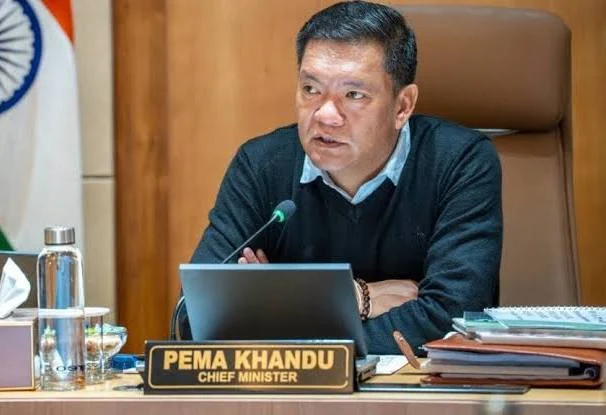
November 2: Arunachal Pradesh Chief Minister Pema Khandu has sought to allay growing apprehensions over the proposed Siang Upper Multipurpose Project (UMP), assuring residents of Siang and Upper Siang districts that neither the state government nor the Centre has taken a decision to proceed with its construction. Any move towards the project, he said, would require extensive public consultations and the consent of the affected communities.
Addressing concerns, particularly among members of the Adi community, Khandu said the government was currently considering only the preparation of a Pre-Feasibility Report (PFR) to assess the project’s viability, potential environmental and social consequences, and possible alternatives.
“Let me be clear. We are not talking about Siang dam construction at this stage,” the Chief Minister said, emphasising that a feasibility assessment should not be mistaken for approval to build the project.
Khandu pointed out that the Union government had designated the Siang project a National Project on February 7, 2008, following a Cabinet decision. It is among 16 projects in the country accorded this classification.
Explaining the strategic and ecological considerations behind the proposed assessment, the Chief Minister referred to China’s ongoing construction of a major dam in Medog County, around 40 km from the Indian border, on the Yarlung Tsangpo river. Construction reportedly began on July 19, 2025.
He said nearly 65 per cent of the Aane Siang’s water originates in China, making the region vulnerable to sudden surges in river flows as well as water shortages during the dry winter months.
My beloved Adi brothers and sisters,
I deeply understand the concerns and apprehensions surrounding the Siang Upper Multipurpose Project. I want to assure you that your voices, your land, your homes and our beloved Aane Siang remain at the heart of every consideration.
Your concerns will be addressed through open dialogue, transparency and meaningful public consultation. We will move forward only with due consideration for the aspirations and interests of our people.
I sincerely urge you to read my detailed statement, which seeks to clarify the facts and address your concerns.
— Pema Khandu པདྨ་མཁའ་འགྲོ་། (@PemaKhanduBJP) November 2, 2026
READ: Hoteliers Question Wangchuk’s “Dry Ladakh” Campaign, Allege Family Link to Wine Business
“Our valley faces real water risks, from sudden and exceptionally high flows arriving with little warning to water scarcity in the dry winter months,” Khandu said.
While India has no control over developments upstream in China, he argued that it must undertake scientific and technical assessments to prepare for possible eventualities. The proposed Siang UMP is one of the options that could be examined to help regulate river flows and maintain ecological flow in the Siang and Brahmaputra river systems.
Khandu stressed that the proposed PFR would be an initial exercise to establish the project’s basic feasibility, assess its likely consequences and explore alternative ways of protecting the Aane Siang. It would not constitute a decision to proceed with construction.
He also assured residents that any eventual decision would have to comply with the Right to Fair Compensation and Transparency in Land Acquisition, Rehabilitation and Resettlement Act, 2013, and the Environment Protection Act, 1986.
Rejecting claims that people would be displaced or their land acquired without consent, Khandu described such assertions as misinformation intended to create fear and uncertainty among local communities.
“None of this is true,” he said, alleging that certain individuals and groups were circulating misleading information about the project.
The Chief Minister said the government would maintain transparency and provide clarity through consultations and a clearly defined roadmap. He also assured residents that the administration would not leave affected communities in the lurch.
Acknowledging that disagreement and dissent were legitimate in a democracy, Khandu said his government was willing to engage with residents, elected representatives and officials to address their concerns. However, he warned against resorting to violence, bandhs and blockades, arguing that such actions would ultimately hurt local communities.
“Violence can never be the answer,” he said, adding that those threatening others or taking the law into their own hands would be held accountable.
Khandu also appreciated the Arunachal Indigenous Tribes Forum and other community-based organisations for their efforts to maintain peace and encourage dialogue in the Siang region.
Appealing to residents of Siang and Upper Siang districts, particularly members of the Adi community, to participate in the discussions, he said the decisions taken on the proposed project could have far-reaching implications for the region and future generations.
“Let us find the truth together and decide together, for Aane Siang, for our land and for our future generations,” he said.