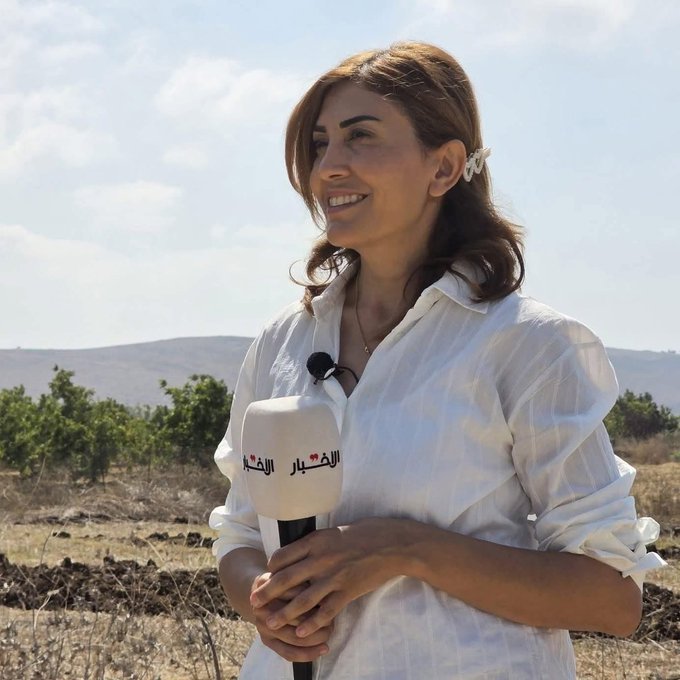
The killing of Amal Khalil adds to a broader pattern flagged by press freedom groups, which report record numbers of journalist deaths in recent conflicts involving Israel, raising concerns over accountability and safety.
BY PC Bureau
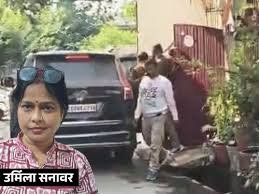
April 23, 2026: Israeli strikes in southern Lebanon on Wednesday killed at least five people, including journalist Amal Khalil, according to the country’s National News Agency (NNA) and her employer.
The incident, occurring just days into a temporary ceasefire, is part of a broader and deeply contested pattern. According to the Committee to Protect Journalists (CPJ), 2025 saw a record 129 journalists and media workers killed globally—the highest since records began in 1992. Israel was responsible for roughly two-thirds of those deaths, with most victims being Palestinian journalists reporting from Gaza.
The sequence of events unfolded in the village of al-Tiri (al-Tayri) in the Bint Jbeil district near the Israeli border. An initial strike, reportedly carried out by drone, hit a car and killed two people. The Israel Defense Forces (IDF) said it had targeted two vehicles that had left a site allegedly used by Hezbollah for military purposes.
Journalists Amal Khalil, a 43-year-old reporter for Al-Akhbar, and her colleague Zeinab Faraj, a freelance photojournalist, arrived at the scene to cover the aftermath. While reporting, they took shelter in a nearby building after their vehicle was reportedly threatened or damaged.
A subsequent Israeli strike hit that building. Khalil was trapped under the rubble and later confirmed dead at the scene. Her body was recovered hours later by Lebanese Red Cross and civil defence teams. Faraj sustained serious injuries and was hospitalised in critical condition, where she later underwent surgery.
Rescue efforts were significantly delayed. Lebanese officials and media reports said continued Israeli military activity in the area—including strikes near the main road linking al-Tiri to Haddatha—hampered ambulance access. Some accounts alleged that Israeli forces used a stun grenade or fired in the vicinity, further delaying aid. Lebanon’s Health Ministry accused Israel of deliberately targeting the journalists, stating the building they sheltered in was struck while they were performing their duties. The IDF denied intentionally targeting journalists or obstructing rescue operations.
Since the escalation of the Israel–Hamas war in October 2023, estimates from the International Federation of Journalists (IFJ) and other sources place the number of journalists killed in Gaza at more than 235–276 by April 2026. CPJ’s verified count for the broader conflict, including related incidents in Lebanon and elsewhere, exceeds 260. Many of these deaths have been linked to air strikes, including attacks on locations where journalists were working or sheltering.
In Lebanon, the toll is smaller but rising. Between October 2023 and April 2026, at least 11–16 journalists have been killed in Israeli strikes, with several high-profile cases reported in March and April 2026 alone.
Press freedom groups, UN experts, and human rights organisations describe a recurring pattern: strikes on journalists or media-linked sites, delays or obstruction affecting rescue operations, and subsequent claims by Israel that those targeted were affiliated with armed groups—often without publicly verifiable evidence. In some cases, individuals have been described by Israeli authorities as militants operating under the cover of journalism.
Critics argue that such actions risk undermining press freedom and deterring independent reporting from conflict zones. They point to increased drone use and incidents involving clearly marked press vehicles or known journalist locations.
Israel murdered journalist Amal Khalil in Lebanon today and stun-grenaded the Red Cross trying to retrieve her
Wondering if President Aoun and PM Salam will say anything or if their voices only work when it’s Israel’s biddingpic.twitter.com/FZrtx2BQQr
— COMBATE |🇵🇷 (@upholdreality) April 22, 2026
READ: Trump Signals Possible Iran Talks Breakthrough by Friday
Israel, however, maintains that its military targets only legitimate threats and does not deliberately attack journalists. The IDF says it operates under strict rules of engagement and has, in some cases, asserted that those killed were involved with or embedded in armed groups. It also cites the challenges of warfare in densely populated or contested areas, where militants are alleged to operate within civilian environments.
The scale of journalist casualties has prompted repeated calls for independent international investigations into possible violations of international humanitarian law. While deliberate or indiscriminate attacks on civilians, including journalists, are prohibited under such law, there has been limited high-level accountability to date.
The killing of Amal Khalil highlights the risks faced by local journalists covering conflicts in their own regions. Her death, along with the critical injury of Zeinab Faraj and reported delays in rescue efforts, has drawn condemnation from press freedom organisations, including CPJ.
Beyond individual losses, the rising toll has significantly restricted independent reporting from Gaza and parts of southern Lebanon, limiting global visibility into the humanitarian and military dimensions of the conflict. As ceasefire efforts continue, the case underscores the ongoing debate over accountability, protection of journalists, and the human cost of war.
The broader reality remains stark: in recent years, no other military has been linked to as many journalist deaths as Israel, according to press freedom monitors. The debate over intent and responsibility continues—but so does the toll on those reporting from the front lines.
Broader Toll (per Committee to Protect Journalists – CPJ)
- 2025 Global Record: 129 journalists and media workers killed worldwide — the deadliest year since CPJ began tracking in 1992.
- Israel’s Share: Responsible for 84–86 deaths (approximately two-thirds of the global total), mostly Palestinian journalists in Gaza, plus some in Yemen and Lebanon.
- Since October 2023: Israel linked to the highest number of journalist killings by any military on record.
- Gaza: Over 200–270+ Palestinian journalists and media workers killed (CPJ verified figures lower; Palestinian and IFJ sources higher).
- Lebanon: At least 11–16 journalists killed by Israeli strikes since October 2023, with a sharp rise in March–April 2026.
Notable Recent Lebanon Cases (2026)
- Amal Khalil (Al-Akhbar) – 22 April
- Fatima Ftouni & Mohammed Ftouni (Al-Mayadeen), Ali Shuaib (Al-Manar) – 28 March (strike on marked press car)
- Mohammed Sherri (Al-Manar), Hussain Hamood (Al-Manar), Ghada Dayekh, Suzan Khalil – earlier April and March incidents.