The controversy now raises two separate questions: whether Bhuyan’s constitutional observations accurately reflect the protections surrounding voting rights, and whether a sitting Supreme Court judge should publicly address principles closely connected to a matter awaiting adjudication before the Court.
BY PC Bureau
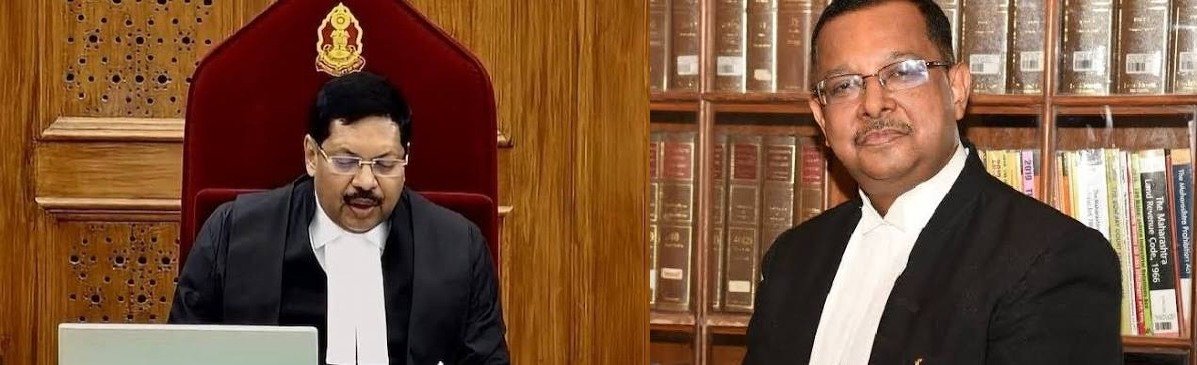
New Delhi/ October 5: A sharp disagreement has emerged within India’s judicial fraternity after former Chief Justice of India B.R. Gavai and two retired Delhi High Court judges questioned remarks made by sitting Supreme Court judge Justice Ujjal Bhuyan on voting rights and mass disenfranchisement.
The criticism came a day after Bhuyan, speaking at NALSAR University of Law in Hyderabad, warned that any process that leaves “millions and millions” of Indian citizens without voting rights would be “intrinsically arbitrary” and a “negation of the constitutional order”. Although Bhuyan did not name the Election Commission or its ongoing Special Intensive Revision (SIR) of electoral rolls, his remarks came against the backdrop of petitions challenging the exercise that are pending before the Supreme Court.
Gavai, who retired as Chief Justice of India earlier this year, questioned whether it was appropriate for a sitting judge to comment publicly on an issue before the Court.
“Judicial propriety would not permit him to make any comment on the matter which is sub judice before the court,” Gavai told PTI, adding that a sitting judge should not comment on an issue pending adjudication before the same court.
Retired Delhi High Court judge S.N. Dhingra was more critical, describing Bhuyan’s remarks as “way beyond the limits of a sitting top court judge”. He said Bhuyan should have “thought a thousand times” before speaking publicly on an issue that remains before the Court and argued that the judge did not have all the facts before him.
Another retired Delhi High Court judge, R.S. Sodhi, questioned Bhuyan’s description of the issue as one of disenfranchisement. He argued that the right to vote is governed by the statutory framework and that a person has the right to vote if he or she meets the conditions prescribed by law.
Sodhi described Bhuyan’s remarks as “hardline” and said they did not reflect a mature approach to the issue.
READ: Clock Ticks for Gyanesh Kumar After SC Flags Form 6 Question
What Justice Bhuyan said
सुप्रीम कोर्ट के जस्टिस उज्जल भुयान के हैदराबाद में दिए गए इस वक्तव्य के पाँच मिनट के इस हिस्से को सुनिए जो उन्होंने मतदान के अधिकार पर बोला है।
एक एक पंक्ति ऐसी है मानो बग़ीचे से चुन चुन कर सुर्ख गुलाब लाए हों। ज्ञानेश के SIR के ख़िलाफ़ प्रदर्शनकारियों के पथ पर बिछाने के लिए भी और ज्ञानेश का बचाव करने वालों के मुँह पर मारने के लिए भी।
वोटिंग राइट छीने जाने के संदर्भ में वे कहते हैं “यह उस संवैधानिक व्यवस्था को नकारना है जिसे हमने भारत के संविधान के आधार पर अपनाया है। भारतीय नागरिकों का वोट देने का अधिकार विदेशी शासन के ख़िलाफ़ भारत के लंबे सालों के संघर्ष से जुड़ा हुआ है… आर्टिकल 326 के साथ बिल्कुल भी छेड़छाड़ नहीं की जा सकती। कोई भी अथॉरिटी ऐसा नहीं कर सकती। कोई भी कोर्ट इसका समर्थन या समर्थन नहीं कर सकता… कोई भी संविधान से ऊपर नहीं है।”
— Umashankar Singh उमाशंकर सिंह (@umashankarsingh) October 5, 2026
Bhuyan made the remarks on October 4 while delivering the valedictory address at the 19th Justice Bodh Raj Sawhney Memorial Moot Court Competition at NALSAR University of Law.
He did not refer directly to SIR or the Election Commission. But speaking about voting rights and deletion of names from electoral rolls, he said any process that “disenfranchises millions and millions of Indian citizens”, leaving them “second class citizens in their own country in the sense of being citizens without voting rights”, would be “intrinsically arbitrary”.
He said no amount of “whataboutery” could justify such a process and warned that it would strike “at the very heart of the Constitution” and amount to “a negation of the constitutional order”.
Bhuyan linked the right to vote to Articles 326 and 14 of the Constitution and said that, apart from a deceased voter, a name already on an electoral roll could not be removed without notice and an opportunity to be heard.
“Article 326 cannot be tinkered with at all. No authority can do it; no court can condone it. No one is above the Constitution,” he said.
The remarks have since been interpreted by political parties and commentators as referring to the controversy surrounding SIR. But Bhuyan himself did not name the Election Commission, the CEC or the SIR exercise.
A question of judicial propriety
That distinction is at the heart of the controversy.
There are effectively two separate questions. One is whether the principles Bhuyan articulated about voting rights and deletion from electoral rolls are constitutionally sound. The other is whether a sitting Supreme Court judge should publicly articulate such views while petitions involving the electoral-roll revision remain pending before the same court.
Gavai, Dhingra and Sodhi have focused primarily on the second question.
The criticism is significant because it comes from judges who have themselves occupied senior positions in the judiciary, with Gavai having headed the Supreme Court until his retirement. It also highlights the sensitivity surrounding public comments by sitting judges on matters that may subsequently require judicial determination.
The SIR backdrop
Bhuyan’s remarks come amid an intense legal and political battle over the Special Intensive Revision of electoral rolls.
The exercise has generated controversy over the verification and deletion of names, particularly in states where large numbers of voters have reportedly been affected. Petitions challenging aspects of the exercise are pending before the Supreme Court.
The issue has also generated political criticism of Chief Election Commissioner Gyanesh Kumar and the Election Commission, with Opposition leaders alleging that the process could disenfranchise legitimate voters.
Congress leader Jairam Ramesh cited Bhuyan’s remarks while attacking Kumar, arguing that the judge’s observations demonstrated that the CEC had violated constitutional principles.
But that is a political interpretation of Bhuyan’s remarks. The judge did not name Kumar, the Election Commission or SIR in his address.
The larger constitutional question — whether the SIR process, as actually implemented, unlawfully excludes eligible voters — remains for the Court to determine.
The episode therefore presents an unusual spectacle: a sitting Supreme Court judge publicly articulating strong constitutional principles on an issue closely resembling a matter before the Court, followed almost immediately by criticism from a former CJI and retired judges over the propriety of doing so.
Whatever the eventual outcome of the SIR litigation, the debate has now expanded beyond electoral rolls to an equally consequential question: how far can a sitting judge go in speaking publicly about constitutional principles when the facts and legality of a related dispute are still awaiting adjudication?