The CBI says the accused being out on bail could deter the victims from appearing. The defence has countered that the prosecution itself has failed to move the trial quickly. The Supreme Court has now put witness testimony ahead of the bail question.
BY Navin Upadhyay
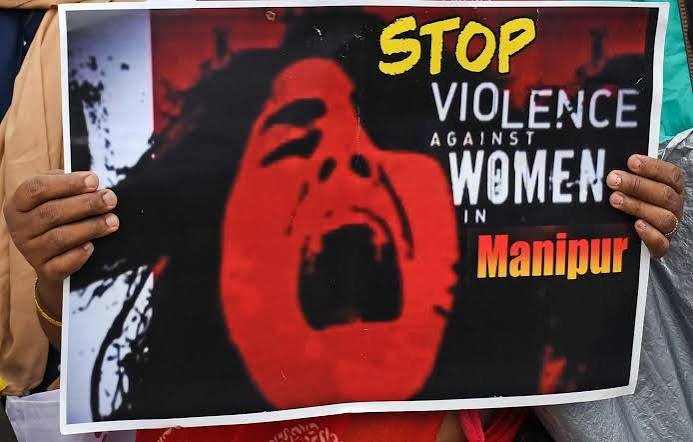
New Delhi: The Supreme Court’s latest intervention in a Manipur sexual violence case is significant not simply because it has fixed dates for two victim-witnesses to testify, but because it has brought three unresolved questions into sharper focus: how quickly these cases are being tried, whether witnesses can safely testify while the accused are out on bail, and who ultimately bears responsibility if fear or intimidation keeps victims away from the courtroom.
The bench headed by Chief Justice of India Surya Kant and comprising Justices Joymalya Bagchi and V. Mohana was hearing the CBI’s pleas seeking cancellation of bail granted to two accused. Instead of deciding the bail question immediately, the court indicated that it wanted the two key victim-witnesses to first be examined.
That puts the testimony of the victims at the centre of the next stage of the proceedings.
The court directed the CBI to ensure their appearance before the trial court on October 7, 9 and 28 and ordered the trial court to record their statements. It also made clear that the authorities must ensure their protection.
That last point could prove as important as the dates themselves.
The CBI argued that allowing the accused to remain out on bail could discourage the victims from testifying. Additional Solicitor General D.P. Singh told the court that given the nature of the alleged offences, “if the accused are out, nobody will depose”.
The Chief Justice pushed the responsibility back on the authorities: “It’s your obligation… witness protection.”
That exchange captures the central tension now before the court. Bail is a legal entitlement subject to conditions, but the criminal justice system cannot function if the witnesses whose testimony is essential to the prosecution are too frightened, vulnerable or otherwise unable to appear.
The defence, meanwhile, has raised a different concern: the pace of the trial itself.
Senior advocate Shadan Farasat, appearing for one of the accused, argued that the CBI could not blame the accused’s release for delays when the prosecution had itself not moved the trial forward at the required speed. With around 30 witnesses to be examined and the proceedings still at an early stage, the defence has effectively put the prosecution’s conduct under scrutiny as well.
The court’s response was revealing. Rather than immediately deciding whether bail should be cancelled, it indicated that the testimony of the two victim-witnesses should come first.
That could make the coming weeks crucial for the case.
The failure of the witnesses to appear on the previous date was not, the court was told, necessarily a case of reluctance or avoidance. The hearing had fallen on a public holiday and the centres where the victims were expected to depose were closed. One of the victims was also suffering from dengue.
The Chief Justice noted that victims could not be expected to appear when a hearing was scheduled on a public holiday.
This is an important distinction. In a case involving allegations of sexual violence, a missing witness can easily become another statistic in a narrative of delay. The court’s questioning suggests that it is examining the circumstances behind the non-appearance rather than automatically treating it as a failure by the victims to cooperate.
But the next dates will provide a much clearer test.
If the witnesses appear and their statements are recorded, the CBI’s argument for continuing the bail challenge could acquire greater force. If they do not, the court will have to examine why — and whether the authorities have done enough to make their appearance possible and safe.
READ: Clock Ticks for Gyanesh Kumar After SC Flags Form 6 Question
The case also needs to be viewed against the wider backdrop of the Supreme Court’s continuing intervention in matters arising from the 2023 Manipur violence.
The Court has increasingly been dealing not only with individual criminal proceedings but also with the broader conditions in which victims and displaced people are expected to seek justice.
On September 17, the same bench raised concerns over deaths in relief camps housing internally displaced persons and sought details from the Manipur government on investigations, criminal proceedings and the safety of camp residents. It also asked the governments of Manipur and Assam and other stakeholders to consider special trial courts for CBI and NIA cases arising from the violence.
That suggests the Court is looking at the justice process as a chain rather than as a series of isolated hearings: protection of victims, preservation of evidence, appearance of witnesses, speed of trial and accountability for failures along the way.
For the victims in the present case, however, the immediate issue is much more basic.
Can they enter a courtroom, face the judicial process and give their evidence without fear?
The Supreme Court has now placed the responsibility squarely on the authorities to make that possible.
The bail question can wait, the bench has indicated. The witnesses cannot.
And that may be the most consequential part of Monday’s order.