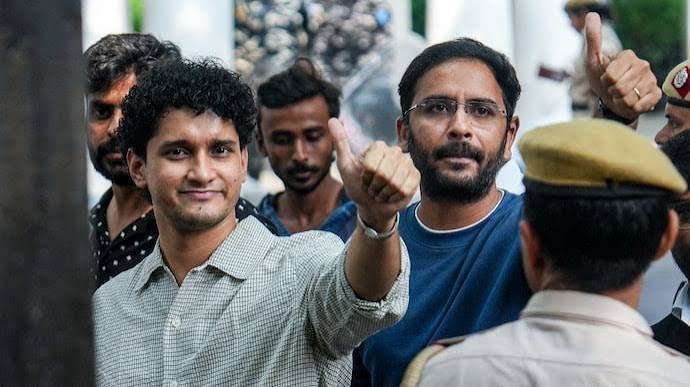
The custody extension of Saurav Das and Ashutosh Ranka following their Tricolour protest has intensified concerns over the treatment of dissent. While scaling locked gates may invite legal action, should it warrant prolonged detention?
BY PC Bureau
October 19: The extension of custody of Cockroach Janta Party (CJP) leaders Ashutosh Ranka and Saurav Das by two more days on October 19 has raised fresh questions about proportionality, due process and the space available for political protest in the national capital.
Das and Ranka had already spent five days in Tihar Jail after their detention on October 13 for allegedly climbing locked gates to enter Jantar Mantar, unfurling the Tricolour and raising slogans against Chief Election Commissioner Gyanesh Kumar and the Special Intensive Revision (SIR) of electoral rolls. Special Executive Magistrate at Delhi’s Mandir Marg police station extended their custody, with the authorities citing concerns over public order, alleged violations of earlier undertakings and the risk of further breaches. The CJP, however, has alleged that procedural hurdles and delays are being used to obstruct their release.
The central question is whether the alleged offences and the circumstances of the protest justify the continued detention of the two men, and whether the process governing their release is being applied fairly.
. https://t.co/DGMCWcl32O
— Abhijeet Dipke (@abhijeet_dipke) October 19, 2026
Trespass or disproportionate punishment?
The police have invoked allegations including trespass, violation of prohibitory orders, obstruction of public servants and breach of peace bonds signed after an earlier detention. The authorities have also cited their past conduct and social-media activity while opposing their release.
A third associate, Ajinkya Shinde, was reportedly released after being bound down on a personal bond.
The distinction matters: unfurling the national flag is not, by itself, a criminal offence. The legal issues concern the alleged manner of entry, restrictions governing the premises and compliance with the activists’ earlier undertakings.
READ: Rahul Gandhi Holidays Abroad, CJP Leaders Behind Bars
The case has acquired wider significance because it follows the removal of Jantar Mantar’s status as a designated protest venue, a development reported around October 11–12. Ramlila Ground, Burari Ground and CBD Ground have been identified as alternative locations.
Relocating demonstrations does not, in itself, extinguish the constitutional right to peaceful assembly. Nor does that right confer an unrestricted licence to enter a restricted site. The practical question, however, is whether the alternatives provide comparable access to the institutions and public figures against whom protesters seek to demonstrate.
Jantar Mantar has served for decades as a prominent site for political dissent close to the centres of power. Restrictions on its use, followed by arrests when activists attempt to enter the premises, inevitably intensify concerns about the accessibility of protest in Delhi.
When procedure becomes the punishment
The authorities are entitled to enforce lawful restrictions and consider credible risks to public order. But detention should not become a substitute for resolving allegations through a fair and timely process.
Five days in Tihar followed by a further two-day extension is a serious deprivation of liberty. Whether it is justified must turn on the legal grounds and the necessity of continued custody—not simply on the political sensitivity of the protest or the activists’ previous involvement in demonstrations.
The state must explain why less restrictive measures would be inadequate, where the law requires such justification. Equally, allegations of procedural obstruction should be examined rather than dismissed as political rhetoric.
There is an obvious contradiction in treating the Tricolour as a symbol of national unity while allowing a flag-waving protest to become the focus of a prolonged custody dispute. Yet the symbolism cannot erase the alleged trespass, just as the alleged trespass cannot make questions about proportionality and due process irrelevant.
The next proceedings will be crucial. The authorities must establish the legal necessity of continued detention, while the court must ensure that the activists’ liberty is not compromised by avoidable delays.
The issue is not whether protesters should be above the law. It is whether the law is being applied proportionately—and whether the right to dissent remains meaningful when the place of protest is restricted and those who challenge the restriction find themselves behind bars.