

From delaying seat-sharing talks in 2023 to breaking with the DMK in 2026, the Congress has repeatedly put its political calculations ahead of Opposition unity, weakening the INDIA bloc.
By Navin Upadhyay
November 28: When Nitish Kumar took the initiative to bring Opposition parties together and lay the foundation for the INDIA alliance in June 2023, it revived hopes of a credible challenge to the BJP-led National Democratic Alliance in the 2024 Lok Sabha elections. The coming together of regional heavyweights, the Congress and several smaller parties appeared to offer the Opposition an opportunity to consolidate its electoral strength against Prime Minister Narendra Modi.
But the optimism did not last long. Within months, the alliance began showing signs of disarray, largely because the Congress failed to recognise that bringing together parties with different political interests required accommodation, sustained coordination and a willingness to share leadership.
The question is whether the Congress has learnt anything from the mistakes that cost the INDIA bloc one of its most important architects.
We have quickly looked at the #Constution (132nd amendment) bill and here are some hot takes:
➡️ It is not a #Delimitation bill. As Yogender Yadav had rightly anticipated, it is a gerrymandering bill.
➡️ Women don’t really gain much as they still need to wait till 2029 for reservation in Lok Sabha and in states much beyond that as reservation continues to be linked to delimitation (on the basis of 2011 census). Further women reservation will cease to have effect 15 years from April 2026 (when #womenreservation act commenced). In practice then, women reservation (till duration extended by Parliament) will actually be in operation for a very limited period of time.
➡️ The extension of freeze till 2051 is ornamental at best, because right now LS seats are increasing anyway and as India’s population (and fertility rates across states) is likely to stabilize by 2050’s, there will likely be no need for further increase in seats after that (and likely for re-allocation as well).
➡️ Flat 50% rise in seats across all states will further increase the gap in number of seats between north and south states. It’s basic math that states which already have more seats will gain more, even as inter-state ratios remain same. Parliament votes in numbers, not in ratios.
➡️ 2011 Census will be used for redrawing boundaries and to decide which seats will be reserved. This will likely be a loss for seats reserved for SC / ST communities as they would have gotten more reserved seat if 2027 census was used.
➡️ Since the Constitution is now changing the representation of states in Lok Sabha, in terms of Article 368, ratification by at least 50% state assemblies will also be required. This may be a safeguard or at least delay the process a bit.
➡️ #Parliament is barely functioning anyway and MPs hardly get opportunity to make their voice heard. With 850 MPs, time and space for meaningful interventions will reduce further, women MPs, MPs from marginalised communities, MPs from small parties or independent MPs and first time MPs will struggle the most.
➡️ Government doesn’t believe in doing #publicconsultations, even on far reaching constitutional amendment. No public consultation happened on the 2023 women reservation bill, the earlier delimitation bill and even the current bill. And the Govt wont send them to a Committee.
Our demand from MPs: If the Bill is not outrightly rejected, it should at the least, be referred to a Parliamentary Committee for thorough scrutiny and public consultation.
See pic for an executive summary of the main points.
Detailed briefing note here – https://t.co/N69cE4Rqad— Maadhyam (@maadhyam_engage) November 28, 2026
Nitish Kumar’s departure: An early warning the Congress ignored
Nitish Kumar was among the principal architects of the Opposition initiative. He reached out to several leaders and hosted the first major meeting of Opposition parties in Patna in June 2023. Subsequent meetings in Bengaluru and Mumbai helped turn the initiative into the INDIA alliance.
The expectation was that the Congress, given its national presence, would provide political leadership while allowing regional parties sufficient space to retain their influence in their respective states.
That understanding soon came under strain.
The Congress was unwilling to move quickly on seat-sharing arrangements and remained preoccupied with the Assembly elections in Madhya Pradesh, Chhattisgarh and Rajasthan. Nitish Kumar wanted the alliance to settle its electoral arrangements early so that a coordinated campaign could begin well before the Lok Sabha elections.
JD(U) leaders subsequently blamed the Congress for delaying seat-sharing negotiations by nearly three months because of its engagement with the Assembly polls.
The proposed first joint rally of the INDIA bloc in Bhopal, scheduled for October 2023, was also cancelled. The Madhya Pradesh Congress leadership was reluctant to host a joint event with alliance partners at a time when it was fighting its own Assembly election. Concerns over the Sanatan Dharma controversy involving DMK leaders added to the complications.
The cancellation was more than a logistical setback. It exposed the difficulty of reconciling the Congress’s state-level electoral interests with the larger objectives of the alliance.
The problem became more visible after the Congress suffered defeats in Madhya Pradesh, Chhattisgarh and Rajasthan in December 2023. A meeting of the INDIA bloc scheduled for December 6 was postponed after several prominent leaders, including Mamata Banerjee, Nitish Kumar and M.K. Stalin, expressed their inability to attend.
The alliance had last met in Mumbai at the end of August. The absence of regular consultations for months, at a crucial stage before the general election, was a serious failure of political coordination.
The leadership question further complicated matters. At the December 19 meeting, Mamata Banerjee proposed Congress president Mallikarjun Kharge as the Opposition’s prime ministerial face, with Arvind Kejriwal supporting the suggestion. Kharge said the alliance should first concentrate on winning the elections.
Nitish Kumar maintained that he was not aspiring to become prime minister. In January 2024, his name was proposed for the convenor’s position, but he declined the offer. The delay in settling the leadership structure and the absence of a consensus-driven mechanism had already damaged confidence within the alliance.
On January 28, 2024, Nitish walked out of the Mahagathbandhan in Bihar and returned to the BJP-led NDA.
His departure was not caused by a single disagreement. Nitish had his own political calculations and a history of changing alliances. But the Congress cannot escape responsibility for creating an environment in which one of the principal architects of INDIA found little reason to remain invested in the project.
READ: DMK Backs Delimitation Bill After Centre Accepts 50% Seat Hike
Tamil Nadu: A longstanding ally sacrificed for a share in power
The Congress appears to have repeated the same mistake in Tamil Nadu.
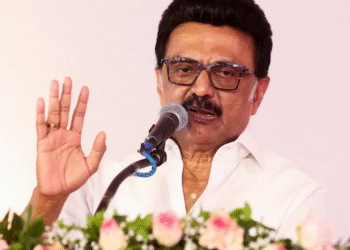
The DMK had been among the Congress’s most dependable regional allies. Its president, M.K. Stalin, had publicly proposed Rahul Gandhi’s name as the Opposition’s prime ministerial candidate in 2019. The two leaders maintained a close political relationship, and the DMK stood firmly with the Congress during the formation and consolidation of the INDIA bloc.
The relationship, however, came under strain ahead of the 2026 Tamil Nadu Assembly elections.
A section of the Congress leadership began demanding a larger share of Assembly seats and a place in the state government if the alliance returned to power. The party also explored the possibility of an understanding with actor-politician Vijay’s Tamilaga Vettri Kazhagam (TVK).
The demand for ministerial berths became a major point of friction with Stalin, who was reluctant to share power in the DMK-led government.
The Congress leadership had an opportunity to manage the differences through direct negotiations between Rahul Gandhi and Stalin. Even if the two parties eventually decided to part ways, they could have done so through a negotiated political arrangement that preserved their broader relationship and the possibility of future cooperation.
Instead, the Congress chose to support Vijay’s TVK after the Assembly election results in May 2026 and broke its decades-old alliance with the DMK.
The Congress had won only five Assembly seats in the election, while the TVK emerged as the single largest party with 108 seats in the 234-member Assembly. The Congress subsequently joined hands with Vijay’s party to form the government and secured a share in power.
The immediate attraction was evident: a place in the new government and the prospect of a longer-term alliance with an emerging political force. But the decision carried a much larger cost.
The DMK had 22 members in the Lok Sabha and eight in the Rajya Sabha. It was one of the most important regional components of the INDIA bloc. By walking away from Stalin for a share in the Tamil Nadu government, the Congress weakened its relationship with a party whose parliamentary strength could be crucial in national political battles.
It also sent an uncomfortable message to other regional partners: the Congress could abandon an established alliance when a new political opportunity appeared more attractive.
The argument is not that the Congress should never explore new alliances. Political parties must respond to changing electoral circumstances. But the manner in which a longstanding relationship is managed matters, particularly when the party claims to be building a national Opposition coalition.
Delimitation: Congress fails to hold its allies together
The latest delimitation controversy has exposed the consequences of this approach.
The Modi government is preparing to push through a revised legislative package that seeks to expand the Lok Sabha and link the exercise to the implementation of 33 per cent reservation for women. The proposal has raised concerns about the future distribution of parliamentary representation and the possibility of politically motivated constituency redrawing.
The Congress has opposed the legislation and has argued that the government could use delimitation to strengthen its political position. It has sought to mobilise Opposition parties against the proposal.
But the Congress appears to have underestimated the importance of engaging its regional partners well before the government moved towards the special session of Parliament.
The DMK, which had been at the forefront of the opposition to delimitation, had two principal demands: a uniform increase in Lok Sabha seats across states and a freeze on the existing proportional representation of states for another 25 years.
The revised proposal has incorporated these safeguards, providing for a uniform 50 per cent increase in seats and maintaining the relative share of states until 2051. Tamil Nadu’s existing share of parliamentary representation is thus protected under the proposed formula.
The DMK has consequently decided to support the revised legislation.
Its position may be defended on the grounds that the government has accommodated its principal demands. But politically, the development represents another setback for the Congress. A party that was once among its closest allies is now taking a position different from that of the principal Opposition party on a major constitutional issue.
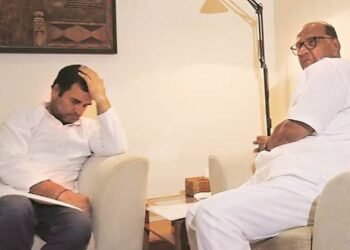
The Congress also appears to have failed to build an effective understanding with Sharad Pawar’s NCP (SP).
The BJP leadership had reached out to Pawar well before the proposed special session, recognising the importance of his party’s eight Lok Sabha members in the numbers game surrounding the constitutional amendment. On November 27, NCP (SP) leader Jitendra Awhad announced that the party would support the delimitation exercise, subject to a uniform 50 per cent increase in seats across states.
The announcement came as a setback to the Congress, which had been opposing the legislation.
Pawar’s decision may have been driven by his assessment of the revised proposal and his party’s political compulsions. But the Congress leadership should have anticipated the possibility of such a development and made a serious effort to secure his support before the BJP established contact with him.
There was little visible evidence of a sustained, high-level personal intervention by Rahul Gandhi before the NCP (SP) announced its position. A direct conversation or meeting with Pawar in Mumbai or Pune could have provided an opportunity to understand his concerns and explore a common position.
Instead, the Congress found itself responding after the decision had been announced.
The irony is difficult to miss. The Maharashtra Congress had given up its claim to a Rajya Sabha seat earlier this year to facilitate Pawar’s re-election. Yet the political goodwill generated by that gesture was not sufficient to ensure coordination on an issue of national importance.
A national party that has not learnt to accommodate regional forces
The recurring problem with the Congress is not necessarily the absence of political issues on which Opposition parties can unite. There is considerable common ground between them on federalism, constitutional institutions, electoral reforms and the distribution of political power.
The problem lies in translating that common ground into sustained political coordination.
The Congress remains the largest national Opposition party, but it cannot expect regional parties to subordinate their interests to its own electoral ambitions. Nor can it assume that its position as the principal challenger to the BJP automatically entitles it to determine the alliance’s leadership, strategy and political priorities.
The experience of Nitish Kumar should have taught the party that regional leaders need to be treated as partners, not merely as electoral assets. The DMK’s departure from the Congress-led alliance should have reinforced that lesson. The NCP (SP)’s decision on delimitation has now brought the consequences into sharper focus.
There is also a larger question about Rahul Gandhi’s approach to coalition politics. His political interventions against the Modi government have been prominent, but the task of maintaining a diverse Opposition alliance requires a different set of skills: regular consultations, personal outreach, compromise and the ability to accommodate leaders who may have their own national ambitions.
The BJP, meanwhile, has demonstrated a willingness to reach out to regional leaders when parliamentary numbers or political circumstances demand it. Whether through negotiations with Pawar or its efforts to accommodate different regional interests, it has shown that political engagement does not stop at ideological differences.
The Congress cannot afford to operate with a narrower approach.
Who benefits from the Opposition’s disunity?
The immediate beneficiary of these divisions is the BJP-led NDA government.
The failure to retain Nitish Kumar weakened the INDIA bloc before the 2024 general election. The subsequent rupture with the DMK reduced the Opposition’s ability to coordinate on national legislation. The NCP (SP)’s support for the revised delimitation proposal has further complicated the Congress’s efforts to build a common parliamentary front.
The delimitation legislation has not yet been passed, and the Congress is still trying to mobilise opposition to it. But the government’s task has become easier when important regional parties take positions different from the Congress.
It would be unfair to attribute every setback to the Congress. Nitish Kumar made his own political choices. The DMK had its own interests in protecting Tamil Nadu’s representation. Sharad Pawar has his own reasons for supporting the revised delimitation formula. Regional parties are not obliged to follow the Congress on every issue.
Yet the responsibility of the largest Opposition party is precisely to anticipate such differences, negotiate with its partners and prevent disagreements from becoming permanent political ruptures.
The Congress has repeatedly failed to do so.
In 2023, it allowed the Assembly election campaign to overshadow the consolidation of INDIA. In 2024, it lost one of the alliance’s principal architects. In 2026, it walked away from the DMK for a share in the Tamil Nadu government and failed to secure a common position with Pawar on delimitation.
The result is an Opposition alliance that has repeatedly struggled to act collectively when it matters most.
The Congress may continue to accuse the Modi government of exploiting institutional and political advantages. But it must also confront an uncomfortable truth: the BJP does not need to defeat every Opposition party individually when its principal national challenger repeatedly weakens its own alliances.