

Uttar Pradesh’s Chief Electoral Officer says the Election Commission does not collect religion or caste data, raising questions about the source of Yogi Aditynath to claim that 1.27 crore Hindu voters are missing.
By PC Bureau
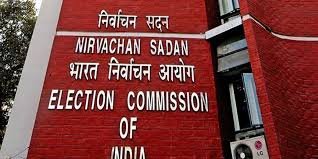
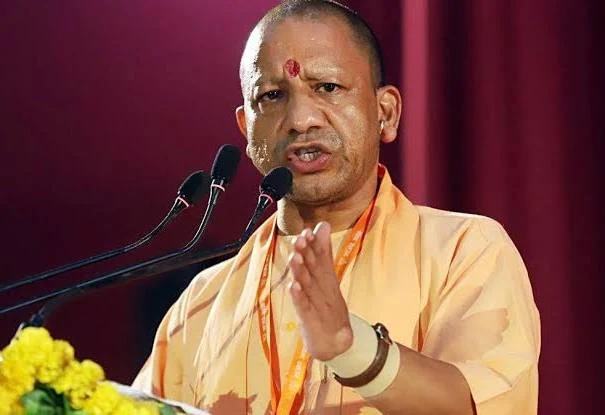
LUCKNOW, November 17: The Election Commission of India does not maintain voters’ religious or caste identities and cannot provide a religion-wise breakdown of electoral rolls, Uttar Pradesh Chief Electoral Officer Navdeep Rinwa said on Tuesday, responding to Chief Minister Yogi Adityanath’s claim that 1.27 crore Hindu voters were missing from the state’s electoral rolls.
Rinwa’s clarification raises questions about the basis of the Yogi’s community-specific figures, which have become a political flashpoint ahead of the 2027 Uttar Pradesh Assembly elections.
Speaking at a press conference following the publication of the draft electoral roll under the Special Summary Revision (SSR) 2027, Rinwa said the Election Commission’s database contains only basic particulars of electors, including their names, age, relationship details, house numbers and gender.
“We do not provide any data on religion,” he said, adding that the Commission does not maintain information on voters’ religion or caste.
The clarification means that the Commission’s official electoral database cannot provide the religion-wise figures cited by Yogi Adityanath. Any such estimates would have to come from sources or methods outside the Commission’s recorded voter data.
READ: ECI Has No Proof of Unanimous SIR Decisions, Petitioner Tells SC
How Yogi arrived at 1.27 crore figure
Yogi Adityanath had claimed earlier this month that 1.27 crore Hindu voters were missing from Uttar Pradesh’s Assembly electoral rolls following the SIR exercise.
Speaking at an Aaj Tak Panchayat event in Ayodhya, Yogi cited three categories: 66 lakh people whose names appeared in panchayat electoral rolls but were missing from Assembly rolls, 55 lakh Hindu beneficiaries of government welfare schemes and around 4.5 lakh young people in the 18-19 age group.
Yogi Aditynath also claimed that the number of Muslim voters had increased by 1.65 per cent after the revision.
The Chief Minister said the BJP had submitted a memorandum to the Election Commission seeking the inclusion of eligible voters whose names were missing.
However, the Commission’s clarification that it does not collect religion-based voter data leaves unanswered how the figures identifying the allegedly missing electors as Hindus were compiled.
Samajwadi Party president Akhilesh Yadav and other Opposition leaders have questioned the source of Adityanath’s figures and asked how he obtained a religion-wise breakdown that the Election Commission itself does not maintain.
क्या यूपी में कट गए 1 करोड़ 27 लाख हिंदू वोट? चुनाव आयोग ने दिया जवाब
#ElectionCommission #UttarPradesh #VoterList https://t.co/r6ExqTDood
— Vistaar News (@VistaarNews) November 17, 2026
Draft roll adds 18.84 lakh voters
The latest draft electoral roll, published on November 17 under the annual SSR 2027 exercise, puts Uttar Pradesh’s electorate at 13,58,68,905.
This represents a net increase of 18,84,113 voters over the final roll published on April 10, which contained 13,39,84,792 electors.
The draft roll includes 7,38,58,510 men, 6,20,06,353 women and 4,042 third-gender voters. It also lists 11,83,352 electors in the 18-19 age group.
The increase follows the contentious SIR exercise, which reduced the state’s electorate from approximately 15.44 crore before the revision to 13.39 crore in the final list published in April 2026.
Despite the latest additions, the electorate remains around 1.85 crore below its pre-SIR strength.
Rinwa said the draft roll would be open to claims and objections from November 17 to December 16. Eligible citizens can use Form 6 for inclusion, Form 7 for objections to entries and Form 8 for corrections.
The Commission will also organise special enrolment campaigns at polling stations on November 21, 22, 28 and 29, with particular attention to young voters and women.
Political controversy ahead of 2027 polls
The exchange has added a new dimension to the political debate over the SIR exercise in Uttar Pradesh.
While Opposition parties have questioned the scale and transparency of deletions, Yogi Adityanath has sought to frame the issue around the alleged exclusion of Hindu voters and the reported increase in Muslim voter numbers.
The Election Commission’s clarification does not establish whether eligible voters were wrongly excluded during the SIR. It does, however, make clear that the Commission’s own database does not provide the religious classification on which the Chief Minister’s claim rests.
The central question now is how Yogi Adityanath cited the figure of 1.27 crore to identify the allegedly missing voters as Hindus, and whether the underlying methodology can withstand independent scrutiny.