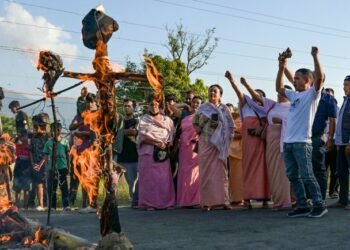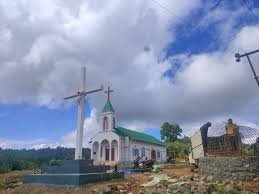
The dialogue process, anchored by church bodies from Nagaland and Manipur, is being positioned as a rare trust-building channel in a conflict environment shaped by recurring violence, misinformation, and deep mistrust between communities.
BY PC Bureau
May 8, 2026 — Amid continuing ethnic tensions in Manipur’s hill districts, a church-mediated peace initiative involving the Tangkhul Naga and Kuki-Zo communities has ignited hope that the two sides could move toward a peace agreement under a shared appeal in the name of “Jesus.”
The dialogue process, anchored by church bodies from Nagaland and Manipur, is being seen as a rare channel of trust-building in a conflict environment marked by recurring violence, misinformation, and deep-rooted mistrust.
According to sources, the Kuki Christian Leadership Forum (KCLF) is working in coordination with the Nagaland Joint Christian Forum (NJCF) and several Kuki-Zo civil society organisations. The initiative is being framed around a shared Christian identity, with a strong emphasis on reconciliation, non-violence, and community healing.
The two Churches involved in the process are working at two levels—first, engaging in internal consultations among themselves, and second, holding discussions with community leaders from their respective sides.
A senior Kuki-Zo representative associated with the process said an internal meeting is scheduled for May 9 to take the matter forward. “The Kohima meeting was a good start. It’s a complex issue and it will take time. But we hope the Church will play a role in ending this mindless bloodletting,” he said.
Church leaders from both sides have expressed deep concern over continuing violence in the region, describing it as “unacceptable” and inconsistent with Christian teachings. They have urged faith leaders to take a more active mediating role by engaging not only civil society groups but also influential community actors and, where possible, armed stakeholders, to build a durable framework for peace.
🕊️ Evangelical Nagas from Senapati undertook a prayer for peace between Kukis and Nagas in Manipur under the theme “Peace for Christ” in Kangpokpi. @HMOIndia @PMOIndia pic.twitter.com/zpg7JfOZNm
— NorthEast Insights 🍥 (@NEIndiaInsights) May 8, 2026
READ: TVK Crosses 118-Mark With Support from Cong, Left and VCK
NJCF pushes for ceasefire and dialogue
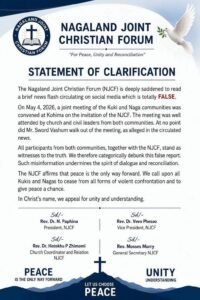
Meanwhile, the Nagaland Joint Christian Forum (NJCF) has reiterated its appeal for peace under the theme “For Peace, Unity and Reconciliation.” It has called on all communities to immediately halt violence and give dialogue a genuine chance.
The NJCF also dismissed as “totally false” a viral social media report claiming that Sword Vashum, President of the Tangkhul Naga Long (TNL)—the apex body of the Tangkhul Naga community in Ukhrul district and surrounding areas—walked out of a joint Kuki-Naga community meeting held on May 4, 2026.
In an official statement, the NJCF said the meeting was convened at Kohima on its invitation and was well attended by church and civil society leaders from both the Kuki and Naga communities. The forum categorically denied that any walkout took place.
“The NJCF is deeply saddened to read a brief news flash circulating on social media which is totally FALSE,” the statement read. “At no point did Mr. Sword Vashum walk out of the meeting, as alleged in the circulated news.”
The forum emphasised that all participants from both communities, along with the NJCF, stand as witnesses to the truth of the proceedings. It further warned that such misinformation undermines ongoing efforts toward dialogue and reconciliation.
The NJCF also urged restraint and cautioned against the spread of unverified claims, saying misinformation risks weakening fragile peace initiatives.
Earlier, the forum had proposed a two-month ceasefire window (May 5–July 5, 2026) to enable safer dialogue conditions, civilian protection, and unhindered humanitarian movement.
KCLF APPEAL
The Kuki Christian Leadership Forum (KCLF) has already released a heartfelt “Appeal for Peace” urging both Kuki-Zo and Tangkhul Naga communities to end violence and return to Christian values of love, unity, and reconciliation.
The appeal, dated May 7, 2026, acknowledges the deep concern expressed by church leaders from Nagaland and calls on all stakeholders to embrace dialogue over conflict. It comes a day after the Nagaland Joint Christian Forum (NJCF) issued its own strong statement advocating peace and unity.
Key Highlights of the KCLF Appeal
Shared Faith as Foundation: The KCLF expressed sorrow that tensions have emerged between two communities that “share the same Christian faith.” It noted that what began as “a small misunderstanding in Litan Sareikhong village” has now escalated into wider unrest affecting regional peace.
116th Anniversary of Christianity: The appeal marks May 7, 2026, as the 116th year of Christianity in Southern Manipur (1910–2026), calling it a historic milestone that should remind both sides of their shared spiritual heritage and ancestral legacy of unity.
Support for Nagaland Church Efforts: The forum expressed gratitude to church leaders from Nagaland for their reconciliation efforts. It urged the Kuki community to fully respect and comply with the NJCF appeal issued on May 4, 2026, as well as similar calls from the Naga Council Dimapur (NCD) and the Fellowship of Naga Baptist Associations (FNBA).
Not All Tangkhuls Involved: The KCLF stressed that “not all Tangkhul brothers and sisters are party to the violence,” noting that many continue to uphold Christian values of love, forgiveness, and peace.
Call for Dialogue: The statement warned that continued violence would only deepen suffering and erode trust, urging dialogue as the only viable path toward “just and mutually acceptable solutions.”
The KCLF also acknowledged the historical role of the Naga Council Dimapur as a mediator during the Kuki-Naga conflict in the 1990s and urged it to continue its peace-building efforts grounded in Christian principles.
While the church-led initiative has been widely welcomed as a neutral and morally grounded platform, significant challenges remain. These include entrenched territorial claims, mistrust amplified by social media narratives, the influence of armed groups, and the continuing spillover from broader ethnic tensions in Manipur.
Observers note that the success of the initiative will depend on whether dialogue can be translated into verifiable ground-level de-escalation and broader participation from all relevant stakeholders.
For now, however, the process remains alive—offering a fragile but meaningful opportunity for reconciliation in one of India’s most complex conflict regions.