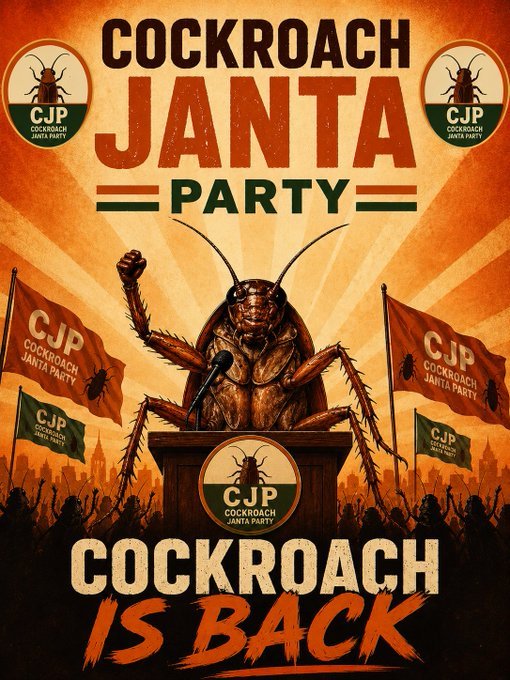
At the centre of its appeal is a mix of irreverence and grievance. For many young users, especially within Gen Z, the movement reflects a form of expressive rebellion — less about formal ideology and more about venting frustration through humour, irony, and viral participation. The framing of CJP as a “party” is itself part of the satire, yet the scale of engagement has given it a quasi-organisational presence that continues to grow in real time.
READ: Ladakh Grants Industry Status to Hotels in Tourism Push
The growth on Instagram has been nothing short of spectacular. On May 21 morning, the CJP crossed the BJP’s official Instagram following of around 8.8 million. By night, it had surged to 17 million followers. At the time of writing, it is approaching 19 million.
The speed of this rise has made it one of the fastest-growing political-adjacent digital movements seen in recent memory in India’s online ecosystem. Feeds have been flooded with reposts, reaction reels, and meme compilations, creating a self-reinforcing cycle of visibility and virality.
READ:
Cockroach 🪳 rule starts #cockroachjanathaparty #Cjp @CJP_2029 pic.twitter.com/Jqdlsg0Oyo
— 🆃🅰🅼🅸🅻 🅲🅸🅽🅴🅼🅰 🆃🅰🅻🅺🆂 (@tamilcinema_12) May 22, 2026
With this blistering pace, it would not be surprising if the Cockroach Janata Party surpasses even Prime Minister Narendra Modi’s official Instagram account — which currently sits at around 100 million followers — in the coming days, at least in terms of engagement intensity and cultural penetration, if not raw follower count.
The content ecosystem driving this surge has been distinctly meme-native: savage humour, satirical reels, layered in-jokes, and rapid-response commentary on current affairs. Hashtags like #MainBhiCockroach and #CockroachJantaParty are dominating timelines, functioning less as slogans and more as participation markers in an ongoing digital event.
Success came with scrutiny. The CJP’s official X account (@CJP_2029), which had rapidly gained over 200,000 followers, was withheld in India on May 21, 2026, following a legal demand. Users in India now see a notice stating it has been withheld in response to a legal request.
The restriction marked a turning point in the movement’s visibility, shifting it from a purely viral phenomenon into a politically sensitive digital flashpoint. While the Instagram presence continued to expand, the withholding of the X account added a layer of controversy that further amplified online discussion around the group.
उन्होंने सोचा कीड़े मकोड़े कॉकरोच कहके वे युवाओं के आक्रोश और नाराज़गी को अवांछित करार कर देंगे, नजर से गिरा देंगे, अपमानित करके बहिष्कृत कर देंगे – मगर कभी कभी जब गर्मीबहुत बढ़ जाती है, एक छोटी सी चिंगारी भी दावानल पैदा कर देती है। युवा फ्रस्ट्रेशन के चरम पर है। वह गुस्से के… pic.twitter.com/f5U2U2hGb5
— Sandeep Singh 🇮🇳 (@KaunSandeep) May 22, 2026
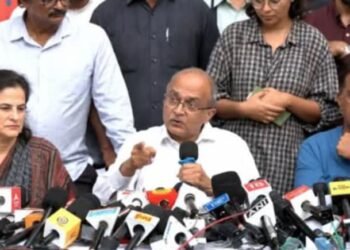
Founder Abhijeet Dipke responded to the withholding with a mix of acceptance, criticism, and defiant humour.
Shortly after the restriction, he posted:
“As expected Cockroach Janata Party’s account has been withheld in India.”
He also shared a screenshot of the platform’s notice confirming the legal demand.
In a widely circulated video statement, Dipke said (translated from Hindi):
“Hello everybody, what we feared has happened. First, they tried to hack our account. When they couldn’t, they got our Twitter handle banned in India…”
He added that the group’s demand for accountability following a student suicide case had triggered the action, calling the move an “own goal” that would only amplify attention and strengthen the movement’s visibility rather than diminish it.
Despite the setback, the movement has only expanded. Thousands of supporters have created alternate accounts and fan pages across X and Instagram, keeping the content ecosystem alive.
Rather than fragmenting the movement, the restriction appears to have decentralised it further. New handles, regional spin-offs, and meme clusters have emerged almost instantly, ensuring that the content pipeline remains uninterrupted and continuously evolving.
The Instagram page remains highly active, still growing rapidly, while meme pages and supporter accounts continue to multiply across platforms, reinforcing the movement’s “swarm-like” digital identity.
Dipke has also promoted new handles and reiterated a viral refrain that has quickly become emblematic of the movement’s ethos:
“Cockroaches don’t die — they just multiply.”
Whether CJP evolves into a structured political force or remains a viral satire phenomenon, its rapid rise reflects a deeper undercurrent of youth frustration and digital dissent in India’s online public sphere.
The attempt to suppress its online presence has, in effect, intensified its visibility and expanded its symbolic power, fuelling broader debate around censorship, satire, and the boundaries of political expression in the digital age.
The swarm, for now, shows no sign of slowing down.
Former Vice President Venkaiah Naidu commended Power Corridors as a commendable news magazine, affirming that it not only upholds Media Dharma but also fulfills its societal obligations. Power Corridors, as its name implies, delves into realpolitik—examining the essence of influential circles, unraveling the intricacies of political maneuvers, and exploring the pulse of the state’s affairs. However, it transcends mere power dynamics, encompassing a broader spectrum of issues beyond the confines of Delhi’s elite circles.
For PC, which is published by the Interactive Forum on Indian Economy, not only highlights the issues of the day but also throws up what ought to be the subjects that the country should be debating about. It reports about the plans, strategies, and agendas of politicians and others; it also sets the agenda for the nation.
© 2023 Power Corridors