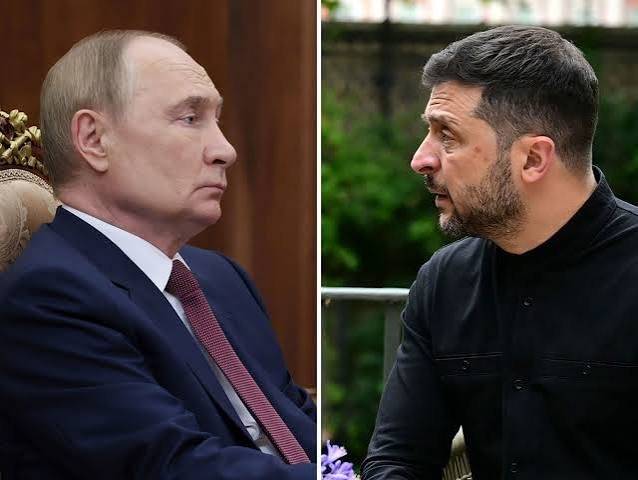
The proposed air pause would last only for the duration of the negotiations, with Zelensky calling on Russia to mirror Ukraine’s restraint. The initiative comes as Russian strikes continue to pound Ukrainian cities, including Kyiv, Odesa and Dnipro
BY PC Bureau
September 5, 2026: Ukrainian President Volodymyr Zelensky has offered Russia a narrowly defined pause in airstrikes to coincide with a fresh US diplomatic push to revive negotiations, as President Donald Trump’s envoys Steve Witkoff and Jared Kushner prepare to travel first to Moscow and then to Kyiv this weekend.
The proposal comes at a particularly volatile moment. Russia has intensified its aerial campaign against Ukraine, including a daytime drone strike on the headquarters of Ukraine’s Security Service (SBU) in central Kyiv on Friday, even as Washington seeks to reopen a diplomatic channel that has been largely stalled for months.
Zelensky said Ukraine would refrain from conducting airstrikes for the duration required for the American envoys to hold their meetings and called on Moscow to reciprocate.
“There will be no airstrikes on our part, and Russia must reciprocally ensure a ceasefire — without its own airstrikes — for the duration needed to conduct these talks,” Zelensky said in his evening address.
He said Kyiv would also ensure the safe functioning of Russian airspace to facilitate the American delegation’s travel.
“As with previous diplomatic visits by the American side, we will ensure the normal functioning of Russian airspace so that the negotiators can arrive safely. We are concerned about their safety, not about Russia,” Zelensky said.
The Ukrainian president said he wanted to see what proposals Witkoff and Kushner bring to the table and how Moscow responds.
“We’ll see what proposals Steve and Jared have and what Moscow will say to them,” he said.
READ: Self-styled `Goon’ Bhardwaj Detained Over Jantar Mantar Assault Case
Today, it has been clearly established that U.S. envoys will be in Ukraine and Russia in the coming days. We have the details from the U.S. President’s team. We discussed today that Steve Witkoff and Jared Kushner will visit Moscow and then Kyiv on Sunday. We are preparing for… pic.twitter.com/MTehI6o2uw
— Volodymyr Zelenskyy / Володимир Зеленський (@ZelenskyyUa) September 4, 2026
US envoys prepare for Moscow and Kyiv
Witkoff and Kushner are expected to travel to Moscow on Saturday and Kyiv on Sunday, according to US and Ukrainian officials. The visit would mark the first time the two Trump envoys travel to Kyiv, after previous rounds of shuttle diplomacy focused heavily on Moscow.
The precise arrangements, however, have remained fluid because of security concerns. Reuters reported that Washington has been seeking assurances from both sides, with Ukraine being asked not to strike Moscow and Russia being expected to avoid attacks on Kyiv while the envoys are in the region.
Kremlin spokesman Dmitry Peskov has declined to formally confirm the itinerary, saying Moscow would provide information about contacts with the American envoys when they take place. Russian state news agency TASS was the first to report that the two would visit Moscow and then Kyiv.
Ukrainian officials, meanwhile, have publicly confirmed that the Kyiv leg is being prepared. Zelensky said Friday that the meetings in Moscow and Kyiv had been discussed with Trump’s team.
A pause designed for diplomacy, not a ceasefire
Zelensky’s proposal is considerably narrower than a general ceasefire.
It is aimed specifically at creating a window in which the US delegation can travel and conduct negotiations without the immediate threat of Russian or Ukrainian air attacks. It does not, at least in the terms publicly outlined by Zelensky, amount to a suspension of all military operations along the front.
That distinction could prove important.
Russia and Ukraine remain deeply divided over the basic terms of any settlement. Moscow has continued to demand territorial concessions and an end to Ukraine’s aspirations for NATO membership, while Kyiv has rejected territorial surrender. Russian officials have also indicated that the territorial question remains central to any long-term agreement.
The latest diplomatic initiative therefore begins with a modest objective: establish enough calm for the two sides and Washington to discuss whether a broader settlement is possible.
Diplomacy meets a new wave of attacks
The timing of the proposal is striking.
On Friday, a Russian drone struck the headquarters of Ukraine’s SBU security service in central Kyiv, near St Sophia Cathedral. Zelensky said the drone was aimed directly at the office of the SBU chief. At least several people were injured, according to Ukrainian officials, while the attack sent thick smoke over the city centre.
Zelensky ordered the security service to deliver what he called an “appropriate, tangible response”, raising the possibility of further Ukrainian retaliation.
The strike was part of a broader intensification of Russian aerial attacks. Kyiv has faced repeated daytime and nighttime drone attacks, with Russia increasingly using fast-moving, jet-powered drones that are more difficult for Ukrainian air defences to intercept.
Overnight attacks also hit other parts of Ukraine. In Odesa, one person was killed and several others were injured, while attacks in the Dnipropetrovsk region killed two police officers who were responding to the aftermath of an earlier strike, according to Ukrainian authorities.
The escalation has raised the stakes for the American mission. The planned visit comes as both sides continue long-range attacks against targets far from the front line.
Moscow shows little sign of conceding
The biggest obstacle to the diplomatic push remains Russia’s position on the substance of a settlement.
President Vladimir Putin has recently indicated that he sees a possibility for a negotiated agreement, but Russian officials have continued to emphasise the territorial issue. After the January meeting between Putin, Witkoff and Kushner, Russian presidential aide Yury Ushakov said that a long-term settlement could not be expected without resolving the territorial question.
Western assessments also suggest that Moscow believes it can improve its position by continuing the war.
The Washington Post reported Friday that Russia has intensified its bombing campaign while attempting to exploit weaknesses in Ukraine’s air defences. The report said some Russian officials and analysts believe Moscow still sees time as an advantage and hopes continued military pressure could force Kyiv to make concessions.
That calculation makes a temporary air pause potentially useful to Moscow only if it believes the diplomatic process can produce concessions without undermining its military objectives.
Kyiv wants guarantees, not surrender
For Zelensky, the immediate priority appears to be preventing the American initiative from being undermined by renewed attacks while keeping Ukraine’s fundamental negotiating position intact.
His offer is therefore reciprocal and temporary: Ukraine will stop its airstrikes during the talks if Russia does the same.
The Ukrainian president has also signalled that he is looking for “real options” to end the war rather than another round of talks without tangible results.
That reflects the central difficulty facing the Trump administration. Previous US-mediated discussions failed to produce a comprehensive settlement, while the diplomatic track subsequently lost momentum as Washington turned much of its attention towards the conflict with Iran.
Witkoff and Kushner are now being sent back into the middle of a conflict that has become more violent even as both sides publicly discuss peace.
A test for Trump’s mediation
The weekend mission will therefore be an important test of whether the Trump administration can narrow the gap between Moscow and Kyiv.
For Washington, even a short reciprocal halt in air attacks would provide an immediate measure of whether Russia and Ukraine are willing to make limited confidence-building concessions.
For Kyiv, the challenge is to demonstrate flexibility without accepting terms that could compromise its territorial or security interests.
For Moscow, the question is whether Putin sees greater value in renewed negotiations than in continuing to seek gains on the battlefield.
The immediate objective is modest: keep the skies quiet long enough for the American envoys to travel and talk.
Whether that limited pause can become the first step towards a wider ceasefire remains uncertain. But with Russia intensifying its attacks and Ukraine preparing to host the first Kyiv visit by Trump’s two principal envoys, the coming days could determine whether the latest diplomatic effort becomes a genuine opening — or another brief pause before the fighting resumes.