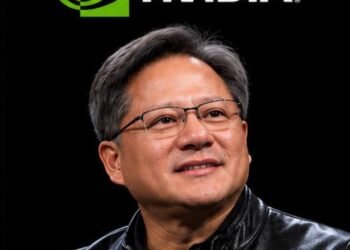



A former television reporter who rose to become a senior executive at a Singapore-based data centre company, Alice Huang has come under the scrutiny of US intelligence agencies over alleged links to China’s Ministry of State Security. Her reported association with Nvidia CEO Jensen Huang has now triggered a major corporate investigation.
BY PC Bureau
November 9: Alice Huang, also known as Huang Le, has emerged as a central figure in an alleged Chinese intelligence operation involving one of the world’s most powerful technology companies. US intelligence agencies reportedly suspect that she was recruited by Beijing to cultivate a relationship with Nvidia founder and CEO Jensen Huang, gather information about the chipmaker and potentially influence its business decisions concerning advanced artificial intelligence (AI) processors.
The allegations, first detailed in a report by The New York Times on October 29, have raised questions about China’s efforts to gain access to advanced semiconductor technology and the vulnerability of major technology companies to foreign intelligence operations.
Nvidia’s board has since ordered an independent investigation into reports that its 63-year-old chief executive was the target of a foreign intelligence effort. Jensen Huang has separately admitted to being unfaithful to his wife and apologised to his family and employees. However, Nvidia has said it has no reason to believe that its trade secrets or US national security interests were compromised.
Alice Huang, who is not related to the Nvidia chief, has not publicly responded to the allegations.
‼️HUGE: Watch the woman in pink VERY CLOSELY!
US intelligence has just revealed she is a Chinese spy who successfully HONEYPOTTED the CEO of Nvidia.
He just admitted to the affair!
Every. Single Time with these tech guys!
-Her name is Alice Huang (Huang Le): Chinese businesswoman, ex-top exec at Singapore firm Megaspeed (major NVIDIA customer).
-U.S. intel concluded she was an MSS spy recruited to gather AI-chip intel on NVIDIA/Jensen Huang and push for looser export rules.
-Megaspeed probed for possibly diverting restricted NVIDIA chips to China; bought billions in hardware.
-Developed close romantic photographed together in Taipei.
Today – Huang admitted affair, apologized to wife/kids/staff; NVIDIA board launched independent investigation.
Trump briefed earlier but took no action; China calls claims groundless.
— Tablesalt 🇨🇦🇺🇸 (@Tablesalt13) November 9, 2026
From television journalism to the technology industry
Alice Huang’s career reportedly began in television journalism in China, before she moved into the technology and business sector.
She eventually rose to a senior executive position at Singapore-based Megaspeed, a company specialising in data centre infrastructure and computing services. Its business involves providing computing capacity to technology companies, including major Chinese firms seeking resources for AI development.
Her position at Megaspeed gave her access to an extensive network of executives, investors and business leaders in the global semiconductor and artificial intelligence industries.
According to The New York Times, she attended technology conferences, private business dinners and industry gatherings, where she developed professional relationships with senior figures in the AI sector.
Megaspeed also became a significant Nvidia customer. The company reportedly purchased more than $4.8 billion worth of Nvidia processors over a two-year period beginning around 2024, making it one of the chipmaker’s largest customers in Southeast Asia.
Alleged recruitment by China’s intelligence agency
The most serious allegations concern her reported links to China’s Ministry of State Security (MSS), the country’s principal civilian intelligence agency.
According to The New York Times, US intelligence agencies monitored Huang’s communications for at least a year before concluding that she was working for Chinese intelligence.
A classified intelligence assessment reportedly circulated among senior officials in the Trump administration identified her as an intelligence asset recruited to collect information about Jensen Huang.
The assessment allegedly suggested that Beijing wanted to understand Nvidia’s internal operations, obtain information about its chief executive and potentially influence the company’s approach to supplying advanced AI chips to China.
Electronic surveillance reportedly identified Jensen Huang as one of her contacts.
The precise nature of their relationship and the information, if any, that may have been exchanged remain matters requiring independent verification. The allegations do not, by themselves, establish that Nvidia’s confidential information was compromised.
Megaspeed’s business model under scrutiny
The controversy has also drawn attention to Megaspeed’s business dealings and its links with Chinese technology companies.
The company reportedly established data centres across Southeast Asia and rented computing capacity to Chinese businesses, including Alibaba.
Such an arrangement could potentially allow Chinese companies to access computing power generated by advanced Nvidia processors without purchasing the chips directly. This has particular significance because Washington has imposed restrictions on China’s access to some of the most powerful American-made AI chips.
US authorities have reportedly examined whether Megaspeed helped Chinese companies circumvent export controls.
The New York Times also reported that businesses and investors connected to Huang had links to companies in Shanghai and Zhejiang, as well as financial connections to China’s military technology establishment.
These allegations have placed Megaspeed’s operations under increased scrutiny, particularly over whether its data centre infrastructure could have been used to facilitate access to restricted computing technology.
READ: Affair, Espionage Concerns Put Nvidia CEO Jensen Huang Under Spotlight
What do Megaspeed and Nvidia say?
Alice Huang has not publicly addressed the allegations or responded to multiple requests for comment, according to the newspaper.
Megaspeed’s current leadership has said it takes the claims seriously and has appointed external legal advisers to conduct an internal investigation.
Nvidia, meanwhile, has defended Jensen Huang’s interactions with the businesswoman, describing them as routine business engagements.
The company’s position is that its chief executive regularly meets thousands of customer executives around the world and that such interactions do not involve the disclosure of sensitive trade secrets.
Jensen Huang has also maintained that his dealings with Megaspeed and its executives were normal. He has said that he was not informed by the US government about its suspicions concerning Alice Huang.
Following the media reports, Nvidia’s board announced an independent investigation overseen by a committee of independent directors and assisted by external legal counsel. The board said it had no reason to believe that national security or company secrets had been compromised.
A larger question about the AI technology race
The controversy comes at a time when access to advanced semiconductors has become a major strategic issue in the US-China rivalry.
Nvidia’s processors are central to the development and training of sophisticated AI systems. Washington has sought to restrict China’s access to the most advanced versions of these chips, arguing that they could strengthen Beijing’s military and technological capabilities.
For China, gaining access to high-performance computing infrastructure remains a priority. Data centres located outside the mainland could potentially offer an alternative route to computing resources, although the legality of individual arrangements depends on the applicable export-control rules and the entities involved.
The allegations surrounding Alice Huang therefore extend beyond her reported personal association with Nvidia’s chief executive. They raise questions about corporate security, intelligence gathering, export-control enforcement and the growing geopolitical stakes surrounding artificial intelligence.
Whether the alleged operation resulted in any transfer of sensitive information or influenced Nvidia’s commercial decisions is now a key question for the company’s independent investigation.