Experts stress the need for a uniform, transparent response to protests to rebuild trust and prevent further escalation of ethnic tensions.
By Navin Upadhyay
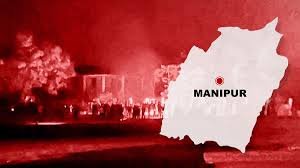
April 24, 2026: Manipur, a state long marked by ethnic tensions, is witnessing growing scrutiny over what many observers describe as uneven responses by authorities to protests led by different communities.
Amid ongoing protests and shutdowns called by Meitei civil society organisations and the United Naga Council, large parts of Manipur have experienced prolonged disruption, affecting transport, markets, and essential services. Despite the scale and duration of these agitations, critics argue that the state government’s response has remained limited, with few visible measures to fully restore normalcy.
The Police have imposed curfews and restrictions in certain areas, but made little effort to ease blockades or shutdown , raising concerns about the administration’s capacity and consistency in maintaining law and order across the state.
In the past as well, agitations involving Naga and Meitei groups saw limited intervention, while protests by Kuki-Zo organisations frequently faced swift and forceful action.
In several instances involving Kuki-Zo groups, including the Committee on Tribal Unity (CoTU), the authorities forced the withdrawal of protests or shutdowns through pressure or direct police action.
A glaring example of alleged police high-handedness in the case of a Kuki-Zo protest occurred on December 31, 2024, in Saibol village near Saikul in Kangpokpi district, when security forces resorted to a lathi charge and tear gas against women protesters. One Kuki-Zo woman, Lhingkhonei Neishi Mate (around 44 years old), suffered severe injuries to her left eye and was left virtually blind. She had to be shifted to a hospital in Guwahati for specialised treatment. Multiple other women were also injured in the clash.
A similar incident was reported on March 8, 2025, in Kangpokpi district, where police action during a protest led to the death of one person. The use of force in that case drew criticism from local groups and civil society organisations, who described it as disproportionate.
Similarly, security forces have, in some cases, acted on suspicion alone. Four activists linked to the United Kuki National Army (UKNA) were killed in Khanpi village in Churachandpur district on November 25, 2025, even though they had no prior criminal cases. All four were reportedly under the age of 19.
In contrast, Korounganba Khuman, the commander-in-chief of Arambai Tenggol, a Meitei armed group, and his associates, facing serious NIA charges for assault on security forces, weapon loot, and arms-related offences, roam free.
In recent weeks, several Kuki-Zo youths have also been detained on suspicion in connection with the Bishnupur mortar attacks, though no evidence has been disclosed in the public domain regarding their alleged involvement. Source-based media reports have suggested that the initial probe indicates the attacks may have been carried out by “actors” operating within a relatively short range, raising questions about the origin of the projectiles.
Bishnupur is a Meitei-majority district, and security deployment in and around the area remains significant. Observers have pointed to the challenges such conditions would pose for any external Kuki-Zo armed group attempting to infiltrate, carry out attacks, and withdraw undetected.
While Kuki-Zo suspects have been picked up in several cases, critics point to inaction in cases involving other groups. For instance, no one has been arrested in connection with the killing of two Kuki civilians in Ukhrul district on April 13, 2026. No crackdown has been reported either.
SP Unveils Ugly Face of Imphal Protests: Drugs, Alcohol and Petrol Bombs https://t.co/5F37TmW4QB #MeiraPaibi #PetrolBombs#ManipurProtests #NortheastIndia @Imphal #Manipur #ImphalWestSP
— POWER CORRIDORS (@power_corridors) April 19, 2026
READ: Trump Caught Sleeping During Oval Office Health Care Event
READ: Curfew Breach: 12 Ordered to Clean War Memorial in Manipur
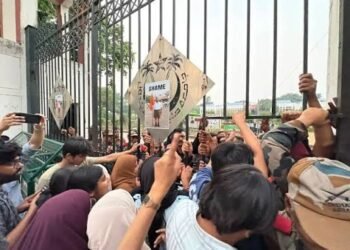
The same approach is visible in the handling of the ongoing spate of protests in the Imphal Valley and Naga-dominated hills. These protests, especially in Imphal, have seen demonstrators clashing with security forces and targeting them with petrol bombs and catapults.
On April 19, Imphal West SP himselg alleged that some protesters in recent Meira rallies were under the influence of drugs and alcohol and attacked security forces with petrol bombs and iron projectiles. Needless to say that, there has been no reciprocal crackdown against such serious incidents of crime.
There is nothing new about this. In June 2025, violent unrest following the arrest of a leader associated with the Meitei group Arambai Tenggol led to attacks on police personnel, damage to property, and road blockades for four days. The police responded with curfews but struggled to enforce them effectively.
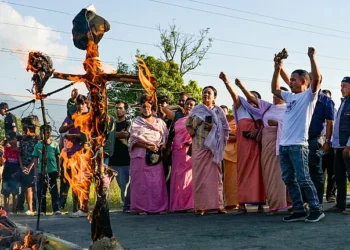
A similar pattern is observed in Naga-majority areas, where shutdowns called by groups such as the United Naga Council have paralysed life across districts like Ukhrul and Senapati. At the same time, the Foothills Naga Coordination Committee (FNCC) has declared a total bandh starting April 23. The group said the bandh would restrict movement and economic activities in the affected areas until further notice.
Some analysts also note that sections of Kuki-Zo leadership have opted for “compromise” in dealing with the government, which may have influenced the overall dynamics on the ground. However, opinions remain divided on whether this has contributed to differing enforcement approaches.
Overall, the perceived disparity in responses — stricter enforcement in some cases and restraint in others — has raised broader concerns about consistency in maintaining law and order. Observers warn that uneven application of authority risks deepening mistrust among communities already affected by prolonged conflict.
Experts emphasise that ensuring a uniform, transparent, and law-based response to all forms of protest, regardless of community identity, will be critical to rebuilding trust and advancing long-term peace in Manipur.