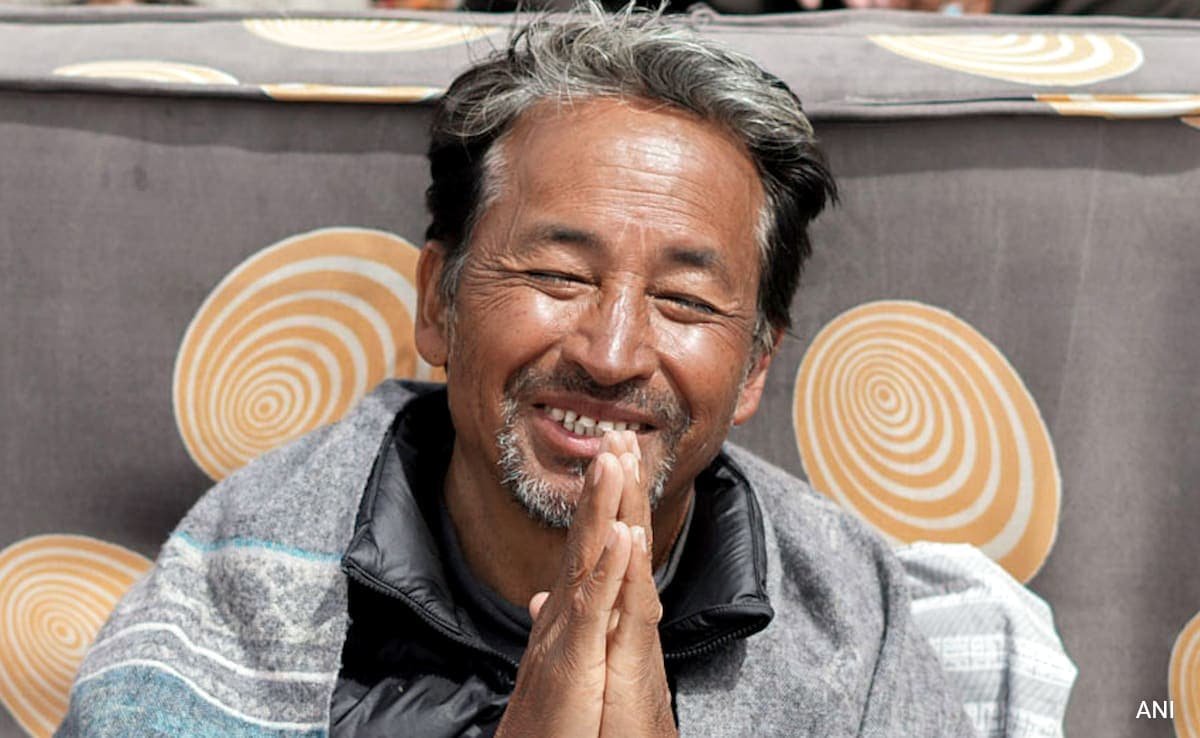
May 25, 2026: Two months after walking out of jail, climate activist and Ladakh reform advocate Sonam Wangchuk says he is still fighting to recover something deeply tied to modern life — his mobile phone.
Speaking in New Delhi after Thursday’s meeting with a sub-committee of the Ministry of Home Affairs, Wangchuk described the latest engagement between Ladakhi representatives and the Centre as “encouraging,” though he warned that genuine confidence-building in the region remains fragile and incomplete.
According to Wangchuk, authorities confiscated his phone at the time of his detention and have yet to return it, despite more than two months having passed since his release.
“My phone was seized when I was arrested, and even now it has not been handed back,” he said, adding that the loss has effectively cut him off from everyday digital life.
He said the absence of the device has created constant practical difficulties. “I cannot book a cab, reserve a flight ticket, or access many essential services. In today’s Digital India, I have practically become digitally disabled,” he remarked.
Wangchuk added that he has deliberately avoided purchasing a replacement device or rebuilding his online accounts, saying he considers the continued withholding of his phone and digital access a matter of principle. “It feels as though only half of me was released, while the rest — my data, communication, and digital identity — remains locked away,” he said.
READ: Bengal Opens First Migrant Holding Centre In Malda
Despite his frustration, the activist acknowledged that the latest round of talks had somewhat eased tensions. He admitted he had become increasingly disillusioned in recent weeks due to what he saw as a widening climate of mistrust across Ladakh.
Referring to the Centre’s earlier assurances after his release, Wangchuk said the government had promised to foster “trust” and ensure “constructive dialogue,” but he felt little progress was visible on the ground afterward.
Instead, he claimed, divisions had begun deepening within communities. “There was growing friction everywhere — between Leh and Kargil, among Buddhists themselves, and among Muslims too. We felt the atmosphere was becoming more confrontational rather than conciliatory,” he said.
Wangchuk described the period leading up to the latest meeting as especially worrying, saying he feared Ladakh was drifting toward prolonged social unrest. “The situation last week felt extremely negative. There was tension from every direction, and I genuinely worried Ladakh could slide into a conflict situation similar to Manipur,” he said.
While he welcomed the renewed dialogue process, Wangchuk stressed that optimism would ultimately depend on whether the government follows up with tangible action.
He also raised concerns regarding the Himalayan Institute of Alternatives, Ladakh (HIAL), the educational initiative he founded. According to Wangchuk, the institute continues to face administrative hurdles despite repeated scrutiny revealing no financial irregularities.
He alleged that HIAL’s land lease had been cancelled even though all paperwork was reportedly in order, while its Foreign Contribution Regulation Act (FCRA) licence has yet to be reinstated. Wangchuk maintained that audits and examinations of the institution’s accounts had found no evidence of wrongdoing.