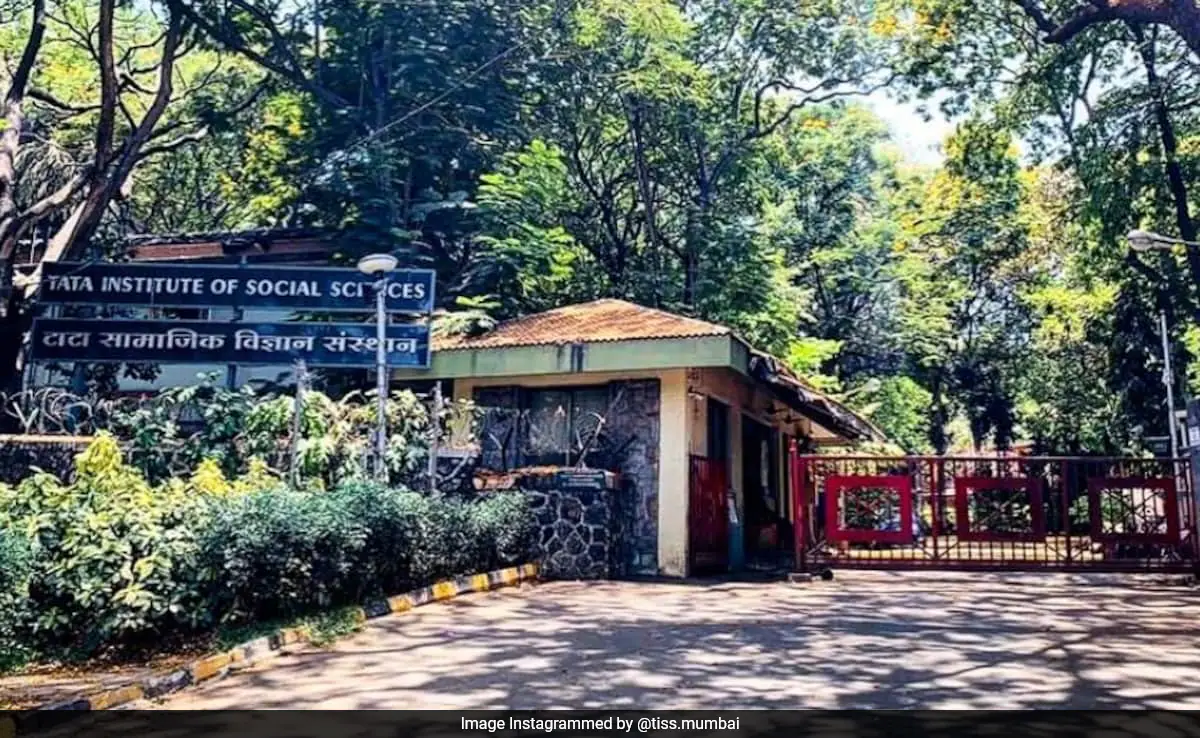
The Mumbai institute, which had scheduled its convocation for August 2 with CJI Surya Kant as chief guest, will now hold the event on August 22 with Tata Memorial Hospital Director Dr CS Pramesh.
BY PC Bureau
August 18, 2026: The Tata Institute of Social Sciences (TISS) has pushed back its 86th convocation and changed its chief guest following concerns over possible student protests and security arrangements at the event.
The convocation, originally scheduled for August 2, was to have Chief Justice of India Surya Kant as the chief guest. The institute postponed the ceremony just two days before the scheduled event without initially providing a public explanation.
The event has now been rescheduled for August 22, with Dr CS Pramesh, Director of Tata Memorial Hospital, named as the new chief guest.
Sources said the institute was concerned about the possibility of demonstrations by students opposed to the CJI’s participation. Institute officials and student representatives subsequently indicated that security concerns and intelligence inputs about potential protests involving the dignitaries contributed to the decision to defer the ceremony.
The development comes amid growing debate on campuses over the role of senior constitutional functionaries at university events and the right of students to express dissent.
CJI’s participation had drawn campus attention
The proposed appearance of CJI Surya Kant had reportedly become a subject of discussion among sections of the TISS student community before the original ceremony was postponed.
The episode also comes against the backdrop of protests at the National Academy of Legal Studies and Research (NALSAR) in Hyderabad, where around 450 students had objected to the Chief Justice being invited as chief guest at their convocation.
The NALSAR controversy subsequently escalated after the Bar Council of India issued an order that threatened to prevent members of the 2026 graduating batch from enrolling as advocates.
The Chief Justice criticised the Bar Council’s intervention while hearing the matter in court, questioning its authority to act against students over their protest.
“It is between me and the students. What role does the Bar Council have in this matter? Students have a right to protest,” he said last week.
The episode ended with Bar Council of India Chairman Manan Kumar Mishra withdrawing the controversial directive. Mishra described the decision as “hasty” and apologised to the students.
READ: AK-47 Firing in Siwan: Video Evidence Punctures Bihar’s ‘Trapped Constable’ Defence
Security versus dissent
The TISS decision highlights a recurring dilemma confronting educational institutions: how to protect the security of invited dignitaries while preserving space for legitimate student dissent.
Universities routinely host public figures, judges, ministers and other constitutional authorities at convocations. Such events are also among the most visible occasions on which graduating students and university administrations interact with public institutions.
A planned protest does not, by itself, establish that an event cannot be held. But security agencies and university administrations can assess whether credible intelligence indicates a risk of disruption, confrontation or violence.
In the TISS case, the precise nature of the intelligence inputs and the security assessment that led to the postponement have not been publicly disclosed.
That leaves an important distinction: whether the institute merely anticipated dissent or had credible information indicating a genuine security threat.
No public explanation at the time
The timing of the postponement had also attracted attention.
The original ceremony was due to take place on August 2, but the institute announced the decision to defer it only two days earlier. At the time, no detailed public explanation was offered.
The revised date and change of chief guest have now provided some context, although TISS has not publicly disclosed the specific security inputs that prompted the decision.
The institute’s choice of Dr CS Pramesh as the new chief guest also changes the nature of the event. Unlike the CJI, Pramesh is a senior medical professional and cancer specialist, and his participation is less likely to generate the same political or institutional controversy.
A wider campus debate
The TISS episode follows the NALSAR controversy and comes at a time when student protests over institutional decisions, government policies and prominent invitees are attracting greater public attention.
The two incidents are not identical. At NALSAR, the controversy centred on students objecting to the CJI’s invitation and the subsequent intervention by the Bar Council. At TISS, the reported concern is primarily about security and the possibility of protests disrupting a convocation.
But both episodes raise the same broader question: how should universities balance the authority of their invited dignitaries with students’ constitutional and institutional space to disagree with them?
For TISS, the immediate answer has been to postpone the ceremony and change the chief guest.
The 86th convocation will now take place on August 22, with Dr CS Pramesh scheduled to preside as chief guest, after the institute’s original plan to host the CJI was abandoned amid reported security concerns.