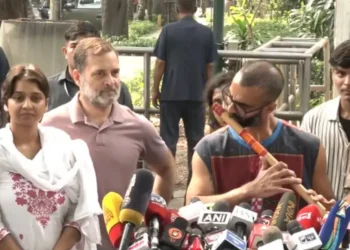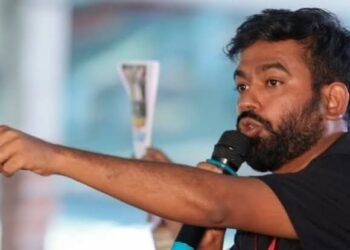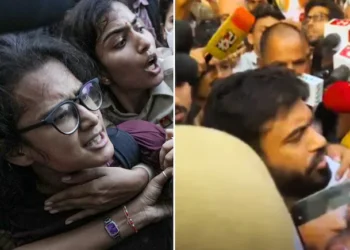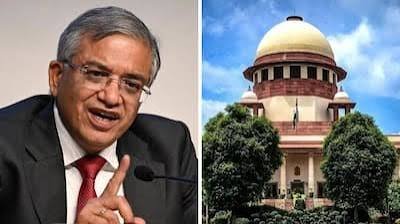
Noted advocate Prashant Bhushan called May 27, 2026 “a dark day for the judiciary” and described the SC judgment as the “final nail in the coffin” of concerns surrounding the SIR process. Former election chief S.Y. Quraishi has questioned the Supreme Court’s lenient approach to SIR, saying it enabled continuation of what he described as an exercise that had deleted millions of names.
BY Navin Upadhyay
September 27: The Supreme Court’s handling of the Election Commission’s Special Intensive Revision (SIR) of electoral rolls is itself coming under growing scrutiny, with critics accusing the Court of failing to adequately confront the consequences of wrongful voter deletions while allowing a nationwide exercise affecting millions of electors to proceed.
The criticism has become particularly sharp because complaints before the Court were not confined to technical disputes over electoral databases. They included allegations of living voters being declared dead, genuine electors being struck off the rolls, large-scale exclusions of voters from particular communities, and extraordinary concentrations of deletions in specific constituencies.
Critics say the Court ultimately focused on whether the Election Commission had the legal authority to conduct SIR, but did not subject the manner in which that power was exercised to equally searching scrutiny.
The question they are raising is more fundamental: what happens to a citizen whose name is wrongly deleted if the error is discovered only after an election has taken place?
‘The Court has authorised disenfranchisement’: CJP and petitioners attack SC
The Cockroach Janta Party (CJP) has been particularly scathing in its criticism of both the Election Commission and the Supreme Court.
CJP national spokesperson Saurav Das has accused the Supreme Court of failing to intervene despite what the organisation describes as mounting evidence of wrongful exclusions. The party has demanded that the Court take custody of all SIR-related files and decision-making records, freeze the exercise and restore electoral rolls to their January 2025 position. It has also called for an independent investigation into the ECI’s decision-making.
Das has argued that the issue cannot be treated as an ordinary administrative dispute because the consequence of an erroneous deletion is the loss of the right to vote.
In a September 23 statement on the broader ECI controversy, Das said: “Nothing is going to work because the Election Commission of India is compromised.” He argued that campaigns on unemployment, education or infrastructure would ultimately achieve little if citizens were unable to use elections to change the system.
CJP has also attacked the Court’s response to the SIR litigation, demanding that the judiciary examine the underlying records rather than merely accept the ECI’s explanation of the process.
The criticism comes amid reports that Election Commissioners Sukhbir Singh Sandhu and Vivek Joshi had repeatedly raised objections over decisions concerning electoral rolls and related procedures. The ECI has rejected the suggestion that these differences invalidate the SIR process and has maintained that the relevant orders were unanimously approved.
Social activisit Yogendra Yadav, one of the principal petitioners challenging SIR, has been even more direct in his criticism of the Supreme Court’s May 27 judgment.
“The case was effectively decided when the apex court allowed the ECI to rush through the Bihar elections without first deciding the matter,” Yadav said after the verdict. He argued that the Court had failed to require the ECI to correct “even the most glaring defects” in the post-SIR rolls.
“Shorn of legalese, the simple truth is that the highest court of a constitutional democracy has already authorised the disenfranchisement of millions of citizens,” Yadav said, estimating that the number could eventually reach 100 million.
A FORCEFUL VOICE OF DISSENT ON INSTITUTIONAL INDEPENDENCE
In this video, Saurav Das of CJP delivers a sharp critique of the Supreme Court’s role in the SIR process in West Bengal. He argues that the Court’s interventions gave the process legal protection and questions whether… pic.twitter.com/bqZnTcBgNc
— Ashok Dadhwal (@ashokdadhwal196) September 25, 2026
READ: Gyanesh Kumar Asked Me to Fight LS Poll on BJP Ticket: Ex-Keala CS
He accused the Court of giving the Election Commission a “carte blanche” over electoral rolls.
Yadav went further in his post on the judgment, writing that the SIR ruling represented, in his view, an abdication of the Court’s constitutional role. He compared the case with the Emergency-era ADM Jabalpur judgment, writing that the SIR judgment could come to be seen as the equivalent of that ruling in the present period.
Prashant Bhushan, another senior lawyer involved in the SIR litigation, also attacked the timing of the judgment. He argued that the Court’s decision came “many months after the elections in several states” had already been conducted on the basis of what he described as a “totally partisan ECI” and a “non-transparent process”.
Bhushan called May 27, 2026 “a dark day for the judiciary” and described the judgment as the “final nail in the coffin” of concerns surrounding the SIR process. These are Bhushan’s characterisations of the judgment and ECI, not findings of the Court.
Former CEC: ‘The ground reality almost entirely wrong’
The criticism has also come from outside the ranks of political campaigners.
Former Chief Election Commissioner S.Y. Quraishi, who has repeatedly criticised the way SIR was implemented, drew a distinction between the Court’s legal conclusion and what he described as the reality on the ground.
Writing after the May 27 judgment, Quraishi said the Court had “got the law right — and the ground reality almost entirely wrong.”
He argued that the judgment treated the exercise as a legitimate electoral-roll revision while failing to adequately address what he considered the disproportionate burden imposed on ordinary voters. Quraishi wrote that the Court’s approach “mistakes a demolition for a renovation.”
His criticism has become even sharper following the latest revelations concerning disagreements within the Election Commission.
In a September 23 article, Quraishi wrote that he had criticised SIR for more than a year because of its “de novo character, its documentary burdens, its treatment of EPIC, its emphasis on deletion, and the shocking numbers left out of draft rolls.” He added that, in light of the latest disclosures, he wondered whether he had been “critical enough” of the exercise.
In a September 21 interview, Quraishi said of the consequences of the SIR process: “They have put the country into chaos, and somebody should be answerable for it.” He argued that eligible citizens should not be disenfranchised because of procedural requirements and urged the ECI to give the Supreme Court a categorical assurance that eligible citizens would not be excluded.
The Bagchi remark that has become a symbol of the criticism
Against this backdrop, a remark made by Justice Joymalya Bagchi during the Court’s West Bengal proceedings on August 25, 2026 has become particularly contentious.
The Bench headed by Chief Justice Surya Kant was examining the enormous backlog of appeals against exclusion from the West Bengal rolls. The Court was told that approximately 38.1 lakh appeals had been filed before the tribunals, but only around 83,000 had been decided by August 7.
Of those decided, 75,443 voters had been restored to the electoral rolls.
Senior advocate Gopal Sankaranarayanan told the Court that the figures made “absolutely appalling reading” and argued that the tribunals should prioritise voters who had been excluded, particularly because municipal and panchayat elections were approaching.
He pointed out that more than 90% of the appeals already decided had resulted in restoration.
“Let them also not lose out on this opportunity that they will have to vote in the next election,” he told the Bench.
Justice Bagchi then asked the Election Commission to provide a complete break-up of appeals seeking inclusion and those seeking exclusion.
The exchange became significant because the Court was being confronted with the practical consequences of the SIR process: voters had already been excluded, many had appealed, and thousands of those appeals had resulted in their names being restored.
Justice Bagchi himself acknowledged the significance of exclusion, saying the Court needed to examine how deletion appeals were being dealt with because exclusion was “denuding a voting right.”
For critics, however, the larger issue was why a citizen who had been wrongly removed should have to wait for an appeal and potentially miss an election in the first place.
The question is stark: can the loss of a vote in one election really be remedied by allowing the citizen to vote in the next?
Bengal: more than 90% of decided appeals restored names
The West Bengal data gives the question particular force.
The RTI data placed before the Supreme Court showed that of about 83,000 appeals decided by the tribunals, 75,443 had resulted in restoration of names. That works out to roughly 91%.
The figure must not be exaggerated: it does not mean that 91% of all voters deleted in West Bengal were found to be genuine. It applies only to the relatively small proportion of appeals decided at that point.
But it does establish that a very large majority of those who had successfully challenged their exclusion were eventually found eligible.
And those voters had already been forced to go through the process of proving that they belonged on the rolls.
That is precisely the concern critics say the Supreme Court failed to address at the outset: whether the burden should fall on a citizen to prove his right to remain on the electoral roll, or on the election machinery to establish sufficient grounds before removing him.
Living voters declared dead
Among the complaints that have repeatedly surfaced during SIR are cases in which living people were classified as dead.
Such an error has consequences beyond a defective database entry. Once a voter is classified as dead, the name can disappear from the electoral roll, leaving the individual to seek restoration.
Critics say the Court should have treated such cases as potential evidence of systemic weaknesses in the verification process rather than merely as individual grievances capable of being corrected later.
The issue becomes even more serious when the same process is being applied to millions of electors simultaneously.
Maharashtra and the concentration of deletions
Maharashtra presents another example cited by critics.
Around 2.07 crore voters were excluded from the draft roll, though the ECI has stressed that exclusion at the draft stage is not equivalent to final deletion.
What has attracted attention is the extraordinary geographical concentration.
An Indian Express analysis found that more than 80% of voters were left out in 59 constituencies and more than 75% in 82 constituencies.
Critics have questioned whether such concentration can be fully explained by ordinary factors such as migration, death, duplication and non-traceability.
The figures do not by themselves prove political manipulation or unlawful discrimination. But they raise a legitimate factual question: why were exclusions so heavily concentrated in particular constituencies, and did the Court demand sufficient evidence from the ECI to explain the pattern?
The Muslim question
The controversy has also included allegations that Muslims were disproportionately affected by SIR.
That claim requires rigorous constituency-level demographic analysis and cannot be established simply by comparing aggregate deletion figures with the Muslim population.
But critics argue that the Court should have demanded precisely such granular data before allowing an exercise of this scale to continue.
The broader concern is whether a supposedly neutral verification system can have sharply unequal effects on different communities — and, if it does, whether those effects are adequately explained by objective criteria.
What the Court decided
The Supreme Court ultimately upheld the ECI’s authority to conduct SIR under Article 324 of the Constitution and Section 21(3) of the Representation of the People Act, 1950.
The Court held that intensive revision was compatible with the Registration of Electors Rules, 1960 and recognised the ECI’s responsibility to maintain accurate electoral rolls.
It also drew an important boundary around citizenship: the ECI cannot itself finally determine whether a person is an Indian citizen. Citizenship-related cases must be referred to the competent authority.
But critics say that the judgment answered the question of power without adequately answering the question of protection.
The ECI may have the authority to revise electoral rolls. The question is whether the safeguards were strong enough to ensure that genuine voters were not wrongly excluded before an election.
That distinction lies at the centre of the continuing controversy.
As Yadav put it after the judgment, the Court had given the ECI a “carte blanche” over the voters’ list. Quraishi, from the perspective of a former constitutional election official, said the Court had got the law right but the “ground reality almost entirely wrong.” And CJP has demanded that the judiciary go back to the records, freeze SIR and independently examine how decisions affecting millions of voters were made.
The debate over SIR has therefore moved beyond the narrow question of whether the ECI can conduct an intensive revision.
It is now about whether the Supreme Court, as the final constitutional check on the exercise, acted with sufficient urgency when the evidence before it suggested that genuine voters could be removed from the rolls and left to fight their way back — potentially after the election in which their vote mattered.