By Navin Upadhyay
June 24, 2026: It has been more than five weeks since three Baptist pastors were brutally killed in Kangpokpi district, an incident that triggered a dangerous chain of retaliatory events. The violence has since spiralled, with multiple abductions carried out by both Naga militant groups and Kuki-Zo militants. The tragedy also ignited a wave of targeted killings and the burning of homes—particularly those belonging to Kuki-Zo villagers—further deepening the ethnic divide in the hills of Manipur.
The response of the state government and security forces, however, has defied logic and fairness. While the abduction of 28 Kuki-Zo villagers has not prompted any formal state-level inquiry, the National Investigation Agency (NIA) was promptly tasked with investigating the disappearance of Naga villagers and the killing of church leaders. This selective approach has reinforced perceptions of bias.
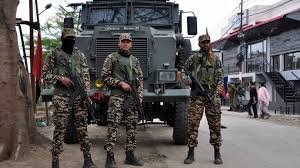
Security forces have launched extensive crackdowns, including search-and-seizure operations, across numerous Kuki-Zo villages. In stark contrast, no comparable operations have been conducted in Naga-dominated areas such as Ukhrul and Kamjong. Since May 13, numerous Kuki-Zo youths have been arrested, yet not a single arrest has been made in connection with the killings of church leaders from the Kuki-Zo community. This glaring disparity has raised serious questions about the even-handedness of the security apparatus.
The reluctance of the security forces and the state machinery to act against the Naga groups in Senapati district that abducted Kuki-Zo villagers and held them in detention for more than four weeks is baffling. Everyone knows who the abductors were. Senior police and administrative officials even held talks with them to secure the release of the hostages, yet no action has been taken against those responsible.
Instead, they appear to have been granted complete impunity. In fact, it increasingly seems that Naga militant groups have been given a free hand by the Manipur government to act as they please. The central message being conveyed is that no matter what actions they take, they will not be held accountable. Such perceptions only deepen public mistrust and raise serious questions about the state’s commitment to impartial law enforcement and equal justice.
It is an open secret that, ever since the ethnic clashes, rapes, and murders erupted across Manipur on May 3, 2023, village youth—often referred to as Village Volunteers (VVs)—have taken up upon themselkves to guard their communities. While this may not be strictly legal under Indian law, these volunteer groups have played a critical role in maintaining a fragile balance of power in the hill districts. They have largely prevented major flare-ups and large-scale massacres. However, the selective targeting of Kuki-Zo Village Volunteers by security forces risks dismantling this delicate equilibrium. It could create an open field for Naga militants to operate with reduced resistance, potentially escalating the conflict to even more dangerous levels.
🔴🔵 Kangpokpi Video Sparks Fresh Questions Over Security Force Conduct
A video from Kangpokpi appears to show security personnel assaulting Kuki civilians,prompting renewed scrutiny of security operations in Manipur and raising concerns over the gov’s security failure. pic.twitter.com/gjphw8jqj0
— Radhika (@Radhika_Shar_ma) June 24, 2026
Compounding these concerns is the controversial stance taken by the state’s Home Minister, Govindas Konthoujam, who has publicly advocated leniency toward members of Arambai Tenggol, a powerful armed Meitei organisation active primarily in the Imphal Valley. Speaking to reporters, the minister stated:
“We cannot forget the sacrifices our Arambai Tenggol sons made for our community. The government has discussed with the DGP and the Union Home Ministry to see to what extent their crimes and offences can be pardoned. We will ensure that the NIA, CBI and state police do not arrest any cadres of Arambai Tenggol in the future.”
He further acknowledged that looted weapons remain in circulation in the valley and urged those possessing them to surrender voluntarily to avoid legal consequences.
These remarks came shortly after the NIA arrested three Arambai Tenggol members, sparking protests in parts of the Imphal Valley and reigniting debate over the group’s role in Manipur’s prolonged ethnic conflict.
The minister’s comments have drawn sharp criticism because the organisation’s self-styled Commander-in-Chief, Korounganba Khuman, also known as Tyson Ngangbam, continues to face multiple NIA investigations. He is accused of serious offences, including attacks on security forces, looting of arms, and other criminal activities.
READ: LG VK Saxena Leads Sindhu Kumbh Celebrations in Leh
Kuki civil society organisations have consistently opposed any attempt to shield Arambai Tenggol members from prosecution. They argue that such measures would severely undermine accountability, the rule of law, and the principle of equal justice.
The NIA is actively investigating Khuman in at least two major cases that were transferred to the NIA Special Court in Guwahati in November 2024 due to security concerns in Manipur. The first case relates to alleged attacks on security personnel and the obstruction of government operations during periods of heightened unrest. The second concerns the large-scale looting and unauthorised possession of arms and ammunition from police armouries following the outbreak of ethnic violence in May 2023.
Against this backdrop, the Home Minister’s suggestion that members of Arambai Tenggol could be protected from future arrests has generated widespread concern among affected communities and human rights advocates. Critics contend that any attempt to grant de facto immunity to individuals facing serious criminal allegations would create a dangerous precedent, weaken public confidence in law-enforcement institutions, and further polarise an already fractured society.
The contrasting treatment of different armed actors in Manipur has become a central point of contention. While Kuki-Zo youths and Village Volunteers continue to face arrests and intensive security operations, groups perceived to enjoy political patronage appear to be receiving a markedly different response. Such perceptions, whether accurate or not, risk deepening mistrust among communities and complicating efforts toward reconciliation.
For any sustainable peace process to succeed, investigations, arrests, and prosecutions must be guided by evidence and the rule of law rather than ethnic affiliation or political considerations. Selective enforcement not only undermines justice but also fuels grievances that can prolong conflict. In a state already scarred by violence, displacement, and mutual suspicion, restoring public confidence in the neutrality of state institutions remains an essential prerequisite for lasting peace.