A three-judge Bench led by CJI Surya Kant said that if official records establish that any ECI decision was taken contrary to the prescribed law or procedure, the Court may injunct such decisions and declare them ultra vires.
BY PC Bureau
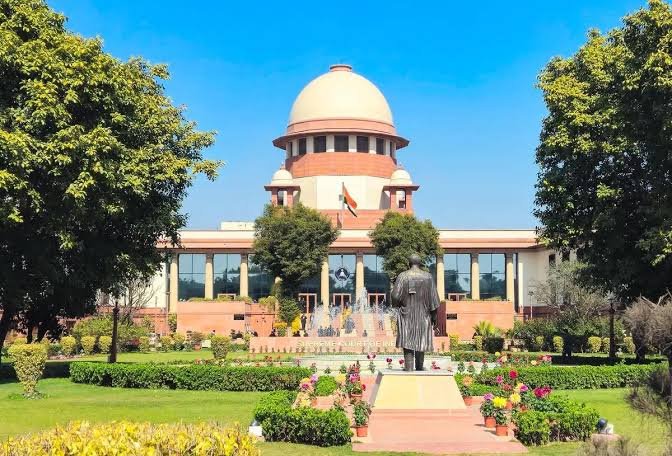
New Delhi, October 5, 2026: The Supreme Court on Monday issued notice on petitions challenging alleged unilateral decisions taken by Chief Election Commissioner (CEC) Gyanesh Kumar in connection with the Special Intensive Revision (SIR) exercise. The Court indicated that if the records establish that any decision was taken in violation of the statutory framework, it could restrain or declare such decisions ultra vires.
A Bench comprising Chief Justice of India Surya Kant, Justice Joymalya Bagchi and Justice V. Mohana heard petitions seeking action against the CEC and questioning whether the Election Commission of India (ECI), being a multi-member constitutional body, can take decisions without the concurrence of the other Election Commissioners.
The petitions have been filed against the backdrop of allegations that around 14 decisions concerning various SIR-related steps were taken in the name of the ECI despite objections allegedly recorded by the other two Election Commissioners, Sukhbir Singh Sandhu and Vivek Joshi, between October 2025 and August 2026.
During the hearing, the petitioners argued that the functioning of the ECI must strictly comply with the statutory procedure governing the Commission’s internal decision-making. They sought access to the original records to determine whether the disputed decisions were taken unanimously or otherwise.
The Bench, however, cautioned against reaching conclusions solely on the basis of media reports. The CJI observed that a news report could be “fully or partially correct” and said the Court would first seek a response from the concerned respondents.
Senior Advocate Menaka Guruswamy, appearing for one of the petitioners, raised concerns regarding the manner in which the SIR process was allegedly conducted and referred to modifications in election-related forms. Responding to the submissions, the Chief Justice clarified that any modified Form 6 had not been approved by the Court and observed that once the relevant records were produced, the Court would examine who had made the modifications.
The Bench also addressed the question of decision-making within the ECI. The Chief Justice observed that the Election Commissioners are expected to take decisions unanimously where possible, but where unanimity is not achieved, the statutory framework provides for a decision by majority.
The petitioners alternatively urged the Court to direct that, until the matter is considered further, the Commission should take only unanimous decisions. The Court declined to make such a blanket direction at this stage, stressing that it first needed to examine the records and the responses of the concerned authorities.
Justice Bagchi, however, made it clear that the Court could intervene if the records demonstrate that particular decisions were not taken in accordance with the law. The Court observed that if the records show that a decision was not taken in accordance with the prescribed procedure, it could injunct such decisions and hold them ultra vires.
READ: Opinion: Justice Bhuyan’s Message Is Unmistakable — Not All Judges Are…
“There’s a law, they are expected to follow. If we find that law was not followed, you know what can happen,” the CJI observed during the hearing.
One of the petitions, filed by Rakesh Kumar Singh, seeks a declaration that the ECI, as a multi-member body, cannot function through unilateral decisions of the CEC. It also seeks examination of the Commission’s primary records to establish whether the disputed actions complied with the constitutional and statutory framework.
The petitioner has also sought interim suspension of CEC Gyanesh Kumar. Another petition, filed by Advocate Shaildendra Mani Tripathi, seeks quashing of the alleged 14 unilateral decisions and the constitution of an independent Judicial Inquiry Commission or Special Investigation Team headed by a retired Supreme Court judge, with assistance from cybersecurity and information-technology experts.
During the hearing, the petitioners also raised concerns over the legal protection and immunity available to the CEC under the current statutory framework, arguing that such provisions make judicial scrutiny of the Commission’s functioning particularly important.
The Supreme Court ultimately issued notice to the concerned respondents, seeking their response to the allegations and the legal issues raised in the petitions.
The Court’s observations indicate that it has not, at this stage, accepted the allegation that all 14 decisions were taken unilaterally. However, it has made clear that if the official records establish that any decision was taken contrary to the governing law or procedure, the Court may restrain its implementation or declare it legally invalid.
The matter is expected to come up again after the respondents place their responses and relevant records before the Court.