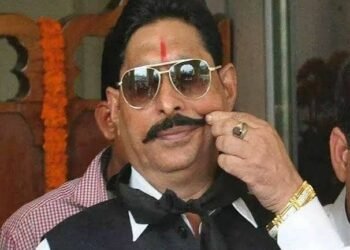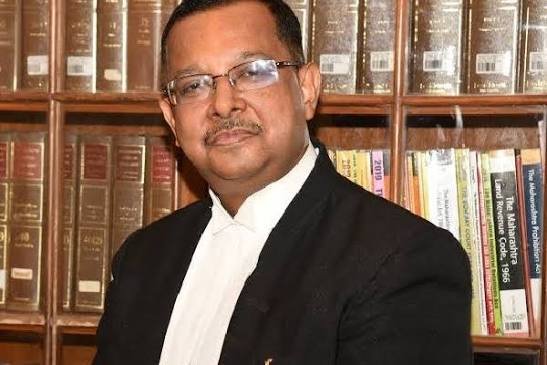
Bhuyan did not name the Chief Justice or the SIR process, but coming a day before related petitions were listed, his warning that “no one is above the Constitution” has added a striking new dimension to the debate over judicial credibility and voting rights.
BY Navin Upadhyay
October 5 : Justice Ujjal Bhuyan’s remarks at NALSAR on October 4 were two things at once: a public compliment to students who had objected to Chief Justice Surya Kant as their convocation guest, and a constitutional warning against mass deletion of voters, delivered a day before the Supreme Court was due to take up related petitions.
Read together, critics of the Court have seen them as a rare expression of internal dissent. They do not, by themselves, repair the wider loss of confidence those critics describe.
What Bhuyan said
Speaking at the valedictory of the 19th NALSAR–Justice B.R. Sawhney Memorial Moot Court Competition in Hyderabad, Bhuyan told students: “You have shown to the country and to the world what a university student, that too, a student of law should be. You are brilliant; you are bold; and you are brave.”
The timing was significant.
In July, around 70 final-year NALSAR students wrote to the university asking it to reconsider inviting Chief Justice Surya Kant as chief guest. The objection was later endorsed by roughly 450 of the university’s 1,400 students. The students cited the Chief Justice’s reported responses when lawyers sought urgent intervention over alleged police excesses against Delhi protesters.
The Chief Justice subsequently said he had never accepted the invitation. There was therefore no reported convocation walkout or refusal to accept degrees. The students had made a written, pre-emptive objection.
The Bar Council of India subsequently directed state bar councils not to enrol the entire NALSAR 2026 batch. The order was withdrawn after criticism, including from a Supreme Court Bench headed by the Chief Justice, which affirmed the students’ right to protest.
Bhuyan did not name the Chief Justice in his NALSAR speech. The inference that his praise for the students was directed at their objection is one commentators have drawn, not something he explicitly said.
He then turned to voting rights.
READ: Justice Bhuyan: Removing Millions From Rolls Would Strike at Heart of Constitution
Any process that disenfranchises “millions and millions” of citizens, he said, making them “second class citizens in their own country” in the sense of citizens without voting rights, would be “intrinsically arbitrary”.
“Article 326 cannot be tinkered with at all. No authority can do it; no court can condone it. No one is above the Constitution,” he said.
सुप्रीम कोर्ट के जस्टिस उज्जल भुयान के हैदराबाद में दिए गए इस वक्तव्य के पाँच मिनट के इस हिस्से को सुनिए जो उन्होंने मतदान के अधिकार पर बोला है।
एक एक पंक्ति ऐसी है मानो बग़ीचे से चुन चुन कर सुर्ख गुलाब लाए हों। ज्ञानेश के SIR के ख़िलाफ़ प्रदर्शनकारियों के पथ पर बिछाने के लिए भी और ज्ञानेश का बचाव करने वालों के मुँह पर मारने के लिए भी।
वोटिंग राइट छीने जाने के संदर्भ में वे कहते हैं “यह उस संवैधानिक व्यवस्था को नकारना है जिसे हमने भारत के संविधान के आधार पर अपनाया है। भारतीय नागरिकों का वोट देने का अधिकार विदेशी शासन के ख़िलाफ़ भारत के लंबे सालों के संघर्ष से जुड़ा हुआ है… आर्टिकल 326 के साथ बिल्कुल भी छेड़छाड़ नहीं की जा सकती। कोई भी अथॉरिटी ऐसा नहीं कर सकती। कोई भी कोर्ट इसका समर्थन या समर्थन नहीं कर सकता… कोई भी संविधान से ऊपर नहीं है।”
— Umashankar Singh उमाशंकर सिंह (@umashankarsingh) October 5, 2026
Except in the case of a dead voter, Bhuyan added, a name once on the electoral roll cannot be deleted without notice and a hearing. Detaching the vote from citizenship, he said, would be “like taking out the soul from the body.”
Several reports did not say he explicitly named the Election Commission’s Special Intensive Revision. But the reference was difficult to miss. SIR has produced large-scale deletions and notices across states, while opposition parties and civil-society groups have accused the Election Commission of risking the exclusion of genuine voters.
Bhuyan’s speech came a day before petitions relating to the Chief Election Commissioner and the electoral-roll revision were listed before the Supreme Court.
A mirror to the Chief Justice?
The SIR litigation has included a Bench headed by Chief Justice Surya Kant and comprising Justice Joymalya Bagchi.
The Court has raised questions about the scale and logistics of the revision but has not stopped the exercise. Critics have objected particularly to remarks suggesting that some voters unable to vote “this time” could vote “next time”.
Saurav Das has been among the most outspoken critics.
In a recent post on X, Das said Surya Kant and Bagchi “must quietly sit this one out”, alleging that they had allowed an “illegal SIR process” to proceed in Bengal and Bihar.
He accused the Supreme Court of being “complicit in ensuring that Gen Z’s voting rights are stolen” and said that whatever the Bench did next would have “absolutely ZERO CREDIBILITY” among a younger generation.
Das also cited delays in cases involving the Maharashtra government, political-party splits and the Delhi constitutional crisis, arguing that delayed justice had political consequences.
These are advocacy claims, not judicial findings. They interpret refusal to stay the process and judicial delay as evidence of institutional complicity. Whether such delays were strategic or simply the result of the Court’s docket remains disputed.
But the criticism reflects a wider problem: a section of lawyers, students and activists now believes that the Court’s handling of electoral disputes has undermined public confidence in its neutrality.
Sibal and Bhushan
The criticism has also come from senior lawyers.
Prashant Bhushan, speaking at a September 28 press conference on the SIR controversy, said: “The Supreme Court let our democracy collapse. We have to together raise our voice against it.”
He also questioned the Election Commission’s use of “logical discrepancy” to justify exclusions and alleged that the SIR exercise was being conducted in violation of electoral law and rules.
Kapil Sibal, who has appeared in challenges relating to SIR, has questioned the extent of the Election Commission’s powers under Article 324, arguing that the provision does not give the poll panel unlimited authority to determine citizenship.
The issue, however, is not whether electoral rolls can be revised. They obviously must be: dead voters, duplicates and people who have permanently moved cannot remain indefinitely on the rolls.
The constitutional question is different: how are genuine voters protected when their names are removed, what notice and hearing do they receive, and can they obtain an effective remedy before polling?
That is where Bhuyan’s intervention matters.
A speech is not a judgment
Bhuyan did not stay SIR, order anyone’s recusal or rule that a particular deletion was illegal.
His reliance on the principle that voters must receive notice and an opportunity to be heard is not new law. It reflects existing constitutional safeguards.
Nor can every deletion automatically be described as disenfranchisement. Figures must distinguish deaths, migration, duplicate entries and genuinely disputed exclusions.
But if a genuine citizen is removed without adequate notice, a meaningful hearing and an effective remedy before an election, the constitutional problem is much more serious.
That is the line on which the SIR controversy will ultimately have to be judged.
Bhuyan’s remarks also raise a separate question of judicial propriety. A sitting Supreme Court judge publicly invoking constitutional principles directly relevant to a case listed before another Bench, immediately before the hearing, inevitably invites scrutiny.
Yet the significance of his intervention lies precisely in its restraint. He did not attack his colleagues or name the Chief Justice. He simply stated a constitutional proposition:
No authority is above the Constitution. No court can condone mass disenfranchisement.
For those who believe the Court has become a manager of the SIR exercise rather than a check on it, that is a powerful statement from within the institution.
But it remains a statement, not a remedy.
The test will come in the courtroom — in whether the Supreme Court insists on meaningful notice, hearing and verification before a genuine voter can be excluded, and whether it acts before an election rather than after the right to vote has already been lost.
That is ultimately the question behind the growing criticism of the Court: who protects the Indian voter when the institutions conducting the election are themselves being challenged?