The apex court also said injuries suffered by both protesters and police personnel deserve equal concern, while questioning whether law enforcement was adequately equipped to manage demonstrations without escalating violence.
BY PC Bureau
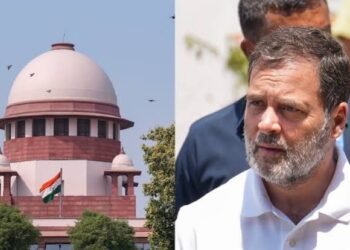
New Delhi/ July 27, 2026:: The Supreme Court on Monday reaffirmed that peaceful demonstrations are protected under the Constitution, observing that the existence of a protest alone does not entitle authorities to resort to lathi-charge or other forms of excessive force.
A Bench headed by Chief Justice of India Surya Kant, along with Justice Joymalya Bagchi and Justice V. Mohana, made the observations while taking up a batch of petitions alleging excessive police action against students protesting across the country over examination paper leaks.
The Bench emphasised that allegations of police excess must be subjected to an independent inquiry and indicated that India needs a uniform framework governing police conduct during public demonstrations.
“The right to peaceful and lawful protest is guaranteed by the Constitution. As long as a protest remains peaceful, the mere fact that people are agitating cannot justify the use of force. If there are allegations of excess, they must be independently examined. This is not an issue confined to Delhi. There should be uniform protocols across the country. Agitation by itself cannot become a ground for lathi-charge,” the CJI observed.
The Court also agreed to hear submissions from counsel representing families of police personnel who were injured during the protests, saying the rights and safety of all those involved deserved equal consideration.
Justice Joymalya Bagchi remarked that injuries suffered by police personnel and protesters should be viewed with the same seriousness. He also questioned whether police had been adequately equipped to manage crowds without escalating the situation.
READ: Justice Bhuyan Red-flags Judges’ Post-Retirement Political Roles
“The injury of any individual, whether a policeman or a student, is equally important. The State may have to explain why proper protective equipment was not provided to police personnel. They should at least have helmets,” Justice Bagchi said.
The Bench directed that all petitions arising from the protests be heard together on Tuesday.
The petitions stem from allegations of excessive force during student demonstrations against examination paper leaks, including the July 20 protest at Delhi’s Jantar Mantar.
One of the petitions seeks an independent investigation into the alleged police action and asks the Court to frame nationwide guidelines for handling protests. It also calls for restrictions on the deployment of plainclothes personnel for crowd control and seeks safeguards against the arbitrary use of prohibitory orders under Section 163 of the Bharatiya Nagarik Suraksha Sanhita (BNSS).
The petitioners contend that students exercising their constitutional right to peaceful assembly were met with disproportionate force, including lathi-charge, tear gas and pellet guns, resulting in violations of their fundamental rights under Articles 14, 19 and 21 of the Constitution.
The Supreme Court’s observations are expected to shape the ongoing debate on balancing public order with citizens’ constitutional freedoms and could influence future guidelines on police handling of peaceful protests.