With petrol nearing ₹100 per litre in Delhi and CNG prices also rising, transport unions are demanding fare hikes to offset mounting fuel costs.
BY PC Bureau
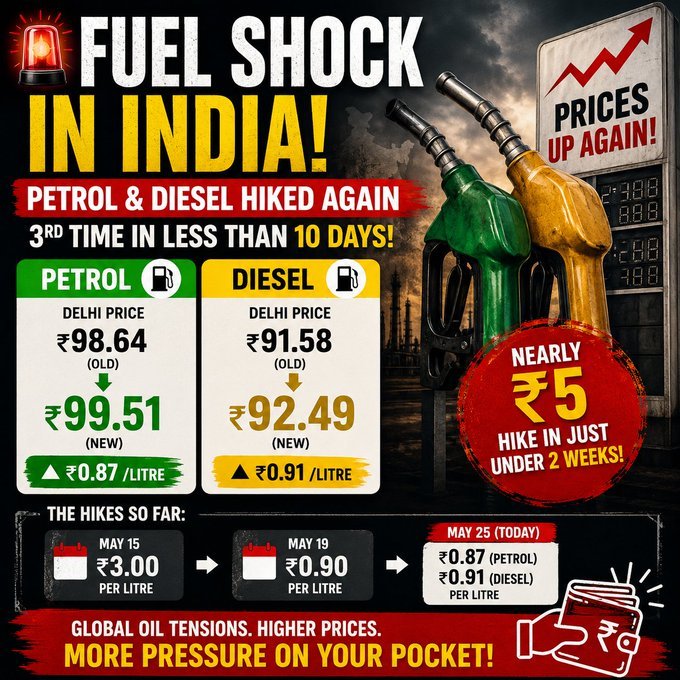
May 23, 2026: Third fuel price hike in just 10 days — and once again, the increases have come in “small doses.” On Saturday, petrol prices were raised by 87 paise per litre and diesel by 91 paise per litre, while CNG rates in Delhi went up by ₹1 per kg. Since May 15, fuel prices have climbed by nearly ₹5 per litre through a series of staggered revisions.
State-run oil marketing companies are gradually passing on the impact of sharply rising global crude oil prices, driven by the escalating Middle East conflict and fears of supply disruptions.
The latest hike has pushed petrol prices in Delhi to ₹99.51 per litre and diesel to ₹92.49 per litre. Similar increases were recorded across major metro cities including Mumbai, Kolkata, and Chennai.
Impact on Inflation and Daily Life
The fresh round of fuel price hikes is expected to intensify inflationary pressure in the coming weeks. Fuel remains a critical input cost across the economy — higher petrol and diesel prices immediately raise transportation expenses, which then ripple across supply chains and retail markets.
Milk prices have already risen by around five percent in several markets in recent weeks, with transport and logistics costs contributing to the increase. Traders also expect vegetable and essential commodity prices to rise as distribution costs continue climbing.
VIDEO | Delhi: As fuel prices see a rise for the third time in 10 days, a consumer at Gole Market Fuel Station says, “The increase in prices has mostly affected cab drivers. We need to refuel three times a day and the fares are not being increased. The war in the Middle-East will… pic.twitter.com/9nTevZvyZE
— Press Trust of India (@PTI_News) May 23, 2026
Taxi and Auto Drivers Demand Fare Revision
Taxi and auto-rickshaw drivers have begun demanding fare hikes to offset the higher fuel burden. Many drivers say the repeated incremental increases are steadily eroding their daily earnings, leaving them with little option but to seek revised fares or pass on the costs to passengers.
Transport unions and driver associations in Delhi, Mumbai, and other cities are expected to approach authorities soon for fare revisions. Commuters could soon face higher ride-hailing, taxi, and auto fares if fuel prices continue rising.
READ: SC’s Larger Bench to Examine Validity of Umar Khalid Bail Rejection
Global crude oil prices have surged amid mounting geopolitical tensions in the Middle East, triggering fears of supply disruptions and shipping instability. India imports nearly 85 percent of its crude oil requirements, making domestic fuel prices highly vulnerable to global energy shocks.
The government and oil companies appear to be opting for gradual increases instead of a single sharp hike, possibly to soften public backlash. However, economists warn that the “small-dose” strategy may continue if crude prices remain elevated.
The combined impact of rising fuel, transport, and food costs is likely to push headline inflation higher, affecting both urban households and rural consumers. The Reserve Bank of India and the central government are expected to closely monitor the situation as they attempt to balance inflation control with economic growth.
For ordinary citizens, however, the message is becoming increasingly clear: the period of relatively stable fuel prices may be ending, and the cost of everyday life — from commuting to groceries — is set to rise further.