Two petitions have put the Election Commission’s internal decision-making under judicial scrutiny, alleging that key SIR decisions were issued without the concurrence of Election Commissioners Sukhbir Singh Sandhu and Vivek Joshi. One petitioner has sought the suspension of CEC Gyanesh Kumar.
BY PC Bureau
October 4: The Supreme Court will on Monday examine allegations that key decisions taken during the Election Commission’s Special Intensive Revision of electoral rolls were issued without the agreement of all three Election Commissioners, putting the decision-making process of the poll panel itself under scrutiny.
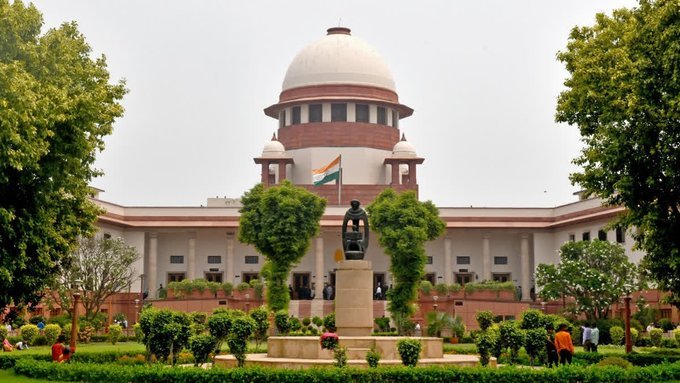
A bench headed by Chief Justice of India Surya Kant, along with Justices Joymalya Bagchi and V. Mohana, is scheduled to hear two writ petitions challenging Chief Election Commissioner Gyanesh Kumar and a series of decisions linked to the SIR exercise.
The petitions are based on records that, according to the petitioners, show that Election Commissioners Sukhbir Singh Sandhu and Vivek Joshi recorded objections to at least 14 decisions between October 2025 and August 2026. The disputed decisions were nevertheless issued in the name of the Election Commission of India, the petitioners allege.
One of the petitions, filed by Ramesh Kumar Singh, argues that the Election Commission is a multi-member constitutional body and that its decisions cannot be taken by one member acting alone. It asks the Supreme Court to examine the Commission’s original records to establish whether the disputed decisions were taken in accordance with the Constitution and the law.
Singh has also sought interim relief in the form of suspension of Gyanesh Kumar as Chief Election Commissioner.
The second petition, filed by advocate Shailendra Mani Tripathi, seeks the annulment of the 14 decisions alleged to have been taken without the concurrence of the other Election Commissioners.
Tripathi has also sought an independent judicial inquiry or a special investigation team headed by a retired Supreme Court judge, with assistance from cybersecurity and information-technology specialists. The proposed probe would include a forensic examination of the ECINet and ERONet databases and an investigation into the circumstances surrounding the deletion of what the petition describes as about 13 crore names from electoral rolls across 30 States and Union Territories during the SIR exercise.
The petition further seeks directions to the competent authority to register complaints and initiate prosecution under Section 32 of the Representation of the People Act, 1950, against Gyanesh Kumar, Senior Deputy Election Commissioner Maneesh Garg, Director General (IT) Seema Khanna and any other officials found responsible.
READ: Justice Bhuyan: Removing Millions From Rolls Would Strike at Heart of Constitution
Section 32 provides for punishment for specified breaches of official duty in connection with the preparation, revision or correction of electoral rolls.
The allegations extend beyond the question of who authorised the disputed decisions. The petition claims that Form 6, used for applications for inclusion of names in electoral rolls, was modified without authorisation; electoral-roll databases were centralised; eligible voters were not restored through the ECINet system; and 16.10 lakh appeals challenging voter inclusion were filed in West Bengal purportedly in the name of the Election Commission.
The petitions put the internal decision-making of the Election Commission at the centre of the legal challenge, with the Supreme Court now being asked to examine whether the poll panel’s constitutional and statutory responsibilities were followed during one of the country’s largest electoral-roll revision exercises.