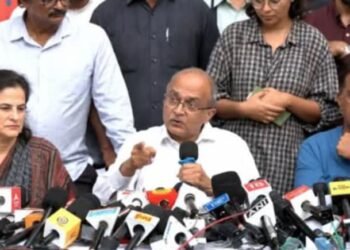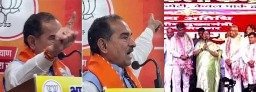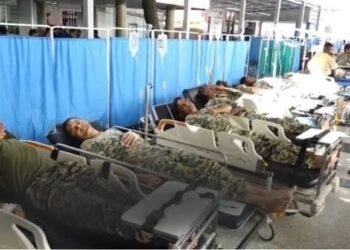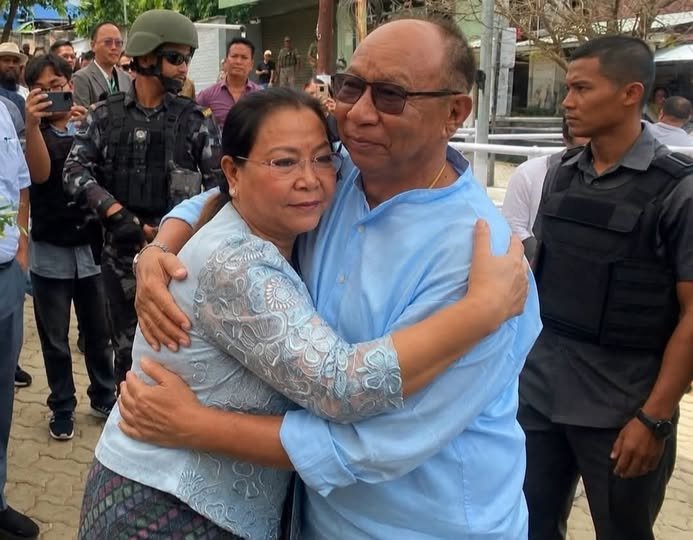
The warm welceome extended by Deputy CM Nemcha Kipgen to Chief Minister Yumnam Khemchand Singh on his maiden visit to Kangpokpi in three eyars and the return of Kuki-Zo MLAs to the Manipur Assembly point to a gradual shift in the community’s political line — and growing questions over who truly represents its collective position.
BY Navin Upadhyay
New Delhi/ September 4: The growing confrontation between Manipur’s Naga and Kuki-Zo political blocs has put Deputy Chief Minister Nemcha Kipgen in an increasingly difficult position — and exposed a divide within the Kuki-Zo community over her decision to join the BJP-led government.
After Naga MLAs led by Deputy Chief Minister Losii Dikho wrote to Union Home Minister Amit Shah seeking action against Kipgen, several Kuki-Zo civil society organisations came out in her defence. They rejected allegations that Kipgen or her office had any role in the recent escalation of violence in the hills.
On the surface, the statements suggest that Kipgen retains strong backing within her community. But beneath that show of solidarity lies a more complicated political reality. A major section of Kuki-Zo opinion has grown increasingly critical of her over the past several months, accusing her of compromising positions that community organisations and armed groups had previously treated as non-negotiable.
The power behind the statements
The flurry of statements defending Kipgen cannot be viewed separately from the political and armed networks operating in Kangpokpi.
Kipgen’s husband, Thangboi Kipgen, heads the Kuki National Front (Presidential), or KNF(P), one of the prominent Kuki-Zo armed groups operating under the Suspension of Operations (SoO) arrangement with the Centre.
Naga legislators have alleged that Kipgen’s office is “colluding” with the KNF(P), a charge she has rejected as “false, vexatious and baseless”.
In Kangpokpi, the influence of SoO groups over political and civil society activity remains an important factor. The Committee on Tribal Unity (CoTU), among the most prominent Kuki-Zo civil society platforms in Sadar Hills, itself experienced internal disruption and restructuring, with several of its members resigning in protest against alleged pressure from Thongboi Kipgen. The organisation has now resumed its activities, but people familiar with the realities of Kangpokpi politics say CoTU can hardly be expected to act independently
That has left a civic environment in which public expressions of support for political leaders can be difficult to separate from the competing interests of armed groups, elected representatives and civil society organisations.
READ: Self-styled `Goon’ Bhardwaj Detained Over Jantar Mantar Assault Case
Kipgen and the community’s political red line
Kipgen’s decision to join the restored BJP-led government marked a departure from the position adopted by much of the Kuki-Zo political establishment.
Civil society organisations, SoO groups and Kuki-Zo legislators had maintained that elected representatives should not participate in any Manipur government until the Centre took a decision on the demand for a Union Territory with a legislature.
Kipgen nevertheless joined the government without securing the consent of the civil society organisations that claimed to represent the community’s collective position.
On February 4, 2026, President’s Rule was revoked and BJP leader Yumnam Khemchand Singh was sworn in as Chief Minister. Losii Dikho of the Naga People’s Front and Nemcha Kipgen took oath as Deputy Chief Ministers.
Kipgen joined the ceremony virtually from Manipur Bhawan in New Delhi, becoming the first woman and the first Kuki-Zo leader to occupy the post.
The Kuki-Zo Council responded by calling for a social boycott of MLAs who supported the BJP-led government, saying they had violated the Lungthu resolution of January 13, 2026.
Kipgen’s supporters defended her decision by pointing to an assurance attributed to BJP national general secretary Arun Singh that the party leadership would pursue a negotiated political settlement of the Kuki-Zo issue within the framework of the SoO agreement.
Seven months later, however, there has been little visible movement on that political track. The talks between the Ministry of Home Affairs and the SoO groups have also shown little momentum, leaving many in the hills questioning what the deputy chief ministership has delivered in political terms.
From silence to confrontation
Kipgen’s critics accuse her not only of abandoning the community’s earlier political position but also of failing to speak forcefully enough as violence returned to the hills after the formation of the elected government.
The relative calm during President’s Rule was followed by renewed violence after the return of an elected ministry, with Naga-Kuki clashes adding another layer to the longstanding Meitei-Kuki-Zo conflict.
Her political style has also been sharply contrasted with that of her Naga counterpart, Losii Dikho. Dikho has been vocal in advancing Naga grievances and lobbying the Centre, while Kipgen has largely remained away from the Imphal political arena, participating in Cabinet and Assembly proceedings virtually from Kangpokpi or Delhi.
For her critics, that physical absence has increasingly become a political statement in itself.
Kipgen further alienated sections of the Kuki-Zo community when she publicly welcomed Chief Minister Khemchand Singh during his recent visit to Kangpokpi.
For a community that has treated the presence of Meitei political leaders in Kuki-Zo areas as unacceptable since the outbreak of violence on May 3, 2023, the reception was viewed by many as a major political concession.
The reaction on social media was swift, with sections of the community accusing her of betraying the collective position.
The Assembly controversy
The same fault line surfaced again on September 2, when Independent Saitu MLA Haokholet Kipgen and Kuki People’s Alliance Saikul MLA Kimneo Haokip Hangshing travelled to Imphal and attended the Assembly in person.
It was the first physical attendance by Kuki-Zo MLAs in more than three years.
The move came despite the Kuki Inpi Manipur directing legislators not to attend the Assembly physically. Nemcha Kipgen herself participated virtually.
Within Kuki-Zo political circles, the decision by the two legislators was interpreted by some as evidence of a broader attempt to soften the community’s earlier political boycott.
The political connections of the two MLAs added to the speculation. Haokholet Kipgen is linked to the political networks around Kangpokpi, while Kimneo Haokip Hangshing is married to a leader associated with a Kuki armed group operating under the United People’s Front umbrella.
Whether the Assembly appearance was coordinated or simply reflected individual political choices remains difficult to establish. But its timing, coming after the Chief Minister’s visit to Kangpokpi, has intensified the debate over whether the Kuki-Zo political leadership is gradually moving away from the positions adopted during the earlier phase of the conflict.
Who actually speaks for the Kuki-Zo community?
That question now lies at the heart of the controversy surrounding Nemcha Kipgen.
The latest statements defending her are being viewed with scepticism by sections of the community, where allegations persist that SoO groups exert influence over civil society organisations.
Such claims are difficult to independently establish. What is less disputed is the considerable influence that armed groups continue to exercise over the political environment in parts of the hills.
This creates an unusual dynamic: civil society organisations need political leaders to advance their interests in government, while elected leaders who participate in the government also depend on those organisations for community legitimacy.
Kipgen has rejected the allegations made by the Naga legislators and warned that unsubstantiated accusations could further aggravate Naga-Kuki tensions.
Dikho and other Naga MLAs, meanwhile, have threatened to reconsider their support for the government if the Centre fails to act on their complaints.
Caught between the two camps is a Kuki-Zo community whose public leadership is increasingly fractured.
The question, therefore, is no longer simply whether Nemcha Kipgen has the backing of Kuki-Zo organisations. It is which organisations genuinely speak for the community, how much freedom they have to dissent, and whether the community’s political consensus has already begun to shift.
If New Delhi ultimately decides to remove Kipgen under pressure from the Naga legislators, the political fallout within the Kuki-Zo community may be far less dramatic than it appears from outside. Her decision to join the BJP-led government has already cost her the support of a significant section of her own community. For many of her critics, therefore, few tears may be shed if Nemcha Kipgen is ousted as Manipur’s Deputy Chief Minister.