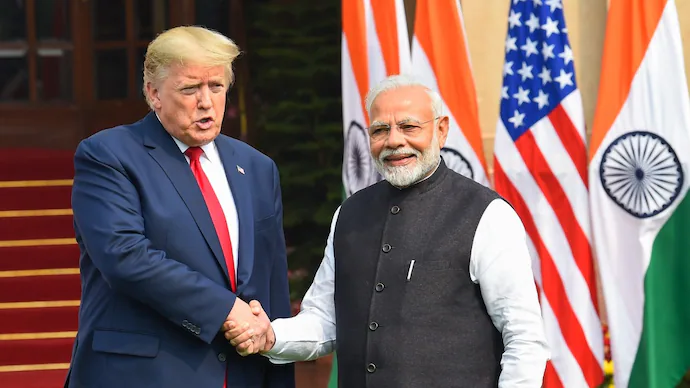
Opposition leaders allege Modi avoided the in-person summit to sidestep potential scrutiny over India-US trade tensions.
BY PC Bureau
New Delhi, October 23 — Prime Minister Narendra Modi will not travel to Kuala Lumpur for the ASEAN summit later this week and will instead participate virtually, putting an end to speculation over a potential bilateral meeting with US President Donald Trump. According to PTI, External Affairs Minister S. Jaishankar is expected to represent India in person at the summit, scheduled from October 26 to 28.
The Prime Minister confirmed his decision in an X post following a phone conversation with Malaysian Prime Minister Anwar Ibrahim.
“Had a warm conversation with my dear friend, Prime Minister Anwar Ibrahim of Malaysia. Congratulated him on Malaysia’s ASEAN chairmanship… Look forward to joining the ASEAN-India Summit virtually and to further deepening the ASEAN-India Comprehensive Strategic Partnership,” Modi tweeted.
PM Modi’s ASEAN Attendance Record
Since 2014, Modi has been a regular feature at the annual ASEAN summits, attending in person every year until 2019. The 2020 and 2021 editions were held virtually due to the COVID-19 pandemic, while the only year he completely skipped the summit was 2022.
India’s engagement with the 10-member ASEAN bloc forms a central pillar of Modi’s Act East policy, aimed at strengthening political, economic, and strategic ties with Southeast Asia. The Prime Minister’s decision to attend virtually this year has raised eyebrows, with political observers and opposition leaders suggesting it may be linked to a possible Trump encounter.
Speculation Over Modi-Trump Meeting
The ASEAN summit was expected to provide a window for Modi and Trump to discuss trade, tariffs, and energy issues, particularly after Trump confirmed his attendance following an invitation from Malaysia.
It is uncommon for US presidents to attend ASEAN summits, as the United States is a dialogue partner, not a member. Trump last attended in 2017, and Joe Biden participated in 2022. His presence this year has heightened speculation about potential negotiations with Modi, particularly in light of ongoing trade and energy tensions.
READ: It’s Time for Muivah to ‘Declassify’ the Framework Agreement
Tensions Over Russian Oil and Trade
Relations between India and the US have faced strain over several issues, most notably India’s continued imports of Russian crude oil, despite US sanctions and pressure. The Trump administration had imposed tariffs of up to 50% on select Indian goods in response to what it called India’s support of Russia’s war in Ukraine through energy purchases.
Adding to the tension, Trump has repeatedly claimed that Modi had agreed to scale down India’s purchase of Russian oil, a claim Modi has neither confirmed nor publicly addressed. Trump has emphasized this in media interviews and public statements, suggesting that India had made commitments during previous bilateral discussions to reduce energy imports from Moscow, though India maintains that its energy purchases are consistent with its national interests.
In addition, negotiations for a bilateral trade deal have stalled, with the US insisting on greater access to Indian agricultural and dairy markets, while India has sought balanced terms.
Despite these challenges, Modi and Trump have maintained communication, speaking twice in the last two months. The latest call took place during Diwali, when Trump wished Modi festival greetings, keeping alive hopes of a potential deal.
A Missed Opportunity?
With Modi attending the ASEAN summit virtually, the possibility of a face-to-face meeting with Trump this year appears slim. Analysts suggest that the decision could be a calculated diplomatic move, avoiding the optics of being “cornered” over trade, energy, or Russia-related questions.
Opposition leaders were quick to comment. Congress MP Jairam Ramesh tweeted:
“The reason why Modi is not going is simple — he just doesn’t want to be cornered by President Trump. Posting messages praising Trump online is one thing; being seen with him after claims about scaling down oil purchases from Russia is quite another.”
PM Modi last met Trump in February during a bilateral meeting in Washington. He was also invited to the Gaza Peace Summit in Sharm el-Sheikh, where Trump was present, but Modi did not attend. This adds to the perception that Modi is avoiding direct confrontation with Trump on sensitive issues.
Balancing Act: Diplomacy and Optics
While virtual participation ensures India remains engaged in ASEAN multilateral dialogue, Modi’s decision underscores the complexities of India-US relations. On one hand, India seeks to maintain strong strategic and economic ties with Washington. On the other, energy security and national interest dictate continued engagement with Russia, especially in the context of global oil markets.
Political analysts say Modi’s virtual attendance allows him to sidestep potentially contentious discussions while still projecting India’s commitment to ASEAN partnerships. However, it may also signal caution, highlighting the delicate balancing act New Delhi must perform between global diplomacy and domestic political optics.
As the ASEAN summit approaches, the spotlight will remain on India’s participation and the possible implications of Modi’s virtual attendance. While the Prime Minister continues to engage with world leaders, the absence of a physical meeting with Trump — coupled with claims over Russian oil purchases — leaves questions unanswered about the future trajectory of India-US relations and potential trade agreements.
For now, Modi’s move is being interpreted as a strategic choice: stay engaged on the multilateral stage but avoid direct confrontation on bilateral controversies.