

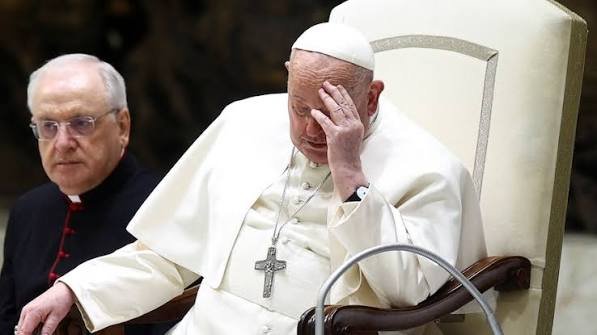
Newly published private diaries of Pope Francis reveal deeply personal accounts of visions of the devil, dreams involving hell and a two-year spiritual crisis over power and authority. The writings offer a rare glimpse into the late pontiff’s private struggles.
BY PC Bureau
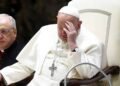
November 25: Pope Francis privately documented deeply personal spiritual struggles, including disturbing visions of the devil, dreams involving hell and a prolonged crisis over power and authority, according to diaries published after his death. The revelations offer an unusual glimpse into the late pontiff’s inner life, exposing the doubts, temptations, exhaustion and religious experiences he rarely discussed publicly.
The accounts appear in The Private Diary of Pope Francis, a newly released 160-page book compiled with commentary by Cardinal Víctor Manuel Fernández, a close associate of the late pope. The diaries, spanning more than three decades, cover his years as a bishop in Argentina and his papacy, which began in 2013 and ended with his death in April 2025.
CNN Vatican correspondent Christopher Lamb reports that the writings document episodes Francis described as encounters with the devil, alongside an intense spiritual struggle during 2021 and 2022.
BREAKING: Francis Saw Satan and Feared Going to Hell, But Said No One Goes There
John-Henry Westen examines Pope Francis’ newly published private diary, released with Leo XIV’s permission with some pages withheld.
Francis describes three encounters with the devil, a voice saying “Now I have obtained everything I wanted,” and seeing “the entrance of hell.” Westen contrasts this with Francis’ public claims that hell does not exist, is “not a place,” or is empty. @JhWesten
— LifeSiteNews (@LifeSite) November 24, 2026
Pope Francis Describes Encounters With the Devil
The diaries contain accounts of what Francis described as repeated demonic attacks. He recalled three particularly disturbing experiences, two during his tenure as archbishop of Buenos Aires and another in 2018, after becoming pope.
In his descriptions, Francis referred to the devil’s fiery eyes as both threatening and seductive. An August 2024 entry revisited these earlier experiences, suggesting that the memories remained significant to him.
One account relates to his 2018 visit to Chile, which was overshadowed by the clerical sexual abuse scandal. Following the trip, Francis recalled hearing a triumphant, rough voice claiming ownership of everything. He wrote that divine intervention allowed him to leave the encounter and escape its influence.
The devil occupies an established place in Catholic theology, which regards Satan as a fallen angel. Francis frequently referred to the devil during his pontificate, often using the concept to warn against gossip, greed, corruption and the misuse of money.
His diaries also recount dreams in which he believed God was communicating with him. In one 2018 entry, he described what he interpreted as a glimpse of the entrance to hell, connecting the experience with what he called intense pagan seduction. He recalled reaching for his rosary as a source of spiritual protection.
READ: Jennifer Barreto of Puerto Rico Crowned Miss Universe 2026 — First Mother to Win the Crown
A Two-Year Spiritual Crisis Over Power and Authority
One of the most revealing sections of the diaries concerns a spiritual crisis Francis experienced in 2021 and 2022.
The struggle centred on the temptations associated with authority, including the desire for power, excessive activity, self-sufficiency and the pressures of governing the Catholic Church.
Rather than responding to criticism by exercising his authority more aggressively, Francis sought to develop greater humility and patience.
He described occasions when he deliberately retained officials in their positions despite opposition and criticism. In one instance, when questioned about why he had not dismissed a critic within the Roman Curia, Francis reportedly remained silent before explaining that he did not believe God wanted him to treat people like puppets.
He later reflected that resisting the temptation to manipulate others was an important spiritual achievement.
Cardinal Fernández connects this period of difficulty to Francis’ struggle with power and the desire to experience its exercise. The crisis also reflected the pope’s continuing effort to distinguish personal ambition from genuine service.
His Jesuit background played an important role in this process. Spiritual discernment, a central feature of Jesuit practice, encouraged him to examine his motivations and distinguish between self-interest and God’s will.
Francis also maintained a deliberately simple lifestyle throughout his papacy. He lived in the Vatican’s Casa Santa Marta guesthouse rather than the traditional papal apartments, wore ordinary black shoes and avoided several traditional symbols of papal grandeur.
Chile Abuse Scandal Left Pope Francis Deeply Distressed
The diaries also revisit the 2018 clerical sexual abuse crisis in Chile, one of the most difficult episodes of Francis’ pontificate.
The pope wrote about feeling devastated by the situation and acknowledged the difficulty of accepting the full extent of the allegations. His exchanges with journalists during the return flight from Chile added to the controversy.
Francis subsequently apologised, summoned Chilean bishops to Rome and pursued broader measures aimed at addressing sexual abuse within the Catholic Church.
The diary entries offer a personal account of the emotional and spiritual burden associated with the scandal and its consequences for the Church’s credibility.
Francis’ Reflections on His Successor, Pope Leo XIV
The writings also contain reflections on Cardinal Robert Prevost, who later became Pope Leo XIV following Francis’ death.
Francis described Prevost as a great pastor, a generous missionary and an irreproachable man.
Interestingly, the late pope also expressed generous views about several prominent critics, including Cardinals Robert Sarah and Gerhard Müller.
These reflections provide an insight into how Francis viewed leadership, disagreement and the future direction of the Catholic Church.
Exhaustion and the Personal Cost of Leading the Catholic Church
A recurring theme throughout the diaries is physical and spiritual exhaustion.
Francis frequently recorded feeling tired, both during his years in Argentina and throughout his papacy. He rarely took extended breaks and never spent a vacation outside the Vatican.
In a 2019 entry, he described feeling almost completely deprived of spiritual support.
Cardinal Fernández portrays this combination of constant dedication and personal exhaustion as evidence of Francis’ commitment to pastoral responsibilities.
The diaries reveal a pontiff who continued to shoulder the demands of leadership while wrestling privately with questions of faith, authority, personal limitations and spiritual endurance.
Pope Francis’ Final Days and Publication of His Diaries
Pope Francis died on April 21, 2025, Easter Monday, at the age of 88, following hospitalisation with double pneumonia.
Despite medical advice, he continued greeting worshippers in St Peter’s Square during his final days. His funeral was held on April 26, 2025.
The publication of his private diaries offers an unusual historical record of his personal reflections over more than three decades.
Papal diaries are relatively uncommon, although writings and personal documents belonging to earlier pontiffs, including John XXIII and John Paul II, have also been published or made available after their deaths.
Francis’ diaries include 86 pages written during his years in Argentina and another 55 from his time as pope. He initially used a 1992 planner to record his thoughts.
The Vatican publishing house has released the volume, while its English edition is being published by Image Books, part of Penguin Random House’s Christian Publishing Group.
Beyond the revelations about visions and spiritual struggles, the writings provide a rare window into the private life of a pope who spent much of his pontificate advocating humility, compassion and service.