The Myanmar-based armed group has accused sections of the media and other organisations of spreading unverified claims that could further inflame an already volatile security situation along the Indo-Myanmar border.
BY PC Bureau
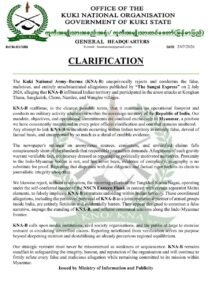
July 3, 2026: The Kuki National Army-Burma (KNA-B) has denied allegations that its cadres crossed into Manipur from Myanmar and participated in recent arson attacks on villages in Kamjong district, describing the accusations as “false, malicious and entirely unsubstantiated.”
In a statement issued on July 2 from its General Headquarters, the armed group rejected media reports and allegations which alleged that KNA-B fighters had infiltrated Indian territory and were involved in attacks on Kongkan Thana (also known as Huimin Thana), Sangkalok, Choro, Namlee and Wanglee villages along the Indo-Myanmar border.
The clarification, issued by the KNA-B’s Ministry of Information and Publicity, asserted that the organisation has no operational presence inside India and carries out no military activities on Indian soil. It maintained that all its operations are confined exclusively to Myanmar and reiterated that the organisation has neither the mandate nor the intention to intervene in India’s internal affairs.
“The allegations are completely baseless and appear designed to malign the organisation and mislead the public,” the statement said, adding that KNA-B’s objectives remain limited to the political and military struggle involving the Kuki people in Myanmar.
Fresh Border Violence
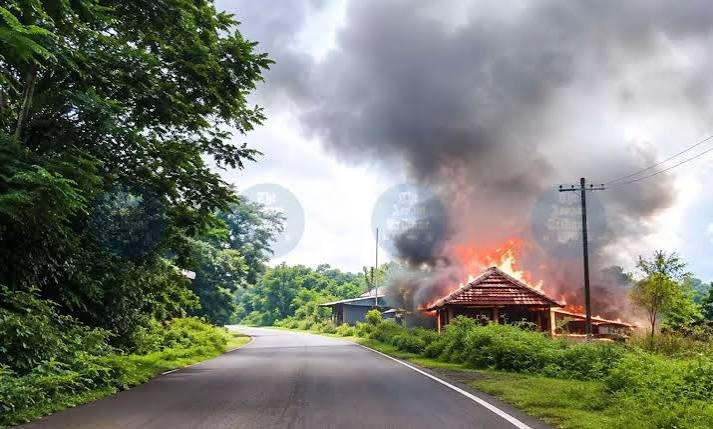
The denial comes amid renewed violence in the remote border areas of Kamjong district, where several villages were reportedly attacked and properties set ablaze earlier this week.
Local reports and statements issued by Naga organisations, including the Eastern Command-Naga Village Guard (EC-NVG), alleged that suspected KNA-B cadres, possibly operating alongside other armed elements, crossed the porous Indo-Myanmar border and set fire to nearly a dozen houses and a local market at Kongkan Thana. Similar incidents were also reported from neighbouring villages, including Namlee, Wanglee, Choro and Sangkalok, escalating tensions between Kuki and Tangkhul Naga communities in the region.
The allegations have not been independently verified.
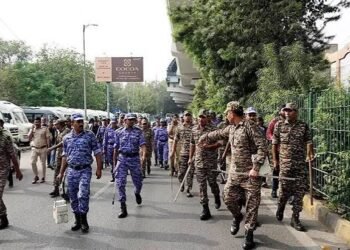
Adding to concerns, Phungyar MLA Leishiyo Keishing criticised the security arrangements in the area, pointing out that one of the attacks reportedly occurred close to an Assam Rifles post. He urged the government to deploy neutral state forces such as the India Reserve Battalion (IRB) to restore confidence among local residents.
Repeated Allegations
This is not the first time KNA-B has found itself at the centre of allegations of cross-border involvement.
Following attacks on several villages in May this year, including Wanglee, Namlee and Choro, the organisation was similarly accused of aiding armed groups responsible for burning houses and displacing villagers. On that occasion too, KNA-B denied any role, dismissing the accusations as politically motivated attempts to discredit the organisation.
The group has consistently argued that the mere proximity of its bases in Myanmar to the international border should not be interpreted as evidence of its involvement in incidents occurring inside Indian territory.
READ: Manipur: Kuki-Zo Leaders Seek Probe into Killings, Attacks
The latest controversy underscores the increasingly complex security environment along the unfenced Indo-Myanmar border, where longstanding ethnic ties often transcend national boundaries.
The Kuki National Army traces its origins to the broader Kuki-Zo movement for self-determination. Following an organisational split over a decade ago, the Indian and Myanmar wings began functioning independently, with KNA-B operating exclusively in Myanmar.
Since Myanmar’s 2021 military coup, KNA-B has been active against the military junta and is reported to have coordinated with several anti-junta resistance groups, including the People’s Defence Force (PDF) and other ethnic armed organisations.
However, amid the prolonged ethnic conflict in Manipur and recurring tensions involving Kuki-Zo, Tangkhul Naga and Meitei communities, the organisation has repeatedly been accused by various groups of facilitating cross-border movement of armed cadres, weapons and logistical support. KNA-B has consistently denied these allegations, maintaining that it does not conduct military operations inside India.
In its latest statement, the organisation urged media organisations, civil society groups and the public to verify information before attributing responsibility for violent incidents.
It warned that unverified reports and speculative allegations risk aggravating communal tensions in an already volatile region and could undermine efforts to restore peace along the border.
The statement also rejected attempts by certain organisations and political actors to implicate KNA-B without presenting credible evidence, arguing that such narratives contribute to misinformation rather than conflict resolution.
Reiterating its position, the group said its continued restraint should not be interpreted as weakness and vowed to continue rebutting what it described as false allegations while remaining focused on its activities in Myanmar.
The exchange of allegations comes against the backdrop of continuing insecurity along the India-Myanmar frontier, where overlapping insurgencies, ethnic rivalries and the spillover effects of Myanmar’s civil conflict have created one of the most volatile security environments in the Northeast.
With competing claims and counterclaims emerging after each incident, establishing responsibility has often proved difficult. Security agencies continue to monitor the border closely even as local leaders and civil society organisations call for restraint, impartial investigations and measures to prevent further escalation.