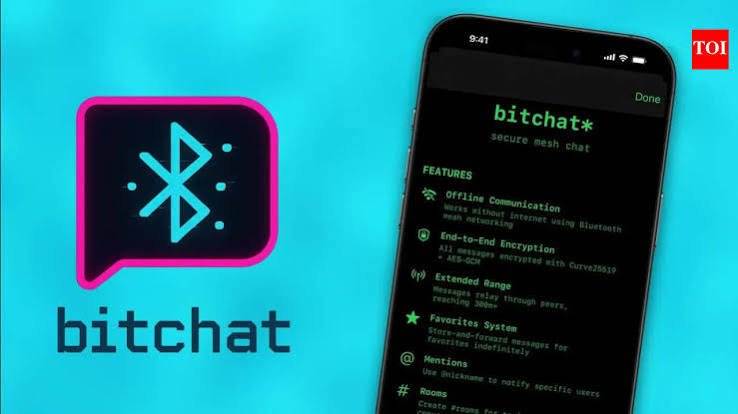
X co-founder Jack Dorsey has alleged that the Indian government sought the removal of decentralised messaging platform Bitchat, sharing what appeared to be an official notice directing GitHub to disable access to the application’s repositories.
BY PC Bureau
New Delhi, July 24: X co-founder and Block CEO Jack Dorsey has claimed that the Government of India sought the removal of links related to the decentralised messaging application Bitchat, alleging that authorities wanted the technology taken down because of concerns over its ability to function without conventional internet infrastructure.
In a post on X on Friday, Dorsey wrote: “the government of india does not like technologies like bitchat and wants it taken down.” He accompanied the post with screenshots of what appeared to be an official government notice directing GitHub to disable access to repositories related to the application.
The document, purportedly issued by the Ministry of Home Affairs’ Indian Cyber Crime Coordination Centre (I4C) under Section 79(3)(b) of the Information Technology Act, 2000, instructs GitHub to remove or disable access to several URLs hosting the Bitchat project within three hours.
🚨 BREAKING:
Former Twitter CEO Jack Dorsey says the Government of India wants Bitchat taken down
The app allows people to communicate through Bluetooth mesh networks, even when mobile networks or the internet are shut down
Instead of solving the paper leak crisis and… pic.twitter.com/bFS4mHG2lS
— Siddharth (@SidKeVichaar) July 24, 2026
READ: Ex-Bureaucrats Slam Police Action on Students, Seek Judicial Probe
According to the notice, Bitchat enables decentralised peer-to-peer communication over Bluetooth mesh networks without relying on mobile networks, internet connectivity or centralised servers. Authorities allegedly argued that such architecture could impede lawful interception and investigation by law enforcement agencies.
The notice further claimed that decentralised communication platforms could be exploited to coordinate unlawful assemblies, violent protests, dissemination of misinformation, radicalisation, criminal conspiracies and terrorist activities while evading internet shutdowns and surveillance. It also alleged that the absence of a central service provider makes it difficult for investigative agencies to obtain subscriber information or communication records during investigations.
The screenshots identify three GitHub repositories allegedly linked to the Bitchat application and cite provisions of the Information Technology Act, 2000, the Information Technology (Intermediary Guidelines and Digital Media Ethics Code) Rules, 2021, and the Bharatiya Nyaya Sanhita, 2023, as the legal basis for the takedown request.
Statement : The blocking of BitChat’s code on GitHub is unconstitutional and authoritarian.
New Delhi, 24 July 2026
The Internet Freedom Foundation (IFF) condemns the order issued by the Indian Cyber Crime Coordination Centre (I4C), Ministry of Home Affairs, directing GitHub… pic.twitter.com/s3wdJEOPK7
— Internet Freedom Foundation (IFF) (@internetfreedom) July 24, 2026
As of publication, the authenticity of the document had not been independently verified, and neither the Ministry of Home Affairs nor the Indian Cyber Crime Coordination Centre had publicly responded to Dorsey’s allegations. GitHub has also not issued any statement on whether it received or complied with such a request.
Bitchat has recently attracted attention as a decentralised messaging platform that allows users to exchange messages over Bluetooth mesh networks without requiring cellular service or internet access, a feature its developers say enhances privacy and resilience during connectivity disruptions. Critics, however, argue that the same architecture could complicate lawful monitoring by security agencies.
The controversy comes amid ongoing debates in India over encryption, digital privacy, intermediary liability and the government’s powers to regulate online platforms under the Information Technology Act and related rules.