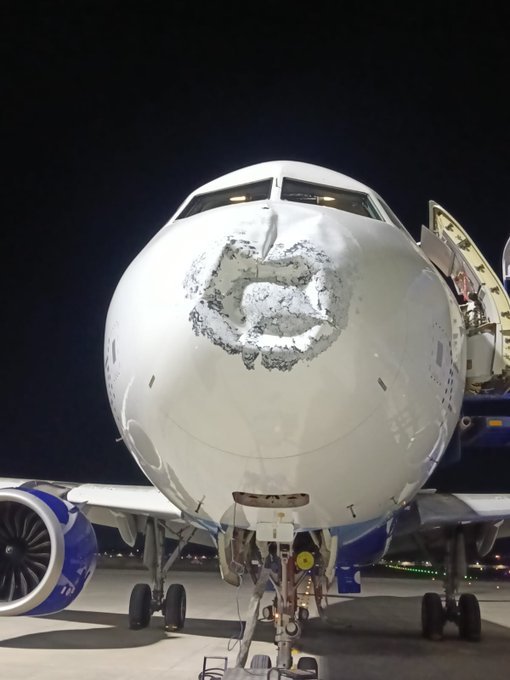
Flight 6E 625 was hit at about 17,000 feet in severe weather. IndiGo said a hailstorm damaged the radome. The jet landed eight minutes early in Lucknow and has been grounded.
BY PC Bureau
An IndiGo flight from Patna to Lucknow landed safely in the Uttar Pradesh capital on Wednesday after the aircraft was struck while flying through severe weather. The aircraft’s nose was damaged, but all 104 passengers and six crew members were unhurt. The flight landed at Chaudhary Charan Singh International Airport eight minutes ahead of schedule.
The aircraft was struck at about 17,000 feet and has since been grounded. The Directorate General of Civil Aviation (DGCA), India’s aviation regulator, has opened an investigation. The aircraft will not return to service until it has been inspected and cleared by the airline and the authorities.
IndiGo said flight 6E 625, operating on October 7, encountered unfavourable weather, including a hailstorm during the approach to Lucknow, which damaged its radome. The radome is the composite nose cone that houses and protects the aircraft’s weather radar. It is outside the pressurised cabin, but its condition is important because the radar provides the crew with information about weather ahead of the aircraft.
“The aircraft landed safely, and all customers disembarked at their destination,” an IndiGo spokesperson said. The airline said the authorities were informed immediately and that the aircraft would undergo the necessary maintenance before returning to service.
READ: Nana Patekar dies at 75; actor found unconscious at Goa home
The fact that an aircraft can be struck by lightning or encounter hail without causing casualties is a testament to the safety margins built into modern airliners. Lightning typically travels along the aircraft’s exterior and exits through designated points rather than passing through the cabin or fuel system.
But severe weather can still cause significant damage. At 17,000 feet, lightning or large hail can crack or puncture a radome, potentially disabling the weather radar and leaving the crew with less information about the storm during the remainder of the flight. Hail can also damage windscreens, dent the aircraft’s leading edges and, in severe cases, affect engines if large quantities of ice or hail are ingested.
#पटना से लखनऊ आ रहे #विमान पर 17 हजार फीट की ऊंचाई पर गिरी #बिजली
इंडिगो फ्लाइट की #लखनऊ में इमरजेंसी लैंडिंग, 104 यात्री और 6 क्रू मेंबर बाल-बाल बचे
बिजली गिरने से विमान के आगे का हिस्सा #क्षतिग्रस्त, सभी यात्री #सुरक्षित
#Lucknow
#IndigoFlight
#EmergencyLanding
#LightningStrike
#PatnatoLucknow
#Noseofflight
#PatnaLucknowFlight
#PatnatoLucknowFlight
#AviationNews
#LucknowNews
#ViralNews
#NewsFlash
@IndiGo6E— Goldy Srivastav (@GoldySrivastav) October 8, 2026
The risks become more acute during an approach, when an aircraft is lower, slower and closer to the ground, leaving the crew less time and altitude to respond to a sudden problem. A more serious failure involving the pressure bulkhead, cockpit windscreen or engines could have turned the incident into an emergency. None of that happened on Wednesday. The crew completed the approach and landed safely.
The incident comes weeks after another weather-related IndiGo episode. Flight 6E 6542, an Airbus A321neo flying from Guwahati to Bengaluru, suffered what the airline described as an “abnormal runway contact” — a tail strike — while landing in gusty conditions at Kempegowda International Airport. That aircraft was also grounded for inspection.
A tail strike can damage the rear fuselage and, depending on the severity of the impact, potentially affect the aircraft’s pressure structure. In both incidents, however, there were no injuries.
The two episodes underline a basic reality of commercial aviation: modern aircraft are engineered to withstand significant weather-related stresses, but severe weather