

The contrast between political pressure in the Imphal Valley and the concerns of tribal communities in the hills of manipur has intensified questions about whose voices carry weight in government decisions—and whether peace can endure without equal representation and accountability.
By Navin Upadhyay
October 25: Manipur’s post-conflict politics increasingly reveal a troubling imbalance: protests and civil-society campaigns in the Meitei-dominated Imphal Valley appear capable of shaping major government decisions, while the voices of the state’s tribal communities struggle to receive comparable attention. From the restoration of an elected government to the deferment of the Census, the suspension of delimitation, the expiry of the Suspension of Operations (SoO) agreement and the conduct of security operations, a central question persists: whose voice actually counts in Manipur’s decision-making?
The issue is not whether people in the Valley have the right to protest. They do. The problem arises when sustained mobilisation in one part of the state appears to carry greater political weight than the concerns, representation and constitutional rights of communities living in the hills.
Manipur Elected government restored amid pressure from Imphal
The return of an elected government in February 2026 was itself part of this larger political dynamic. After nearly a year of President’s Rule, imposed in February 2025 following N. Biren Singh’s resignation amid the prolonged ethnic conflict, the Centre restored an elected administration under Yumnam Khemchand Singh.
The restoration followed months of pressure from legislators and political constituencies demanding a return to popular rule. In the Imphal Valley, there was sustained discontent over the continuation of President’s Rule, the absence of an elected government and the failure to restore normalcy. Street mobilisation and public pressure formed part of the political
Since the restoration of the elected government, renewed violence, killings and unrest have again underscored how fragile the state’s stability remains. The question is whether the decision to restore elected rule, amid pressure from the Valley, adequately considered the concerns and security of communities across Manipur.
Census deferred, tribal concerns sidelined
The deferment of Census operations in Manipur offers a striking example of how public mobilisation can influence administrative decisions.
In August and September 2026, protests intensified over demands that the National Register of Citizens (NRC) be implemented before the Census. Meitei civil-society organisations and student groups organised demonstrations, strikes and other forms of agitation, arguing that population enumeration should not proceed without first addressing alleged illegal immigration and demographic change. The Centre subsequently deferred the Census exercise in Manipur.
The consequences extend beyond the immediate dispute over the NRC. Census data can influence development planning and future political representation. The relationship between population figures and delimitation makes the issue especially sensitive in a state where communities already dispute the balance of political power.
The larger concern is not whether citizenship verification deserves consideration. It is whether a decision with statewide consequences is being made through a transparent process that gives all affected communities a meaningful voice.
A nationwide administrative exercise should not become hostage to regional political pressure without adequate consultation, clear legal grounds and safeguards for displaced people and vulnerable communities.
Delimitation on hold: tribal representation left in limbo
The suspension of delimitation is another crucial example.
Delimitation could potentially alter the distribution of Assembly constituencies and change the balance of representation between the Valley and the hill districts. Depending on the applicable legal framework, population data and the final exercise, Nagas and Kuki-Zos could stand to gain additional representation. The precise outcome, however, cannot be assumed in advance.
For tribal communities that have long complained of inadequate political influence, delimitation is not merely a technical exercise. It is a question of whether their democratic representation will be assessed fairly and transparently.
The continued uncertainty leaves the existing distribution of seats in place and postpones the possibility of correcting perceived imbalances through a lawful delimitation process.
The irony is difficult to ignore. Demographic concerns can generate powerful political campaigns, yet the process that could potentially reshape political representation remains stalled amid disputes over population figures and citizenship verification.
The issue requires a transparent explanation from the authorities: what is the legal and administrative status of delimitation, what conditions must be met before it proceeds, and how will the interests of all communities be protected?
Without clear answers, tribal communities are likely to continue viewing the delay through the lens of political exclusion.
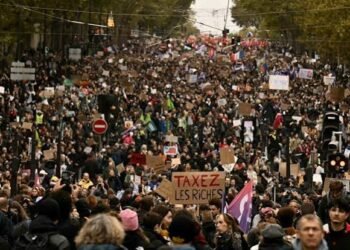
READ: 410,000 Rally Across France as Clashes Flare Amid Heavy Security
🚨 BREAKING | MANIPUR
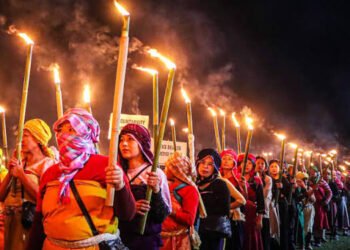
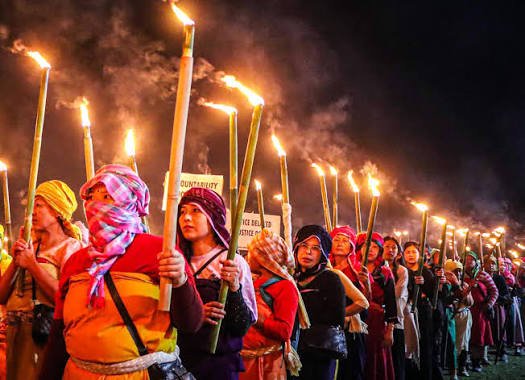
Massive torchlight rally in Imphal last evening.
Hundreds of activists took to the streets, condemning the brutal killing of three civilians in the recent violence.
Three years later, Manipur still demands peace and security.
Narendra Modi and Amit Shah have abandoned Manipur.
How many more innocent lives must be lost?
— Krishna Yadav (@Control_Krishna) October 25, 2026
SoO agreement lapses amid Valley opposition
The expiry of the SoO agreement with Kuki-Zo armed groups in September 2026 has further reinforced the perception that decisions affecting the hills are increasingly shaped by political pressure from Imphal.
The agreement, involving the Centre, the Manipur government and Kuki-Zo armed groups under the Kuki National Organisation and United People’s Front, provided a framework for regulating the activities of cadres and maintaining designated camps. Sections of Valley civil society had long demanded its termination, citing allegations of violations during the ethnic conflict.
After the agreement expired, the state government confirmed that it had not been extended, with opposition to its continuation among the factors publicly cited. The decision has intensified concerns among Kuki-Zo groups about the future of the peace process.
There are legitimate grounds for investigating violations, recovering illegal weapons and holding offenders accountable. But the future of a security framework affecting an already alienated community should be determined through evidence, negotiations and clearly stated policy objectives—not simply by the volume of protests against it.
If the continuation of a negotiated arrangement becomes politically untenable primarily because of pressure from one side of an ethnic conflict, confidence in future negotiations will be difficult to restore.
The government must explain how it intends to address security concerns, prevent further violence and maintain channels of engagement after the agreement’s expiry. Otherwise, a decision presented as a response to public sentiment risks deepening the very divisions it is supposed to address.
Security operations and the question of equal enforcement in Manipur
The security response following the killing of three Meitei civilians in the Sunurok–Nongshum hills on October 19 provides another test of consistency.
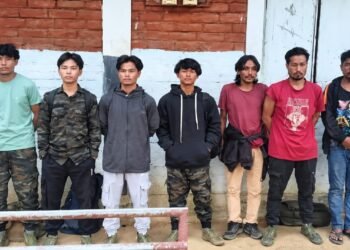
The killings triggered protests in Imphal, including demonstrations near the Chief Minister’s residence. Security forces launched combing operations, and authorities subsequently announced arrests and the recovery of a substantial cache of weapons and ammunition.
The swift deployment of security personnel and the pursuit of suspects were necessary responses to a grave crime. No civilian killing should be tolerated, regardless of the victim’s ethnicity.
However, the wider question is whether similar urgency, investigative intensity and public accountability follow when tribal civilians are killed or when allegations of violence involve other armed actors.
A democracy cannot be governed by one region’s street power
Taken together, these episodes point to a deeper institutional problem. The restoration of elected government in February 2026 ended a period of President’s Rule, but it did not resolve the question of whose concerns carry the greatest weight in the state’s political system.
From government formation and Census deferment to delimitation, the SoO framework, security operations and development spending, the recurring concern is that political pressure generated in the Valley can shape decisions with consequences for the entire state.
The answer is not to dismiss protests in Imphal or deny the genuine anxieties of Meiteis. Democratic protest is legitimate, and governments must respond to public concerns. But responsiveness cannot become selective, nor can the ability to mobilise large crowds become an informal substitute for constitutional representation and inclusive decision-making.
The Centre and the state government must establish transparent consultation mechanisms involving tribal representatives, district authorities and affected communities before taking major decisions on population enumeration, delimitation, security agreements and development spending. They must explain their decisions, publish the evidence supporting them and apply the same standards of law enforcement across communities.
Manipur cannot achieve lasting peace if one region’s street power is perceived to outweigh the political rights and legitimate concerns of others. The voices of Nagas, Kuki-Zos and other hill communities cannot remain secondary whenever the streets of Imphal grow louder.
A democracy is tested not simply by how quickly it responds to its most vocal constituency, but by whether it protects the rights and interests of those with less political influence.
In Manipur, the unanswered question is whether the government represents the whole state—or whether the loudest street increasingly determines the direction of governance.