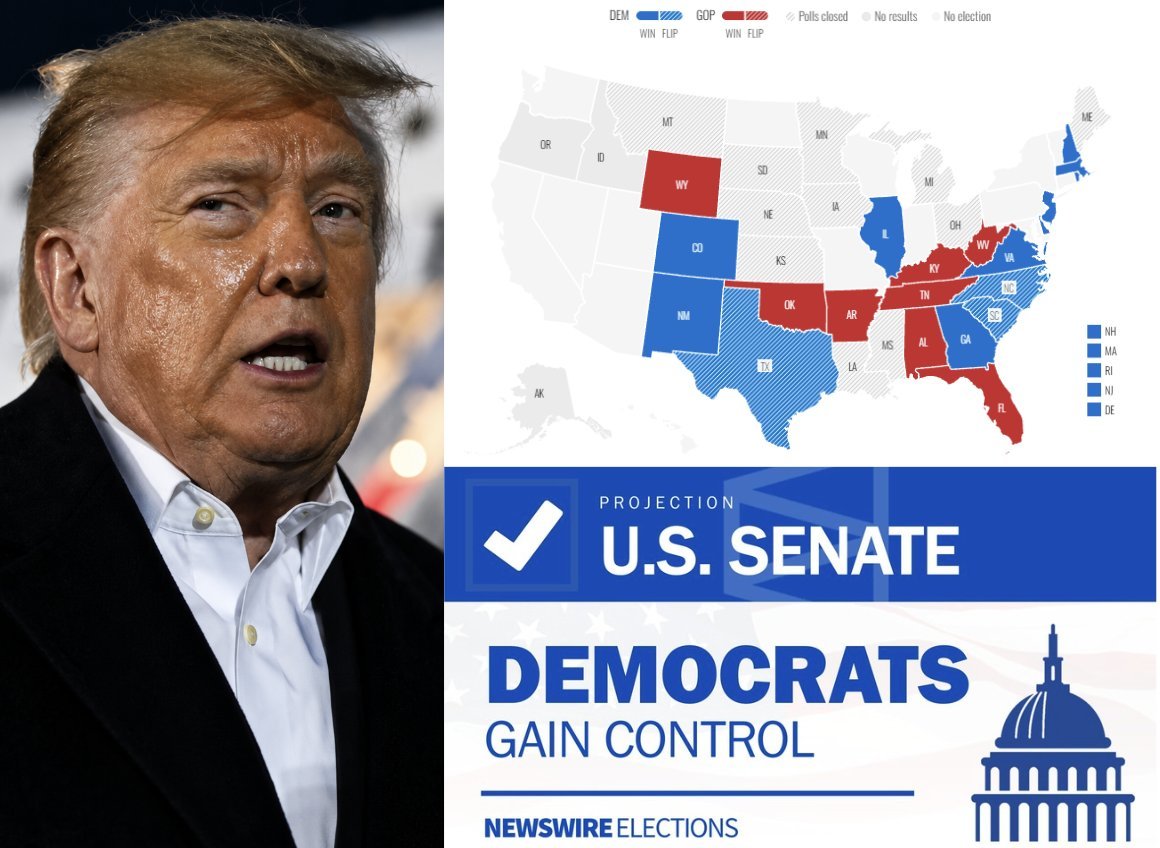
From Texas and Kansas to North Carolina and South Carolina, Democrats pulled off stunning victories, breaking Republican strongholds and recording several historic firsts in gubernatorial races.
BY PC Bureau
November 4: The 2026 US midterm elections delivered a sharp rebuke to President Donald Trump, with Democrats making sweeping gains across the country and breaking Republican strongholds. Rising living costs, declining approval ratings for Trump and public discontent over the war with Iran appear to have driven voters away from the ruling party.
The results could reshape the balance of power in Washington. A Democratic takeover of Congress would allow the party to stall Trump’s legislative agenda, launch investigations, summon administration officials and issue subpoenas. However, Trump’s veto powers and the Senate filibuster would remain significant obstacles to the Democrats’ plans.
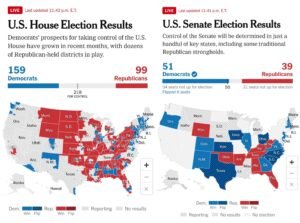
Here are the major developments from the 2026 US midterm elections:
Democrats scored an early and striking victory in North Carolina, flipping both a Senate seat and a House seat. Jamie Ager won the House race following the retirement of Republican Chuck Edwards, while former Governor Roy Cooper defeated Michael Whatley in the Senate contest. It was the first time Democrats had won a North Carolina Senate seat since 2008.
In New Jersey, Democrat Rebecca Bennet, a former Navy helicopter pilot, flipped a House seat by defeating two-term Republican Tom Kean Jr. The constituency had changed hands in the previous two midterm cycles and was considered a key battleground.
US Midterm Elections: Democrats Win Senate Majority, House of Representatives, Defeat Trump-Backed Candidates In Republican Strongholds https://t.co/J62YUbErW9
— Reliable Surz🇺🇳 (@rabiu_shina) November 4, 2026
Pennsylvania also delivered a clear Democratic victory. Bob Brooks defeated Republican incumbent Ryan Mackenzie, campaigning on his blue-collar background and the rising cost of living, a major concern among voters.
READ: Ladakh Admin Orders Halt on Activities at Wangchuk’s School
In two traditionally Republican states, South Carolina and Texas, Democrats captured Senate seats in historic victories. Annie Andrews defeated Darline Graham in South Carolina, while James Talarico defeated Republican Ken Paxton in Texas.
Texas delivered another major setback for Republicans in the governor’s race. Democrat Gina Hinojosa defeated incumbent Greg Abbott, becoming the state’s first Democratic governor since 1990 and its first Latina governor. Abbott had been seeking an unprecedented fourth term after winning the office in 2014.
Kansas, another Republican stronghold, witnessed a major upset. Democrat Adam Hamilton defeated Republican Roger Marshall to capture the Senate seat, marking the first Democratic victory in the state in nearly a century. Hamilton, a Methodist megachurch pastor, overcame Marshall, who had sought a second term and received two campaign visits from Trump in October.
The gubernatorial contests produced several other setbacks for Republicans. In Ohio, Indian-origin Republican Vivek Ramaswamy lost the governor’s race to Democrat Amy Acton. An advertising controversy involving Acton’s birth mother failed to derail her campaign.
Iowa elected its first Democratic governor since 2006, with Rob Sand defeating Republican Zach Lahn. The result was particularly significant because Trump had carried the state by 13 percentage points in the 2024 presidential election.
The elections also produced several historic firsts. In Georgia, Keisha Lance Bottoms defeated Rick Jackson to become the first Black woman elected governor of a US state. Wisconsin elected Democrat David Crowley as its first Black governor after he defeated Republican Tom Tiffany. In New Mexico, Deb Haaland became the first Native American woman elected governor.
Trump acknowledged the results and said he would work with Democrats in the interest of the country. He nevertheless maintained that Republicans would have won by a landslide had he himself been on the ballot.