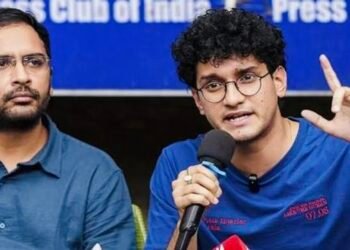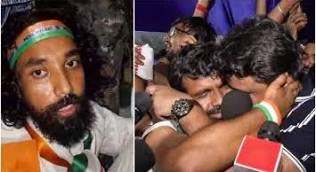
Mahto called off his fast after the state ordered a CID probe into recruitment-exam irregularities since 2014 and announced a committee to overhaul Jharkhand’s examination system.
Mahto, 33, had been on hunger strike since the night of August 2 at Ranchi’s Jaipal Singh Munda Stadium, where students had been protesting alleged irregularities, paper leaks and malpractice in recruitment examinations conducted by the Jharkhand Public Service Commission (JPSC) and Jharkhand Staff Selection Commission (JSSC).
The broader student agitation at the stadium had begun in late July following the declaration of the 14th JPSC preliminary examination results. By Monday, the protest had entered its 24th day.
The breakthrough came after an emergency Cabinet meeting chaired by Chief Minister Hemant Soren. The government announced the cancellation of the JSSC-CGL examination and all recruitment processes associated with TDPL.
Soren said the decision would cover not only examinations conducted through the agency but also results and selections arising from those processes.
The government also ordered a comprehensive CID investigation into alleged irregularities in recruitment examinations conducted in Jharkhand since 2014. The probe will examine both major and minor discrepancies, widening the scope beyond the examinations at the centre of the current agitation.
The state has additionally decided to constitute an examination-reforms committee headed by senior IAS officer Amitabh Kaushal. The panel is expected to examine weaknesses in the existing recruitment system and recommend measures to make future examinations more transparent and secure.
The government has also indicated that it will examine provisions of the Centre’s Public Examinations (Prevention of Unfair Means) Amendment Bill as part of efforts to strengthen penalties against organised examination malpractice.
READ: Jharkhand Recruitment Row: Soren Scraps Exams, Orders CID Probe
Mahto ends fast but says struggle continues
Speaking after the government’s announcements, Mahto said the decisions addressed several of the issues for which the students had been protesting, but cautioned that the movement had not reached its ultimate objective.
“Our demands have been met, but we cannot say we are fully satisfied yet, as a long battle still lies ahead,” he said.
Mahto thanked Chief Minister Soren, the state government, fellow students, parents, the media, police and the administration for their roles during the prolonged agitation.
He made it clear, however, that the larger campaign for reforms in Jharkhand’s education and recruitment system would continue. Protesters are expected to discuss their next course of action before deciding whether to continue their agitation on other outstanding demands.
Victory of students’ struggle.
– Devendra Mahto as Jharkhand govt scraps JSS-CGL exams, cancels all tests conducted by TDPL pic.twitter.com/U8CfAwtREo
— News Arena India (@NewsArenaIndia) August 17, 2026
What triggered the protest?
The student movement was driven by allegations of paper leaks, irregularities in recruitment examinations, concerns over the use of examination agencies and complaints about a lack of transparency in results and evaluation.
The JPSC-JSSC Reforms Manch, which spearheaded several of the protests, had demanded cancellation of multiple examinations conducted after 2019, including the JSSC-CGL, Junior Engineer and Post Graduate Teacher examinations.
The protesters also sought an independent or CBI investigation, action against officials and others allegedly involved in malpractice, greater transparency in the release of answer keys and OMR sheets, and a more predictable examination calendar based on systems followed by national recruiting agencies such as the UPSC and SSC.
Earlier, the state government had cancelled the 14th JPSC Combined Preliminary Examination amid allegations of irregularities. Investigations by the CID and SIT followed, with several people questioned or arrested in connection with different aspects of the controversy.
The protesters, however, remained dissatisfied with earlier government measures and rejected claims that most of their demands had already been accepted. They continued to insist on cancellation of the JSSC-CGL examination and a broader investigation into the recruitment system.
Mahto’s health deteriorated during fast
Mahto began his hunger strike on August 2, initially refusing both food and water. After climate activist Sonam Wangchuk spoke to him through a video call on August 5-6, he agreed to take water and salt after Wangchuk warned that continuing without water could seriously endanger his life.
Mahto maintained that taking water did not amount to ending his hunger strike and continued to refuse food.
His health subsequently deteriorated. Doctors reported dangerously low blood sugar and blood pressure, along with dehydration and other complications.
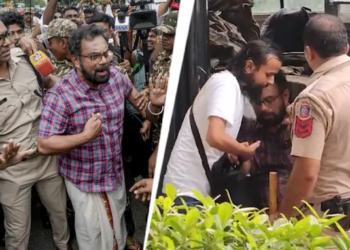
His condition worsened during a march towards the Jharkhand Assembly on August 10. Police used water cannons, tear gas and lathis to control protesters during the demonstration, and Mahto was taken to Ranchi Sadar Hospital after his blood sugar levels fell sharply.
He continued his fast while under medical supervision. Reports in the following days indicated electrolyte imbalance, low sodium levels and the presence of ketones associated with prolonged starvation.
By the middle of August, doctors had warned of potentially serious complications, including seizures, as Mahto’s blood pressure and other vital parameters remained dangerously low.
Who is Devendra Nath Mahto?
Mahto, who comes from a rural background in Ranchi district, has been involved in student activism for several years, campaigning on issues including recruitment examinations, scholarships, reservation policies and alleged examination malpractice.
He has appeared in JPSC and JSSC examinations himself and has postgraduate qualifications in Sanskrit and Kurmali/Tribal and Regional Languages from Dr Shyama Prasad Mukherjee University in Ranchi. He also holds a B.Ed degree.
Mahto has been active in Jharkhand’s student movement since around 2015. He contested elections in 2024 on a Jharkhand Loktantrik Krantikari Morcha (JLKM) ticket and emerged as one of the prominent faces of the current recruitment-exam agitation.
His hunger strike attracted support from student groups and political organisations and received wider attention after Wangchuk publicly intervened and urged him to protect his health.
What happens next?
The cancellation of the JSSC-CGL examination and TDPL-linked recruitment processes has given the protesting students a significant concession, but it also creates a new set of challenges.
Candidates who had already cleared stages of the cancelled recruitment processes face uncertainty over their future, while fresh examinations could mean additional preparation time and delays in appointments.
The government’s CID probe and the Kaushal-led reform committee will now determine whether the administration can address the deeper concerns raised by aspirants.
For Mahto and the protesters, the immediate hunger strike may be over, but the demand for a transparent, predictable and credible recruitment system remains unresolved.
The next phase of the agitation is likely to focus on the outcome of the investigations, action against those found responsible for irregularities and the implementation of structural reforms in Jharkhand’s examination system.