The Rs 83-crore infrastructure projects will drastically reduce travel distances, improve access to healthcare, education and markets, and strengthen connectivity in Ladakh’s border region.
BY PC Bureau
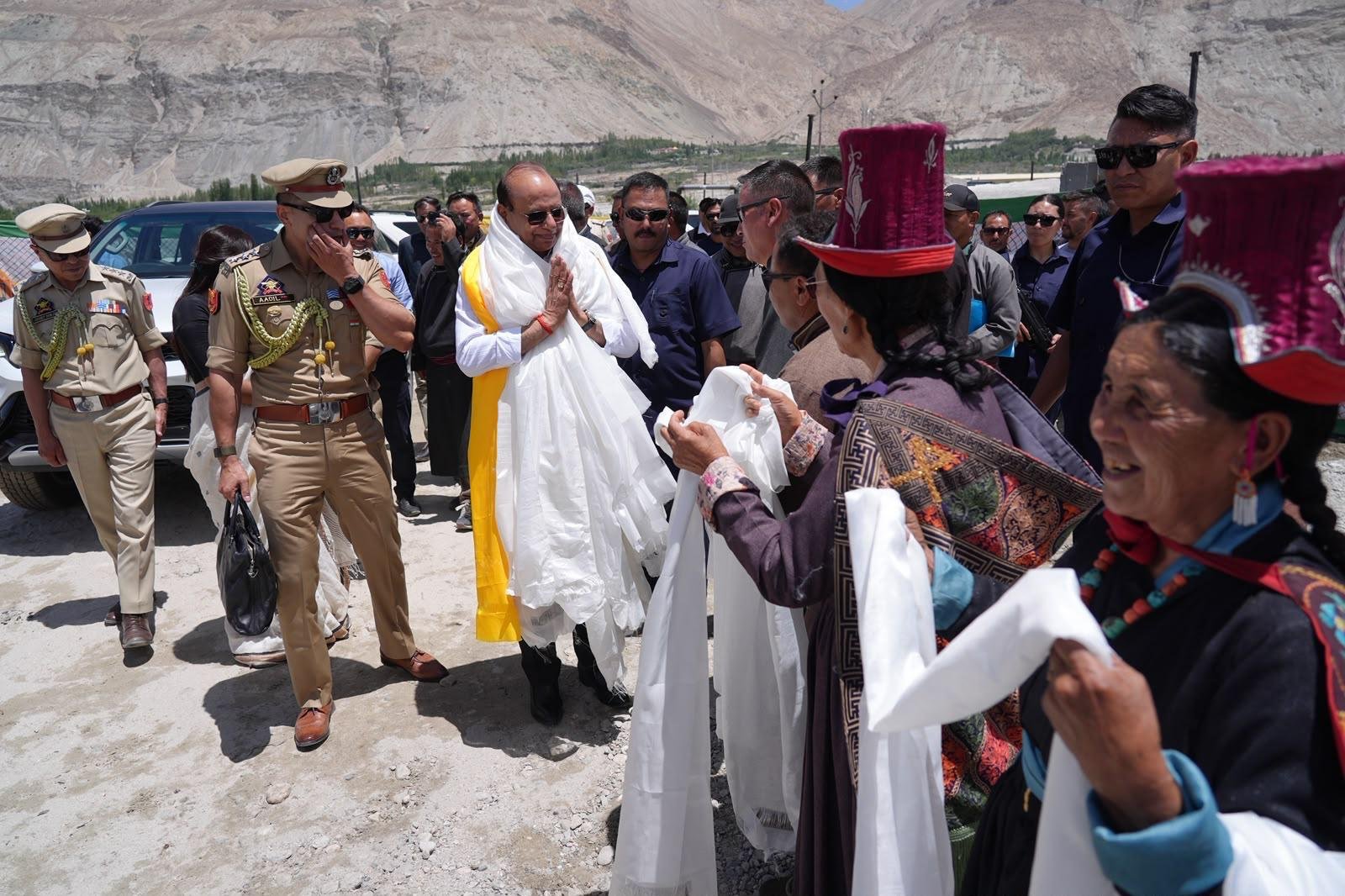
July 20: Lieutenant Governor Vinai Kumar Saxena on Monday laid the foundation stones for two major motorable bridges across the Siachen River in Nubra Valley, projects that are expected to transform connectivity for several remote border villages and significantly improve access to healthcare, education, markets and government services.
The Lieutenant Governor inaugurated the Burma-Sumoor Motorable Bridge and the Tongsted Motorable Bridge during his maiden visit to Nubra district, describing them as “lifelines” that would strengthen border infrastructure and accelerate socio-economic development in one of Ladakh’s most strategically important regions.
70-km Detour to Shrink to 500 Metres
The flagship Burma-Sumoor Bridge, sanctioned at Rs 64.10 crore, will dramatically reduce the distance between Sumoor and the villages of Burma, Charasa, Kuri and Murgi from nearly 70 kilometres to just 500 metres.
The project comprises 470 metres of bridge structures at three locations, a 2.5-km approach road, and six reinforced cement concrete (RCC) culverts.
Officials said the bridge will directly benefit around 848 residents, making travel faster and safer while ensuring quicker access to hospitals, schools, markets and administrative offices at Diskit. It is also expected to improve transportation of agricultural produce and promote tourism and local livelihoods.
READ: ‘Will Not End My Fast’: Wangchuk Condemns Police Action, Demands Parliament Hear Students
All-Weather Link for Remote Villages
The second project, the Tongsted Motorable Bridge, has been sanctioned at Rs 19.29 crore and involves the construction of a 160-metre steel plate girder bridge over the Siachen River.
Designed to withstand Ladakh’s harsh climatic conditions, the bridge will provide year-round connectivity to the remote villages of Tongsted, Yarma Gonbo, Dongsa, Nungsted, Henachy, Changlung and Samosa, benefiting more than 500 residents.
Besides improving the movement of people and essential supplies, the bridge will provide easier access to Yarma Gonbo, an important religious and cultural centre in the region.
Focus on Border Infrastructure
Addressing residents after laying the foundation stones, Saxena said the projects reflected the administration’s commitment to improving infrastructure in Ladakh’s remote border areas.
He said the bridges would not only improve connectivity but also strengthen agriculture, tourism and local economic activity.
“These are not merely engineering structures but lifelines that will connect communities with opportunities, reduce travel time, strengthen border infrastructure and create new avenues for economic growth,” the Lieutenant Governor said.
Credits PM Modi’s Development Vision
Saxena said Ladakh has witnessed unprecedented infrastructure development since becoming a Union Territory under the leadership of Prime Minister Narendra Modi.
He pointed to the expansion of road networks, construction of strategic bridges and enhanced connectivity in border villages as key achievements aimed at improving the quality of life for residents.
Boost to Tourism and Local Economy
The Lieutenant Governor noted that Nubra Valley possesses enormous tourism potential and said improved road and bridge infrastructure would encourage greater tourist inflow while generating employment opportunities for local youth through homestays, transport services, handicrafts and adventure tourism.
He also observed that the rivers of Nubra, while vital for agriculture and horticulture, often become major obstacles during floods and adverse weather conditions. The construction of all-weather bridges, he said, would ensure uninterrupted connectivity throughout the year.
The two bridge projects are being executed under the Special Development Package (SDP) of the Union Territory Administration and are expected to play a key role in improving mobility, strengthening border infrastructure and promoting balanced regional development in Ladakh’s frontier areas.