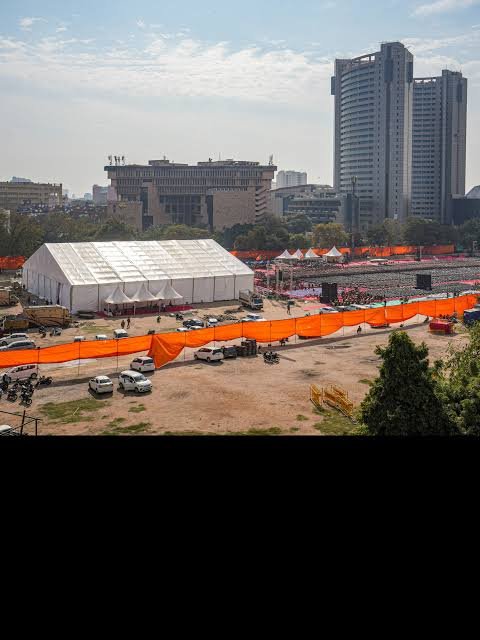
With nearly 50,000 people expected at the INDIA bloc rally, Delhi Police have divided Ramlila Maidan into 14 security zones, introduced multi-layered frisking and restricted public entry to three gates.
BY PC Bureau
New Delhi, October 31, 2026: Delhi Police have drawn up an extensive, technology-driven security plan for the Congress-led INDIA bloc’s rally at Ramlila Maidan on November 1, deploying thousands of personnel, hundreds of surveillance cameras and AI-enabled monitoring systems to manage the expected turnout of nearly 50,000 people.
The rally, scheduled from 10 am to 5 pm, is being organised to demand the resignation of Chief Election Commissioner Gyanesh Kumar over alleged irregularities in the Special Intensive Revision (SIR) of electoral rolls. Opposition parties have accused the Election Commission of compromising the integrity of the electoral process, allegations that have been contested by the poll body.
Security arrangements will cover the 12-acre venue and surrounding areas, with approximately 200–250 high-definition CCTV cameras installed to monitor crowd movement, entry and exit points and other sensitive locations. Their live feeds will be relayed to dedicated control rooms for real-time surveillance and coordination.
Police personnel will also be equipped with body-worn cameras, while AI-enabled cameras will be used for facial scanning and monitoring in and around the venue. A temporary control room will coordinate surveillance operations and relay instructions to personnel deployed on the ground.
Join ‘Chalo Dilli’ on November 1 at Ramlila Maidan ✊ https://t.co/eSSFK6U4ez
— Congress (@INCIndia) October 31, 2026
3,500 police personnel to be deployed
The security operation will involve between 3,000 and 3,500 Delhi Police personnel, supported by central armed police forces. Authorities are preparing for an estimated gathering of around 50,000 participants.
For effective crowd management, the entire venue has been divided into 14 zones, each headed by an Assistant Commissioner of Police. These zones will, in turn, be grouped into eight larger regions under the supervision of senior police officers.
Of the eight gates at the venue, only three will be opened for public entry. Separate gates have been earmarked for VIP movement and senior police officers. All participants will undergo two levels of frisking before entering the rally ground.
Baggage-screening machines, metal detectors and multiple layers of barricades are being installed as part of the security arrangements.
READ: Days After Pasighat Violence, Five Minors Still in Police Custody
Emergency exits and crowd movement under watch
Police have also prepared special evacuation routes and designated emergency exits to deal with any unforeseen situation. Crowd movement and dispersal will be closely monitored to prevent congestion and ensure that participants leave the venue in an orderly manner.
Authorities are also keeping a close watch on the possibility of an unauthorised procession moving out of Ramlila Maidan after the rally.
Organisers have been directed to deploy an adequate number of volunteers to assist participants, arrange drinking water and provide separate toilet facilities for women. They have also been asked to coordinate parking arrangements with the traffic police to minimise disruption on surrounding roads.
The police have sought detailed information about invitees, volunteers and buses being arranged to transport participants to the venue. The information is intended to help security agencies assess the expected crowd and regulate arrivals and departures.
Strict time limit for rally
The organisers have been instructed to conclude the programme by 5 pm, with no extension beyond the permitted hours. Overnight stays or camping at the venue will not be allowed.
With senior Congress leaders and representatives of other INDIA bloc constituents expected to participate, the rally is likely to draw considerable political attention. The elaborate security arrangements reflect the police’s preparations for a large gathering in the national capital, with surveillance, access control and crowd management forming the core of the deployment.