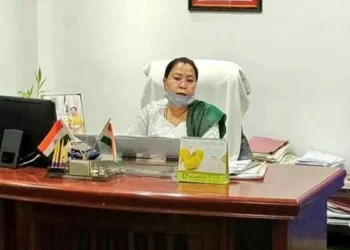
The proposal, floated by Home Minister Govindas Konthoujam, involves shifting Central forces and increasing the role of state security personnel.
BY PC Bureau
April 16, 2026: Amid ongoing ethnic tensions in Manipur, Kuki-Zo organisations have strongly opposed a proposed plan to replace Central security forces in sensitive hill areas, warning that such a move could destabilise the fragile peace established since the violence of May 2023.
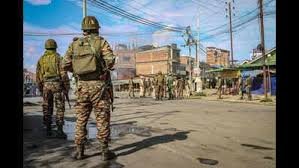
The controversy stems from remarks made on April 11 by Manipur Home Minister Govindas Konthoujam, who said the government is considering a phased redeployment of Central forces. Under the proposal, Central units currently stationed in valley peripheries would be shifted toward adjoining hill areas, while state forces would assume responsibility in the valleys. The minister cited pressure from valley-based groups and manpower constraints as key reasons.
READ: Post Modi-Trump Talks, India Hit as US Ends Iran, Russia Oil Waiver
However, Kuki-Zo organisations fear the plan could eventually lead to a reduction of Central forces in hill regions and buffer zones—areas seen as critical in preventing clashes between Kuki-Zo and Meitei communities.
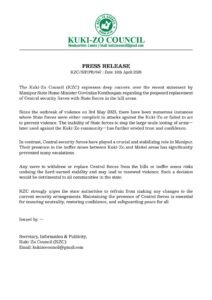
In a press release issued on April 16, the Kuki-Zo Council expressed deep concern, arguing that trust in state forces remains severely eroded since the outbreak of violence on May 3, 2023. The council alleged that state forces either failed to prevent attacks on Kuki-Zo communities or were complicit, including in incidents involving looted arms.
By contrast, the council credited Central forces with maintaining neutrality and stability, particularly in buffer zones separating the communities. It warned that any attempt to withdraw or replace these forces could “undo hard-earned stability” and trigger renewed violence. The group urged authorities to maintain the current security arrangement.
The stance aligns with that of the Indigenous Tribal Leaders’ Forum, which has consistently backed the continued deployment of Central forces. While not directly responding to the minister’s remarks, the ITLF recently reiterated the importance of strict buffer zones and announced plans to observe “Separation Day” on May 3, reinforcing demands for political resolution before any changes to security deployment.
Opposition has rapidly consolidated across Kuki-Zo civil society. The Kuki Inpi Manipur termed the proposal a “direct threat” to tribal safety, while local groups such as the Kuki Women Union have warned that replacing Central forces with state police would heighten insecurity in tribal areas. Within days, multiple organisations have formed a unified front against the move.
Analysts warn that implementing the proposal could escalate tensions in already volatile districts, potentially triggering protests, blockades, or fresh clashes. Politically, it may further strengthen demands for a separate administration or Union Territory for Kuki-Zo communities, while complicating Centre-state relations.
With the Union government closely monitoring the situation, any decision on redeployment is likely to have significant implications for peace efforts. For now, the strong and coordinated pushback from tribal groups underscores deep mistrust of state institutions and highlights the fragile nature of stability in Manipur.