Census row deepens in Manipur: COPTAM-KH says Census, NRC, citizenship and the constitutional status of the Hill Areas are separate legal issues that must not be conflated.
BY PC Bureau
September 1: A Kuki Hills tribal organisation has challenged the Manipur government’s announcement that the Centre has deferred Census operations in the state, arguing that a press note issued by the Chief Minister’s Secretariat cannot substitute for a formal order or notification from the competent Union authority.
The Committee on Protection of Tribal Areas Manipur–Kuki Hills (COPTAM-KH), in a three-page statement issued on Tuesday, questioned whether the Census exercise has been legally deferred at all in the absence of a publicly available government order specifying the decision.
The statement followed a press note issued by the Chief Minister’s Secretariat on August 31, which said the Union government had “deferred the Census operations in Manipur” after a meeting chaired by Union Home Minister Amit Shah.
COPTAM-KH said the wording of the state government’s announcement itself suggests that the meeting “agreed to defer” the exercise but does not establish that a formal decision has subsequently been issued by the competent Central authority.
‘A press release is not an order’
The committee said the distinction was important because a political or administrative press statement cannot, by itself, establish the legal status of a statutory exercise.
“It is therefore important to distinguish between a political press statement and an official statutory or administrative order,” it said.
Unless the formal instrument is placed in the public domain, COPTAM-KH said, the announcement should not be treated as conclusive proof that the Census has been legally deferred.
If the Centre has formally ordered a deferment, the committee demanded that the relevant authorities publish the notification or order, along with its number and date, the authority that issued it, the legal or administrative provision invoked, its effective date, territorial scope and duration.
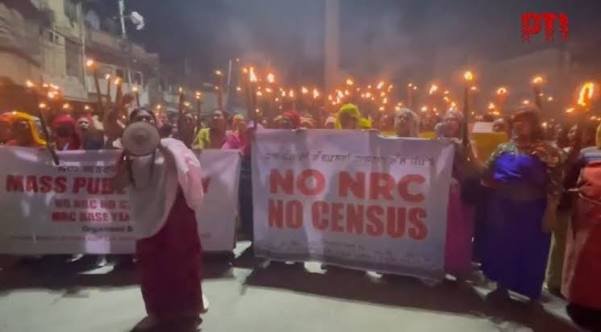
House-listing for Census 2027 was scheduled to begin in Manipur on September 1. The exercise had already become entangled in a wider political and legal dispute, with valley-based organisations demanding that an updated National Register of Citizens (NRC) precede the Census.
The Manipur High Court has also been seized of the issue and recorded undertakings concerning the commencement of the exercise. The matter is listed next for October 12, while the Centre has indicated that the Registrar General and Census Commissioner would issue a fresh notification.
Census, NRC and territorial status are different issues
COPTAM-KH also objected to what it described as the merging of separate questions concerning the Census, citizenship, NRC and the status of the Hill Areas.
“These are legally distinct questions and must not be conflated,” the committee said.
According to the organisation, demands by political or civil society groups cannot by themselves determine the legal status of territories or the constitutional rights of communities living in them.
The argument assumes particular significance in the context of the Hill Areas. COPTAM-KH referred to historical documents, including the White Paper on Indian States, 1950, which it said used descriptions distinguishing the Valley from surrounding tribal hill areas.
The committee cautioned against treating such historical descriptions as establishing present-day territorial jurisdiction.
Even if the Centre has decided to postpone a particular Census operation, it said, that decision should not be interpreted as recognising any claim about the historical territorial extent of Manipur or as prejudicing the existing constitutional and administrative position of the tribal Hill Areas.
It also argued that historical expressions such as “Hill Country of Manipur”, “Hill Areas of Manipur” and “Kuki Mountains surrounding Manipur” must be understood within their specific historical and constitutional contexts and cannot, without legal authority, be converted into present territorial claims.
Seven questions for Centre and state
COPTAM-KH called on the Union Ministry of Home Affairs, the Registrar General and Census Commissioner of India and the Manipur government to publicly clarify seven points:
- Whether Census operations in Manipur have been formally deferred.
- The order or notification number and date.
- The competent authority that issued the decision.
- The statutory or administrative power under which it was issued.
- Whether the deferment applies to the entire state or only specified areas or operations.
- The duration of the deferment.
- Whether the decision has any bearing on the territorial, constitutional or administrative status of the tribal Hill Areas.
The committee said it was not opposed to a lawful Census but objected to what it described as a lack of transparency. It also cautioned against using Census, NRC or citizenship-related processes “directly or indirectly, to alter or prejudice territorial and administrative arrangements without lawful constitutional authority.”
READ: How Did ₹7.4 Crore in Genuine Notes Vanish From PNB Chest?
Political dispute continues
The dispute over the Census comes against the backdrop of competing demands from Manipur’s Valley and Kuki-Zo communities.
Valley-based organisations have pushed for an NRC before enumeration, citing concerns over demographic change. Kuki-Zo groups, meanwhile, have opposed making the Census conditional on such a process and have argued that an independent population count is necessary after years of disputed demographic claims.
For COPTAM-KH, the immediate issue is narrower: whether the Census has actually been deferred through a legally valid Central order.
Until that document is made public, the organisation said, the assertion that the “Centre defers Census in Manipur” should be regarded as a claim requiring documentary verification rather than an established legal fact.
The next steps by the Registrar General and Census Commissioner, along with the Manipur High Court proceedings, are therefore likely to determine not only whether the Census remains on hold but also the precise legal basis, geographical scope and duration of any deferment.