BY PC Bureau
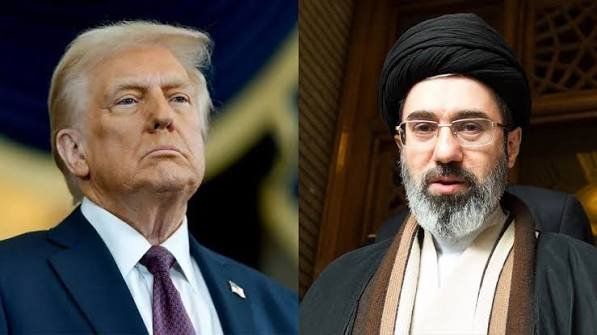
August 22, 2026: Iran has warned that any fresh US pressure will trigger a “crushing, punishing and devastating” response, as the Trump administration prepares what it describes as the toughest financial sanctions ever imposed on Tehran.
US Treasury Secretary Scott Bessent said details of the new measures would be unveiled on Monday. President Donald Trump has separately warned that countries providing “any type of lifeline to Iran” could also face economic penalties.
The escalation comes after nearly six months of conflict between the United States, Israel and Iran, which has inflicted heavy damage on Tehran’s economy and military capabilities, sharply disrupted shipping through the Strait of Hormuz and pushed global oil prices higher.
Major General Ali Abdollahi, chief of staff of Iran’s Armed Forces, said the country was prepared to respond across land, sea, air, air defence and cyberspace. Iranian media quoted him as saying the armed forces would meet “the enemy’s new threats with crushing, punishing and devastating responses.”
Despite the damage caused by the conflict, Iran retains missile and drone capabilities that could threaten tanker traffic through the Strait of Hormuz and targets across the region.
🇺🇸 🇮🇷 TRUMP: “I view the Strait of Hormuz as an American territory right now.”
A striking statement from Trump tonight as the six-month Iran war enters another potentially decisive phase. Trump says Iran is now desperate to make a deal, but suggests Washington may no longer…
— The Tectonic (@thetect0nic) August 22, 2026
Trump says Iran is not ready for a “right deal”
Trump said on Friday that Iran was still not prepared to accept what he called the “right deal”. Asked whether Washington’s military options were becoming limited, he replied: “It just means that we’re seeing what happens.”
He claimed the United States had “total control” of the region around the Strait of Hormuz, extending into nearby land areas. Trump went further, saying: “I view the Strait of Hormuz as an American territory right now, it’s an American territory.”
Speaking at a rally in Myrtle Beach, South Carolina, he again insisted that Iran must never acquire a nuclear weapon.
“We cannot let them have a nuclear weapon,” Trump said, warning that failure to prevent it could lead to “some very bad things.”
Washington promises unprecedented sanctions
Bessent described the new measures as part of an intensified campaign to weaken Tehran economically.
“It is a one-two punch. We have the blockade, and we are going to have the toughest sanctions in history,” he said, adding that Washington intended to “collapse this regime.”
Trump has also threatened secondary sanctions against countries that continue doing business with Iran.
China, Iran’s biggest buyer of seaborne oil, has rejected the approach. Beijing’s embassy in Washington said sanctions and pressure would not resolve the crisis and urged diplomacy instead.
More than 80 per cent of Iran’s seaborne oil exports went to China in 2025, according to Kpler data cited by Reuters. Greater pressure on Beijing could further strain already tense US-China relations over trade and critical minerals.
Tehran admits sanctions are taking a toll
Iranian officials have maintained a defiant public stance while acknowledging the economic damage caused by sanctions and war.
Parliament Speaker Mohammad Baqer Qalibaf, who has been involved in mediated talks with Washington, said Tehran needed to prepare for the new measures.
“We must make plans to deal with the unjust sanctions so that we can overcome them,” he said during a visit to neighbouring Iraq.
Qalibaf also warned that military strength alone could not sustain the country.
“No matter how much military power we have, we won’t survive if people are hungry and we don’t have financial turnover, economic growth and national production,” he said.
Iran has lived under US sanctions for decades, but the latest pressure comes as the country grapples with high inflation, a weakening currency, energy shortages and extensive infrastructure damage from the conflict.
READ: Arjun Rampal and Gabriella Demetriades Tie the Knot in Goa
Oil prices rise as Hormuz remains a flashpoint
Oil prices climbed on Friday following Washington’s sanctions threat. Brent crude settled at $94.39 a barrel, while US West Texas Intermediate closed at $87.06.
Before the conflict, the Strait of Hormuz carried roughly one-fifth of global oil trade. Traffic has since fallen sharply, with only seven commodity ships passing through the waterway on Thursday, according to Kpler data.
Iran and Oman have held separate discussions aimed at restoring navigation through the strait, while Washington has opposed any arrangement that would impose tolls on ships.
NATO’s top commander, US Air Force General Alexus Grynkewich, also convened a video conference of allied defence chiefs to discuss support for freedom of navigation. Officials stressed that the effort did not amount to a NATO mission, although the alliance could assist with coordination.
Costly conflict puts pressure on Trump
The war has inflicted severe damage on Iran, but Trump has yet to fully achieve his stated objectives of dismantling Tehran’s nuclear programme and creating conditions for the overthrow of its clerical leadership.
The conflict has also carried domestic political costs for the US president, particularly as higher fuel prices have hit American consumers. A Reuters/Ipsos poll this week showed Trump’s approval rating at its lowest level of his current term.
Ceasefire arrangements were announced in April and again in June, but a lasting restoration of normal shipping through the Strait of Hormuz has yet to materialise.
With military options carrying significant risks, Washington is now placing greater emphasis on economic pressure. Tehran, meanwhile, says it can withstand the sanctions but has made clear that any further escalation could provoke a military response.