In this exclusive interview, UPF spokesperson Aaron Kipgen accused the Centre and Manipur government of delaying a political settlement, selectively targeting Kuki-Zo cadres and failing to protect the community from continuing violence and highway blockades.
By Navin Upadhyay
New Delhi/ September 11, 2026: Kuki-Zo armed groups are growing increasingly restless over the prolonged delay in finding a political settlement to the Manipur conflict and could eventually consider walking out of the Suspension of Operations (SoO) framework with the Centre if it fails to deliver what they regard as justice, security and a separate Union Territory for their people.
In an exclusive interview with The Power Corridors in Delhi, Aaron Kipgen, a prominent spokesperson of the United People’s Forum (UPF), one of the two Kuki-Zo armed-group platforms engaged in talks with the Centre under the SoO framework, said the groups had entered the agreement in the hope of finding a peaceful political solution—but that their patience could not be tested indefinitely.
“We entered into the SoO because we believe in peace. But those in power must also understand and appreciate our compulsions and our commitment,” Kipgen said.
“It cannot go on indefinitely. The SoO framework came into existence in 2008. We have waited 18 long years. Hundreds of our community members have lost their lives, our women have been raped and butchered, and our children have suffered the brunt of this conflict,” he said.
Asked specifically whether the Kuki-Zo groups could consider exiting the SoO framework, Kipgen said they continued to have faith in the Centre but warned that there were limits to their patience.
“We still have faith in the Centre, but it cannot go on forever. If we cannot deliver what our people expect for their safety, security and growth, what moral right will we have to represent them? We may be left with no option but to walk out of the SoO agreement,” he said.
His remarks are the clearest indication yet of mounting pressure on the Kuki-Zo armed groups, which represent their community in political negotiations with the Union Ministry of Home Affairs, to secure an early settlement to the ethnic conflict.
The violence that erupted in Manipur in May 2023 has killed more than 250 people from the Kuki-Zo community, according to Kuki-Zo organisations, with Kipgen claiming that about 20 Kuki-Zo people have been killed in the past four to five months alone.
READ: Kuki-Zo Leaders: Force Can’t Bring Peace, Press Centre for Manipur UT
‘At what cost?’
Kipgen said the Centre’s slow response to the Kuki-Zo political demand was only extending the hardship of those displaced by the conflict.
“We hope the Centre understands that delaying action on this sensitive issue will only deepen the misery of people on the ground,” he said.
He noted that a political proposal submitted to Union Home Minister Amit Shah in September last year through the SoO–MHA dialogue channel was still pending.“The formulation sent to Home Minister Amit Shah last September on our political demand remains with him. We have received no response in a year,” he said.
“This suggests the government believes it can simply buy time. But at what cost?” he asked.
The Kuki-Zo groups have been seeking a separate administrative arrangement for the hill areas, with the demand for a Union Territory with a legislature emerging as a central political demand among sections of the community.
Anger over highway blockade
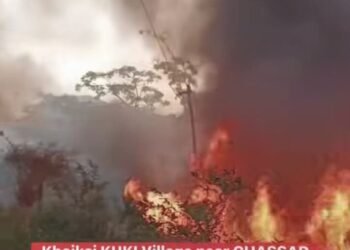
Kipgen also accused the Manipur government of failing to end a prolonged blockade on key highways by the United Naga Council (UNC), alleging that it had driven up the prices of essential commodities in several Kuki-Zo-majority hill districts.
“It is shocking that this blockade has gone on for months and the Manipur government has done nothing. The UNC has made a mockery of a government order that bars any such blockade, but the government has remained a picture of inaction,” he said.
Asked what the Kuki-Zo groups would do if the blockade continued, Kipgen warned that patience among people was running out.
“Then people will do whatever they like. We can’t just wait and watch. We will be forced to act,” he said.
‘Selective action’ against Kuki-Zo cadres
Kipgen also accused the Manipur government and security agencies of adopting what he described as a selective approach towards armed groups operating in the state.
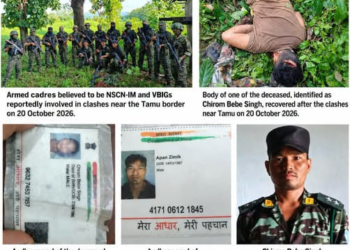
He alleged that security forces were targeting Kuki-Zo cadres while failing to take comparable action against the activities of the NSCN (IM).
“Everyone knows who killed the three Kuki-Zo pastors in May this year,” Kipgen said. “Everyone knows who is killing our people and burning their homes. But it is surprising that no one is ready to act even when we have so many thousands of security forces on the ground.”
“Who is abetting them to target Kuki-Zo villagers?” he asked.
Accusing the Manipur government of failing to hold perpetrators of violence against Kuki-Zo people accountable, Kipgen questioned how the two communities could be expected to coexist without justice and accountability.
He also referred to the Arambai Tenggol, a Meitei group that Kuki-Zo organisations have accused of involvement in attacks, and questioned what he described as the political response to allegations against its members.
“How could we expect to coexist in a state where the Chief Minister himself gives a clean chit to a group like Arambai Tenggol, which was involved in rape and killing of our women, looting of weapons and attacks on security forces?” he said.
Anger over KLA camp operation
Kipgen was particularly critical of the recent security operation at a Kuki Liberation Army (KLA) camp in Kangpokpi, alleging that the operation violated the SoO framework.
“This is outrageous. According to the SoO framework, such raids were not allowed, and any inspection could take place only with the district police’s help. In this case, the police was not present and the KLA cadre was arrested,” he said.
Kipgen alleged that NSCN (IM) camps were operating in Manipur without comparable action being taken against them.
“You expect us to turn a blind eye to such one-sided action against our boys. This is not going to happen,” he said.
He questioned whether the use of force by security agencies could produce a durable settlement.
“The CRPF’s CoBRA unit cannot expect to bring peace through force,” he said.
For Kipgen, the answer lies in returning the conflict to the political negotiating table.
“The political demands of the Kuki-Zo groups have to be addressed for a lasting settlement,” he said.
Census, NRC and the 1951 baseline
On the Centre’s decision to defer the Census in Manipur and the state Assembly’s call for an NRC before the Census and delimitation, with 1951 proposed as the baseline, Kipgen opposed the sequencing.
A Census, he argued, should precede any citizenship register so that questions relating to population and citizenship are based on comprehensive and officially verified data.
He also questioned the use of 1951 as the sole baseline, arguing that it could disadvantage hill communities because many remote settlements had limited access to government offices and official enumeration at the time.
The issue has become contentious in Manipur, where Meitei organisations and several Naga groups have pressed for an NRC before the Census and delimitation, citing concerns over alleged illegal immigration and demographic changes.
The Centre has deferred Census operations in Manipur amid continuing political sensitivities and concerns over the security situation.
For the Kuki-Zo leadership, however, the larger concern remains the unresolved political future of the community.
Kipgen’s warning that the SoO framework cannot continue indefinitely puts the Centre under renewed pressure to demonstrate progress in the political dialogue—and signals growing impatience among the Kuki-Zo groups that have maintained the ceasefire arrangement while waiting for a settlement.