Without naming any country, BRICS called for disputes to be settled through dialogue and diplomacy, while warning of rising nuclear risks and the dangers of escalation. It also called on israel to respect the terms agreed with the Lebanese government and to withdraw its occupying forces from all of the Lebanese territories, in which they remain.
BY PC Bureau
September 12: The BRICS summit in New Delhi has delivered a pointed message on one of the defining issues of Donald Trump’s economic policy: unilateral tariffs. The group also sent a strong message to Trump’s ally Israel, asking it to respect the terms agreed with the Lebanese government and to withdraw its occupying forces from all of the Lebanese territories, in which they remain.
Without naming the US president or the United States, the New Delhi Declaration expressed serious concern over the growing use of unilateral tariffs, non-tariff barriers and other coercive economic measures, warning that they distort trade and undermine the rules of the global trading system.
The language is significant because it comes amid a sharp expansion of tariff-based trade policy under Trump, who has repeatedly used tariffs as a tool to pressure trading partners and pursue what his administration describes as fairer trade.
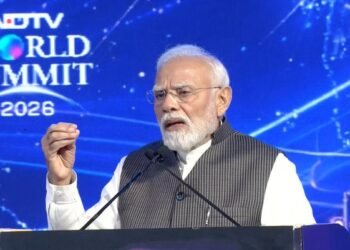
Sharing my concluding remarks during the BRICS Summit. pic.twitter.com/PNkEBxAD3O
— Narendra Modi (@narendramodi) September 12, 2026
BRICS, however, argued for a very different approach.
The grouping called for international economic disputes to be addressed through dialogue, consultation and diplomacy rather than unilateral pressure. It also reaffirmed the importance of the multilateral trading system and adherence to World Trade Organization principles.
Although the declaration does not mention Trump by name, its criticism of unilateral tariffs closely intersects with one of the most controversial elements of his economic agenda.
The New Delhi BRICS Declaration delivers several important outcomes for India:
• China and Russia supported the aspirations of India and Brazil to play a greater UN role, including in the Security Council
• BRICS backed stronger African representation and a greater… pic.twitter.com/vZf3zLn75M— Nabila Jamal (@nabilajamal_) September 12, 2026
A rebuke without naming Trump
The choice of language appears deliberate.
BRICS members include major trading powers such as China, India, Brazil and Russia, all of which have strong interests in an international trading system that is less vulnerable to unilateral restrictions.
Rather than directly confronting Washington, the declaration framed the issue as a broader defence of multilateralism.
The BRICS countries said unilateral tariff and non-tariff measures can distort international trade and are inconsistent with WTO rules and international law.
That formulation allows the grouping to challenge tariff-based economic pressure without turning the summit declaration into a direct political confrontation with the United States.
The message, nevertheless, is difficult to separate from the current global trade environment.
READ: BRICS 2026: Modi Pitches Global South Voice and UNSC Reform
From tariffs to economic coercion
The declaration went beyond tariffs.
BRICS also raised concerns about the use of coercive economic measures, signalling opposition to the increasing use of trade, finance and market access as instruments of geopolitical pressure.
The grouping argued that differences between countries should be resolved through consultation and negotiation rather than unilateral action.
Its position reflects a wider BRICS argument that the global economic order should become more representative of developing countries and the Global South.
The summit therefore linked trade policy with the larger question of global governance.
Stern message to Israel
BRICS leaders have issued a strong warning over the worsening situation in the Occupied Palestinian Territory, expressing “grave concern” over the humanitarian crisis in Gaza and calling for full compliance with international law.
In the New Delhi Declaration adopted at the BRICS summit on Saturday, the grouping specifically stressed the need to uphold international humanitarian and human rights law and condemned actions that violate those principles.
The declaration criticised the use of starvation as a method of warfare, attacks on civilians and civilian facilities, including hospitals, and restrictions on the delivery of humanitarian assistance. BRICS also rejected attempts to politicise or militarise humanitarian aid.
The grouping reaffirmed its “steadfast support” for the United Nations Relief and Works Agency for Palestine Refugees in the Near East (UNRWA), insisting that its UN-mandated role in providing essential services to Palestinian refugees must be respected.
BRICS urged all parties to comply with their obligations under international law, exercise the “utmost restraint” and refrain from actions that could further escalate the conflict.
Iranian President at #BRICS Summit: BRICS Must Play a Greater Role in Defending Palestinian Rights#Iran #Palestine pic.twitter.com/3yF4Jd1Wqt
— IranPress (@IranPress_eng) September 12, 2026
ICJ measures and humanitarian access
The declaration also referred to the provisional measures issued by the International Court of Justice in the case brought by South Africa against Israel.
BRICS said the court’s measures reaffirmed Israel’s obligation to facilitate the provision of humanitarian assistance to Gaza.
On Jerusalem, the grouping rejected “any unilateral measures” that could alter the city’s legal and historical status.
It called for the sanctity of all religious sites to be protected and for worshippers to have unrestricted access to places of worship.
Lebanon ceasefire
The declaration also addressed the situation in Lebanon, welcoming the ceasefire while calling for the full implementation of UN Security Council Resolution 1701.
BRICS condemned what it described as continued violations of the ceasefire and Lebanon’s sovereignty, and called on Israel to abide by the commitments reached with the Lebanese government.
The grouping further demanded the withdrawal of Israeli forces from Lebanese territory where they continue to remain.
The New Delhi Declaration thus placed the Gaza crisis, humanitarian access, protection of civilians and adherence to international law firmly within BRICS’ broader call for diplomacy and a rules-based international order.
A different vision of globalisation
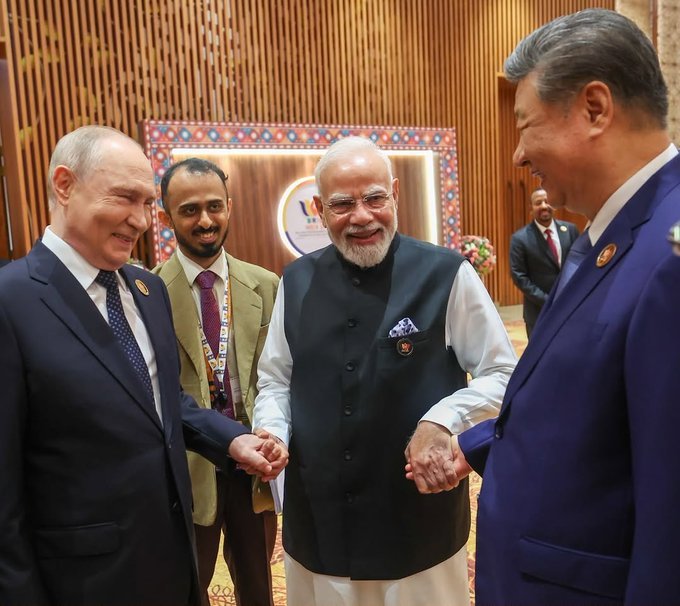
Prime Minister Narendra Modi, opening the summit, said BRICS was “not against anyone” and sought to take everyone along.
That message assumes particular significance against the backdrop of tensions between the United States and several major BRICS economies.
Modi called for a global system based on partnership rather than what he described as a “pyramid of power and privilege”. He also renewed India’s demand for reform of the United Nations Security Council.
The economic and political messages were closely connected: a more representative global order, according to the BRICS vision, should also have a trading system in which unilateral economic pressure does not determine the rules.
BRICS backs diplomacy
The declaration also called for disputes to be settled peacefully and emphasised conflict prevention, including efforts to address the root causes of conflicts.
It advocated a multilateral approach to major international questions while acknowledging that BRICS members may have differing national positions.
The grouping also expressed concern over rising nuclear risks and the dangers of escalation amid worsening geopolitical tensions.
The emphasis throughout was on dialogue rather than confrontation.
Push for alternative payment mechanisms
BRICS also backed continued work on practical arrangements for cross-border payments among its members.
The proposal is part of the grouping’s broader effort to strengthen economic cooperation and make transactions between member countries more efficient.
Importantly, the declaration did not announce the creation of a common BRICS currency.
Instead, the focus remained on practical payment arrangements and greater financial cooperation.
A carefully worded challenge to Washington
The New Delhi Declaration therefore represents a carefully calibrated challenge to the direction of US trade policy.
BRICS has not declared an economic war on Washington. Nor does the declaration name Trump.
But by condemning unilateral tariffs, non-tariff barriers and coercive economic measures at a summit attended by some of the world’s largest emerging economies, the grouping has made its position unmistakable.
Trade rules, BRICS argues, cannot simply be rewritten through unilateral economic pressure.
That is particularly relevant at a time when tariffs have become one of Trump’s principal instruments of economic diplomacy.
The New Delhi summit thus leaves two messages.
One comes from Modi: BRICS is not an anti-Western bloc.
The other comes from the declaration: the global trading system cannot be governed by unilateral tariffs and coercion.
Together, they amount to a carefully worded but unmistakable message to Washington — and to Trump’s tariff-driven trade policy.