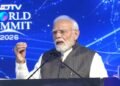
Opening the BRICS Summit in New Delhi, Modi renewed India’s demand for UN Security Council reform and said developing nations must have a greater voice in global institutions.
BY PC Bureau
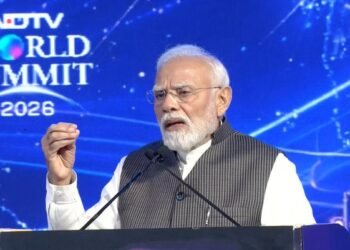
September 12, 2026: Prime Minister Narendra Modi used the opening of the BRICS Summit in New Delhi on Saturday to draw a clear line between cooperation and confrontation, telling leaders of the expanded grouping that BRICS is “not against anyone” and wants to work with all countries.
Addressing leaders and delegates at Bharat Mandapam, Modi also renewed India’s call for reform of the United Nations Security Council, arguing that global institutions must better reflect the realities of the 21st century and give greater representation to the Global South.
Modi said India’s fourth BRICS chairmanship had been built around a “people-centric and humanity-first approach”, with resilience, innovation, cooperation and sustainability identified as its key priorities.
“It gives me immense pleasure to welcome and greet all of you to India,” Modi said at the opening session. He said India had deliberately sought to connect the BRICS agenda with ordinary people rather than allowing it to remain limited to official declarations and summit communiqués.
Sharing my opening remarks during the BRICS Session on ‘Inclusive Global Governance and Strengthening Multilateralism.’
https://t.co/g31TharSOc— Narendra Modi (@narendramodi) September 12, 2026
The Prime Minister thanked BRICS members and partner countries for their cooperation during India’s year as chair and said the grouping had established a distinct identity on the global stage.
The challenge now, he suggested, was to turn years of discussions and consensus into outcomes that could be felt by people.
‘We are not against anyone’
Modi’s assertion that BRICS was “not against anyone” appeared aimed at countering the perception in some Western capitals that the grouping is emerging as an anti-Western bloc.
“Everyone has their own perspectives and BRICS works on the principle of consensus. We are not against anyone, but we try to take everyone along,” Modi said.
He argued that the same principle should shape the international order in the years ahead, calling for a shift from a global system based on a “pyramid of power and privilege” towards one built around partnership.
The Prime Minister said developing countries and the Global South should no longer remain on the margins of institutions created in a very different geopolitical era.
Fresh push for UN Security Council reform
That argument fed directly into India’s longstanding demand for reform of the UN Security Council.
New Delhi has repeatedly maintained that the Council’s present structure does not adequately represent contemporary political, economic and demographic realities. Modi used the BRICS platform to again place reform of global governance institutions at the centre of India’s diplomatic agenda.
The call is particularly significant as BRICS has expanded beyond its original five-member structure, giving the grouping a broader representation of emerging economies and the developing world.
Focus on implementation
Modi also proposed a mechanism to ensure continuity and implementation of BRICS decisions between successive summits.
The idea is intended to prevent initiatives announced at one summit from losing momentum once the meeting ends. According to Modi, BRICS needs a system through which decisions are followed up and translated into concrete action.
The emphasis on implementation comes as the grouping seeks to demonstrate that its growing membership can produce practical cooperation rather than simply a larger collection of summit declarations.
READ: Modi Tells Pezeshkian Dialogue it Only Way Out of Middle East Crisis
Global South under pressure
Modi said the Global South was confronting a difficult international environment marked by supply-chain disruptions, trade barriers, climate pressures and geopolitical tensions.
In such circumstances, he argued, stronger cooperation among BRICS members and partner countries was becoming a practical necessity.
India’s chairmanship theme — “Building for Resilience, Innovation, Cooperation and Sustainability” — was presented as the framework for that effort.
The priorities range from strengthening institutions and expanding digital and financial cooperation to developing mechanisms capable of delivering benefits at a much wider scale.
#WATCH | PM @narendramodi welcomes Sheikh Khaled bin Mohamed bin Zayed Al Nahyan, Crown Prince of Abu Dhabi, to Bharat Mandapam, the venue of the BRICS Summit 2026.@BricsIndia2026 @MEAIndia#BRICS2026 #BRICSIndia2026 #IndiaBRICSChairship pic.twitter.com/EPLTDCCeeU
— All India Radio News (@airnewsalerts) September 12, 2026
The opening session thus set the tone for a summit that India has positioned as both a milestone in BRICS’ two-decade evolution and a test of whether the grouping can move beyond political declarations.
Modi’s message was clear: BRICS does not see itself as a bloc against the West, but as a platform seeking a more representative global order — one in which the Global South has a larger voice and greater influence.