The case has renewed questions about mob violence during the Kanwar Yatra, with legal experts stressing that even when an accident occurs, no individual or group has the right to impose punishment through violence.
BY PC Bureau
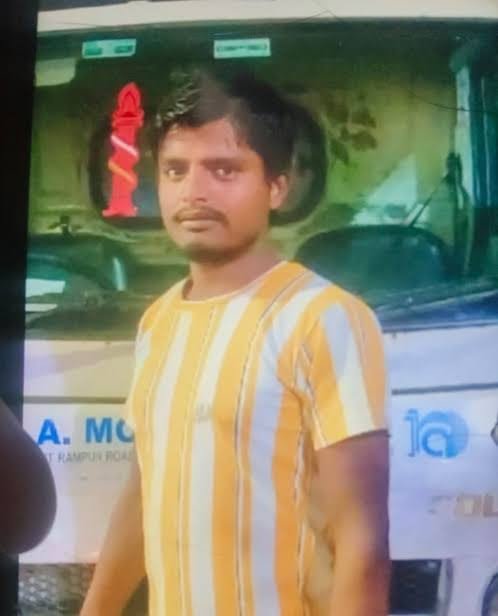
HAPUR (UP)/ August 8: A road accident involving a pickup truck and an auto-rickshaw carrying Kanwariyas in apur has taken a fatal turn after the truck driver, 24-year-old Azeem Ali, allegedly came under attack following the collision. Police have booked seven people in connection with the assault, including four Kanwariyas.
According to the complaint and police account cited in the case, Ali was driving a pickup truck when it collided with an auto-rickshaw carrying Kanwariyas during the ongoing pilgrimage season. The collision reportedly injured the auto-rickshaw driver.
What followed turned a road accident into a far more serious criminal case. The Kanwariyas allegedly pulled Ali out of his vehicle and assaulted him. He sustained critical injuries and was rushed to hospital, where he later died.
Police have registered a case against seven people in connection with the alleged assault. Four of those named are Kanwariyas. The investigation will determine what happened immediately after the collision, who participated in the assault and the precise circumstances that led to Ali’s death.
The case raises a fundamental question about the line between anger following an accident and criminal violence. Even if a driver is found responsible for causing a collision, that does not give those involved the right to administer punishment themselves. Questions of negligence, culpability and compensation are matters for the police, courts and established legal processes—not for an angry crowd.
READ: Wife, Lover Plot Murder; Man Uncovers Plan on WhatsApp
When an accident turns into mob violence
Indian law provides criminal consequences for violence committed by a group. Depending on the evidence and the circumstances, people involved in a fatal assault can face serious charges relating to causing death, voluntarily causing hurt or grievous hurt, unlawful assembly, rioting and common intention or common object. Where an assault results in death, investigators and prosecutors will examine the individual role of each accused rather than treating the incident simply as an extension of the original road accident.
The distinction is important. A collision on the road may itself require investigation into driving, negligence or other offences. But a subsequent assault is a separate act. The fact that someone may have caused an accident does not automatically provide legal justification for others to beat, drag or collectively punish that person.
Mob violence also creates a dangerous chain of escalation: an accident produces anger, anger turns into confrontation, and confrontation can quickly become an assault in which individual responsibility becomes blurred. The death of Azeem Ali shows the potentially irreversible consequences of that escalation.
READ:
2/10 HAPUR, UTTAR PRADESH – Azeem Ali, 24
Azeem Ali was driving a pickup truck when it collided with an auto-rickshaw carrying Kanwariyas during the pilgrimage season.
According to police, the collision injured the auto driver. The Kanwariyas then allegedly pulled Azeem from… pic.twitter.com/HPl49jw136
— Hoot Republic (@HootRepublic) August 8, 2026
The case also underlines the responsibility of authorities to maintain law and order during the Kanwar Yatra, when large numbers of pilgrims and ordinary road users share heavily congested routes. Uttar Pradesh authorities had already announced extensive traffic restrictions and diversions for the 2026 pilgrimage, including restrictions on heavy vehicles and, on some routes, wider closures to facilitate the movement of Kanwariyas.
The restrictions are intended to reduce the possibility of accidents and confrontations, but incidents can still occur when vehicles and large groups of pilgrims come into close contact. A recent incident in neighbouring Muzaffarnagar, for example, saw Kanwariyas allegedly vandalise a pickup vehicle after it came into contact with a kanwar, prompting police intervention.
The Hapur case, however, has a much more serious outcome. A road collision has been followed by an alleged assault and the death of a young man. The investigation must now establish exactly how the confrontation unfolded and fix responsibility on those whose actions contributed to the fatal outcome.
For the family of Azeem Ali, what began as a road accident ended with the loss of a 24-year-old man. For the justice system, the central issue is equally clear: an accident may be investigated, but punishment cannot be outsourced to a mob.