



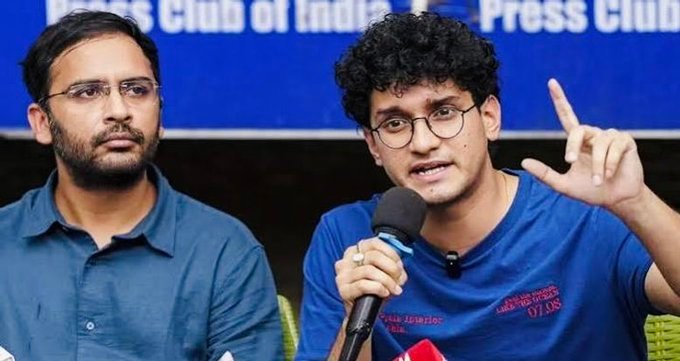
Delhi Police has opened a fresh front against the Cockroach Janata Party (CJP), with leaders Saurav Das, Ashutosh Ranka and Ajinkya Shinde remanded to five days of judicial custody over alleged trespassing at Jantar Mantar .
BY PC Bureau
New Delhi/ October 5: As Delhi celebrates Navratri, with its message of the triumph of good over evil ringing through the capital, the Delhi Police has sent Cockroach Janata Party (CJP) leaders Saurav Das and Ashutosh Ranka to judicial custody for trespassing at Jantar Mantar. The action raises uncomfortable questions about the treatment of dissenters and the shrinking space for political protest in the national capital.
Das, Ranka and fellow CJP leader Ajinkya Shinde were remanded to five days of judicial custody on Wednesday after being arrested for allegedly crossing police barricades and entering the Jantar Mantar protest area while demanding CEC Gyanesh Kumar’s resignation over alleged irregularities in the Special Intensive Revision (SIR) of electoral rolls.
The irony of the timing is difficult to ignore. At a time when the country invokes the victory of righteousness over injustice, the detention of political protesters demanding accountability from the country’s top election official has brought the question of democratic freedoms back into focus.
The issue is not whether protesters should be allowed to disregard lawful restrictions or whether the police can enforce conditions imposed by a court. It is whether the state’s response is proportionate to the conduct alleged, and whether the machinery of law is being used to facilitate peaceful dissent or to discourage it.
From barricades to jail
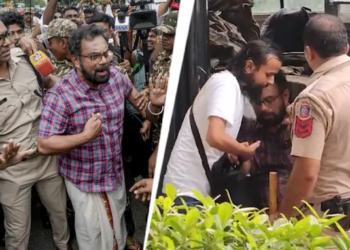
According to reports, the three leaders were detained on Tuesday morning after allegedly crossing barricades and raising slogans against Chief Election Commissioner Gyanesh Kumar. They face charges including trespassing, violation of bond conditions and obstruction of a public servant.
The police have reportedly treated them as repeat offenders, citing earlier undertakings to maintain peace. But the existence of a previous bond does not, by itself, settle the question of whether the latest protest warranted arrest and judicial custody. That assessment must rest on the specific allegations, the applicable law and the circumstances of the incident.
CJP legal team head Ratna Singh alleged on X that the leaders were denied access to their lawyers until late at night and were brought to Parliament Street police station in a private van at around 3 am. These allegations warrant clarification from the police. The authorities should disclose the circumstances of the arrests and explain the basis on which custody was sought.
The five-day remand marks a significant escalation in the confrontation between the party and the Delhi Police. Whether the action is justified must be judged on evidence and due process, not merely on the police’s characterisation of the protesters.
Jantar Mantar closed, protest pushed to the margins
The arrests come against the backdrop of a wider dispute over the right to demonstrate in central Delhi. On October 11, Delhi Police Commissioner Anurag Kumar designated Ramlila Maidan, Burari Ground and CBD Ground as authorised protest venues, removing Jantar Mantar from the list of permitted sites.
The CJP has objected to the move, arguing that shifting demonstrations away from the heart of the capital would diminish their visibility and political impact.
The choice of a protest venue is not a trivial matter. Demonstrations derive much of their significance from their ability to draw public attention to grievances and place demands before those in power. Moving them to designated grounds may serve administrative or security objectives, but restrictions must not become a means of rendering dissent invisible.
A democracy cannot promise citizens the right to protest in principle while making its exercise increasingly difficult in practice. Reasonable regulation is legitimate; disproportionate restrictions that effectively blunt peaceful political expression deserve scrutiny.
The larger question of accountability
The CJP protests centre on allegations concerning the Special Intensive Revision of electoral rolls and a demand for the Chief Election Commissioner’s resignation. Those allegations must be examined on their merits. The demand for a resignation is political speech, not proof of wrongdoing by the official concerned. Equally, the controversial nature of a demand does not strip those making it of their democratic rights.
The Election Commission’s credibility depends not only on the integrity of its processes but also on public confidence that objections can be raised and answered transparently. When protesters are arrested, the underlying questions about electoral revision do not disappear. If anything, heavy-handed responses risk shifting attention from the original grievance to the conduct of the authorities.
READ: Congress Manipur MP Bimol Akoijam Gets Transit Bail in JNU Sexual Harassment Case
VIDEO | Delhi: CJP leaders Saurav Das and Ashutosh Ranka sent to five-day judicial custody. Advocate Abhisht Hela says, “Where we will file for bail is a matter of our legal rights. We do not want to disclose all those details because there are other aspects as well. We will exercise our legal rights and follow the legal procedure. Whatever happens, you will be informed. Keep following CJP’s social media accounts for all leads and updates. We were not given any information. No such information was provided to us.”
(Full video available on PTI Videos – https://t.co/bIyFWTfmBd)
— Press Trust of India (@PTI_News) October 14, 2026
The Delhi Police, for its part, has a duty to maintain public order. But that responsibility must be exercised within the framework of constitutional freedoms, with arrests and restrictions justified by law and proportionate to the circumstances. The allegations made by the CJP’s legal team also call for a clear and verifiable account from the authorities.
There is a particularly troubling contradiction when public celebrations invoke the triumph of good over evil while citizens demanding accountability find themselves behind bars. Navratri is not a legal standard by which arrests should be judged, but its symbolism offers a timely reminder that authority must remain answerable to the principles it claims to uphold.
The test of a democracy is not how comfortably it accommodates praise for those in power. It is how fairly it treats those who challenge them.
As Saurav Das, Ashutosh Ranka and Ajinkya Shinde face judicial custody, the central question remains larger than the fate of three protesters: will Delhi remain a city where dissent can be heard, or will the exercise of that right increasingly be met with barricades, arrests and jail?
The answer will depend not on slogans, official assurances or festival symbolism, but on the consistent application of the law, respect for due process and the willingness of institutions to tolerate scrutiny.







Comments 1