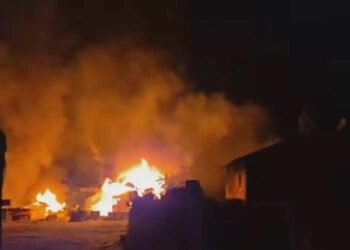
The Chief Justice’s detention has triggered questions over the legal authority behind the operation, after police shifted from describing Rana’s removal as an arrest to saying he had been taken to a “safe place”.
BY PC Bureau
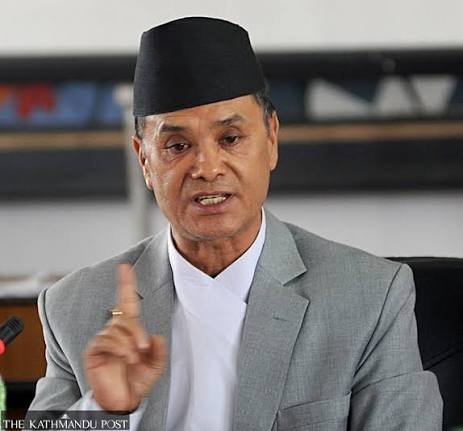
September 28: Former Nepal Chief Justice Cholendra Shumsher Rana was taken from his Maharajgunj residence in the early hours of Sunday and kept at the Kathmandu Valley Crime Investigation Office for about 12 hours, triggering questions over the legal basis of the operation after police first described it as an arrest and later said he had been moved to a “safe place” because of an unspecified security threat.
A police team led by Deputy Superintendent of Police Yograj Khatri reached Rana’s residence shortly after midnight and took him to the Crime Investigation Office in Teku at around 3 a.m. Rana’s family said officers did not produce an arrest warrant or identify any offence against him. Police later said no criminal case was being pursued and that the action was taken after receiving information that Rana faced a security threat.
The authorities, however, have not publicly identified the nature of the threat, who allegedly posed it, when the information was received or why Rana had to be removed from his home rather than given additional protection there. Rana was already under round-the-clock security.
Arresting a former Chief Justice in a hooliganism- and abduction-style manner is deeply alarming.
When due process is replaced by intimidation, what remains of the rule of law under the #BalenShah government?
Is state power being misused?#NepalJudiciary@smadixit pic.twitter.com/ohtzxHqlLG— Vidhi Thapa (@Vidhithapa22) September 28, 2026
According to family members cited in local media, police referred to a possible threat from “Gen Z” groups. Police have not publicly substantiated that claim. A National Human Rights Commission team that went to the crime investigation office to meet Rana was not allowed access and later objected to the handling of the matter.
The episode has left Rana’s legal status during the 12 hours unclear. If he was formally arrested, police have not disclosed the offence or produced an arrest warrant. If he was not arrested, authorities have yet to explain the legal authority under which a former chief justice could be taken from his residence and held at a police office overnight.
Police eventually handed Rana over to his family at about 2 p.m. Sunday.
The controversy continued on Monday when Rana sought additional protection for himself and his family. A written request, submitted by his son Sachindra Shumsher Rana to the Kathmandu Valley Police Office, cited growing security concerns. Deputy Inspector General Govinda Thapaliya confirmed that the request had been received and said Rana remained under police watch at his residence.
The detention has also become a parliamentary issue.
In the House of Representatives on Monday, CPN-UML chief whip Ain Bahadur Mahar questioned why Rana had been taken into custody without a disclosed offence or charge. Other opposition lawmakers also demanded an explanation from the government, questioning both the legality of the operation and the decision to invoke an unspecified security threat.
Rastriya Prajatantra Party lawmaker Bharat Giri argued that if Rana genuinely faced a threat, the logical response would have been to strengthen security at his residence rather than take him to a police office. Other lawmakers questioned whether similar action against senior former officials had a clear legal basis.
READ: Form 6: ECI Invokes SC Order It Never Made, Faces Contempt
The controversy comes at a particularly sensitive moment in Rana’s own legal history.
Rana became Nepal’s 29th chief justice in January 2019. On February 13, 2022, 98 lawmakers from the ruling coalition registered an impeachment motion against him under Article 101 of the Constitution, automatically suspending him from office. The motion contained 21 allegations, including claims concerning judicial administration, alleged corruption and interference in the functioning of the judiciary.
An 11-member Impeachment Recommendation Committee was subsequently formed by the House of Representatives. After an inquiry, the committee recommended impeachment on eight grounds, although members were divided and five members dissented. The recommendation was never put to a final parliamentary vote.
Rana retired in December 2022 while the impeachment process remained unresolved. In December that year, the then secretary-general of the Federal Parliament declared the impeachment motion inactive. The decision was challenged in the Supreme Court.
On September 9, 2026, the Constitutional Bench dismissed petitions challenging that decision, effectively ending the pending legal dispute over the status of the impeachment motion. The written judgment had not yet been released when the dismissal was reported.
That recent judicial development has added another layer to the questions surrounding Sunday’s police operation.
For now, the central issue remains unanswered: what was the specific security threat against Rana, who authorised his removal from his home, and under what legal authority was he kept at a police office for roughly 12 hours?