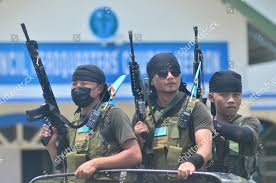
In a statement, Eastern Flank leaders alleged internal suppression, disputed peace negotiations, and deviations from core principles guiding the Naga national movement.
BY PC Bureau
June 17, 2026 — The Eastern Flank of the National Socialist Council of Nagalim (NSCN-IM) has publicly accused the organisation’s Hebron-based leadership of adopting what it describes as a “compromised and surrendered position” on the Naga political issue and deviating from the core principles of the 2015 Framework Agreement signed with the Government of India.
In a statement issued on June 16, 2026, and signed by Lieut. Gen. (Retd.) Hs. Ramsan-VC, Ikato I. Chishi Swu, Victor Angami, Lieut. Gen. A. Raman-MM, MC, and Angyo Jacob Tangshang, the Eastern Flank reaffirmed its commitment to the historical Naga political movement, citing milestones such as the 1929 memorandum to the Simon Commission, the 1947 Naga declaration of independence, the 1951 plebiscite, and the recognition of the Nagas’ unique history and situation.
Criticism of Peace Negotiations
The Eastern Flank alleged that since the signing of the Framework Agreement on August 3, 2015, under the leadership of late Chairman Isak Chishi Swu and General Secretary Thuingaleng Muivah, the Government of India has retreated from key issues, particularly the demand for a separate Naga flag and constitution.
According to the statement, the Hebron leadership failed to respond effectively to these developments and instead continued what it termed “prolonged and inconclusive negotiations” without securing tangible political outcomes.
Allegations of Internal Suppression
The statement also detailed internal disagreements that reportedly emerged in 2019 following efforts to strengthen the Naga Army through the creation of Eastern and Western Flanks. The Eastern Flank said its proposed operational base along the Indo-Myanmar border was subsequently weakened by decisions taken within the organisation’s military hierarchy.
Former Longvibu Gen. Anthony Ningkhan Shimray-VC was accused of withdrawing strategic commands, promoting negotiations perceived to be aligned with the interests of the Government of India, and authorising actions against Eastern Flank cadres. The statement further alleged that cadres loyal to the Eastern Flank were targeted in areas including Homalin and Somra.
The group also criticised the termination of senior leaders, including Lieut. Gen. (Retd.) Hs. Ramsan-VC and Lieut. Gen. A. Raman, claiming that disciplinary measures were based on unfounded allegations of anti-national activities. It noted that these decisions were later revoked.
Hongbei Incident Raises Tensions
A significant point of contention remains the March 28, 2026 incident at Hongbei village in Kamjong district, Manipur, in which four Eastern Flank cadres were killed during an ongoing Peace Mission process.
The Eastern Flank alleged that the killings resulted from directives issued by certain authorities within the organisation and described the incident as a betrayal of efforts toward internal reconciliation. It further claimed that two surviving cadres later revealed details of the alleged operation.
The group expressed support for the non-cooperation measures announced by the Tangkhul Naga Long (TNL) and other Tangkhul civil society organisations against the Wung-Tangkhul Region (NSCN/GPRN) pending accountability and justice in connection with the incident.
Welcomes New Alignments
The statement welcomed the decision of Executive Member Steering Committee member Ikato I. Chishi Swu, Collective Leadership member Victor Angami, and their associates to align with the Eastern Flank, describing the move as necessary to safeguard the Naga political movement from what it termed “another surrender.”
Concerns Over Proposed Political Arrangements
The Eastern Flank identified several proposals emerging from the ongoing negotiations that it believes depart from the original intent of the Framework Agreement and move closer to integration within the Indian constitutional framework.
Among the concerns raised were:
- Representation of Nagas in the Lok Sabha and Rajya Sabha;
- Incorporation of the Naga Constitution (Yehzabo) as a separate chapter within the Constitution of India;
- The use of broad language on political integration without clearly defined mechanisms;
- Proposed institutional links between the Tatar Hoho Election Commission and the Election Commission of India;
- Requirements for Naga political leaders to take oaths or receive formal recognition through Indian constitutional authorities.
The Eastern Flank stated that any future reconciliation within the organisation must be based on adherence to the Framework Agreement “in letter and spirit,” referencing principles outlined in a statement by Th. Muivah on November 7, 2024.
It further asserted that no oath of allegiance would be accepted until fundamental political issues are resolved and individuals allegedly acting against Naga national interests are held accountable.
READ: ‘Victims Treated as Suspects’: Kuki Inpi Slams CRPF Crackdown‘
Reiterating its long-standing position, the Eastern Flank opposed the creation of any Kuki homeland within areas it considers part of Nagalim, stating that the issue remains non-negotiable.
Appeal for Unity
Concluding its statement, the Eastern Flank called upon Nagas and national workers to unite in defence of what it described as the God-given rights of the Naga people and urged supporters to overcome divisions and uncertainty.
The latest statement highlights growing divisions within NSCN-IM at a time when the Naga peace process remains stalled. While the Eastern Flank presents itself as defending the original objectives of the Framework Agreement, the allegations underscore ongoing internal tensions over the direction of negotiations and the future political settlement of the Naga issue.
The statement has since circulated widely among Naga civil society groups and regional media platforms.