

The Supreme Court has permitted certified green crackers in Delhi-NCR on November 7 and 8, but only during two specified time windows. Conventional crackers, series crackers and barium-based products remain prohibited.
BY PC Bureau
New Delhi, November 7, 2026: Delhi is heading into Diwali amid dangerously polluted air, with the capital’s air quality already hovering between the “very poor” and “severe” categories a day before the festival. With Diwali falling on November 8, authorities face the prospect of a further deterioration as firecracker emissions add to pollution from vehicles, industries, construction and crop-residue burning.
The city’s average Air Quality Index (AQI) has ranged between 360 and 390 in recent days, while several monitoring stations have recorded readings between 440 and 475. The Commission for Air Quality Management (CAQM) has invoked Stage III of the Graded Response Action Plan (GRAP) across Delhi-NCR in response to the deteriorating conditions.
@byadavbjp ji Namaskar 🙏
I woke up this morning to an AQI reading of 601 in Delhi. Just imagine! They say air quality becomes unhealthy when the AQI crosses 150 and hazardous beyond 300. Honestly, I cannot even remember the last time Delhi’s air quality consistently remained below 100.Just think about the situation we are living in. Where are we heading? Don’t the people of Delhi even have the basic right to breathe clean air? Can we not even step outside and take a breath without worrying about our health?
year after year, we continue to hear promises and assurances, while the air we breathe keeps getting worse.
At some point, one seriously begins to wonder whether leaving Delhi is the only option, especially when I have a five-year-old son whose health and future are at stake. What kind of environment are we leaving behind for our children?
Is clean air a privilege, or is it a fundamental right?
Sadly, this is the reality we are living with.
@narendramodi @PMOIndia
#DelhiPollution #DelhiAQI— Nandan Jha (@Nandan_Jha4) November 7, 2026
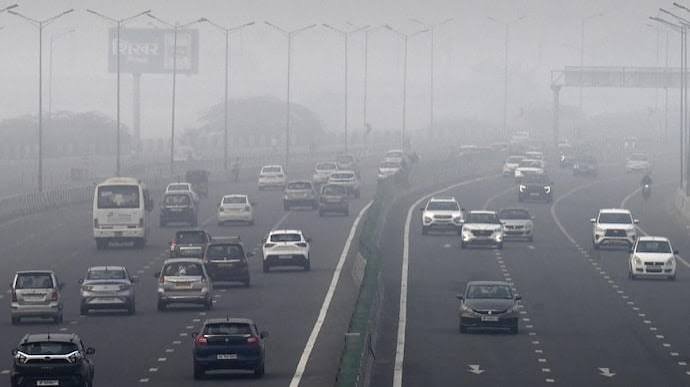
A thick layer of smog has covered several parts of the capital, reducing visibility and increasing health risks. Monitoring stations in areas including IIT Delhi, Punjabi Bagh, Rohini and Jahangirpuri have repeatedly recorded severe air quality, with AQI readings crossing 400.
High concentrations of fine particulate matter, particularly PM2.5, are adding to the health burden. Weather conditions typical of early November, including slow wind speeds and temperature inversions, are preventing pollutants from dispersing. Emissions from vehicles, industries, construction activity and household sources are accumulating close to the ground, while smoke from stubble burning in neighbouring states is adding to the pollution load.
Supreme Court permits green crackers under strict restrictions
The Supreme Court has permitted the use of certified green firecrackers in Delhi-NCR on November 7 and 8, subject to strict conditions. Bursting is allowed only during two designated windows: 6 a.m. to 7 a.m. and 8 p.m. to 10 p.m. A complete ban will come into force again from November 9.
The court has also designated areas within 300 metres of hospitals, nursing homes, health centres, old-age homes, educational institutions and notified silence zones as no-cracker zones.
Only green crackers certified by the Council of Scientific and Industrial Research-National Environmental Engineering Research Institute (CSIR-NEERI) and the Petroleum and Explosives Safety Organisation (PESO) can be manufactured and sold. Such products must carry QR codes and must be sourced from approved manufacturers and sold at designated locations.
Series crackers, commonly known as laris, garlands and crackers containing barium remain prohibited.
The Supreme Court Bench of Justices M.M. Sundresh and Prasanna B. Varale recognised that bursting firecrackers is associated with religious celebrations protected under Article 25 of the Constitution. However, it stressed that religious practices must be balanced against public health and the right to a clean environment, particularly for children, elderly people and other vulnerable groups.
The court also observed that an outright ban in previous years had encouraged illegal sales and made enforcement difficult, while restricting access to certified, lower-emission alternatives.
Last year’s experience raises doubts about enforcement
The experience of Diwali 2025 offers little assurance that this year’s restrictions will be followed.
Despite similar Supreme Court permissions, QR-code requirements and police patrols, conventional firecrackers were widely available in markets. Products carrying questionable green labels were also sold, while bursting continued beyond the permitted hours, in several areas extending into the early morning.
Delhi’s post-Diwali AQI climbed to the high end of the very poor category, with citywide readings around 345-351 and considerably higher levels at some monitoring stations. Particulate pollution also increased sharply.
Enforcement remained a major weakness. Seizures and police cases were limited compared with the scale of reported violations.
The central problem was not simply the availability of conventional crackers. Even certified green crackers produce emissions, and their widespread use can undermine the benefits of lower-emission formulations. Conventional products sold under the guise of green crackers further complicate enforcement.
Post-Diwali pollution could push AQI deeper into severe zone across Delhi
Delhi could face another sharp deterioration in air quality in the 24 to 48 hours following Diwali. Firecrackers release fine particulate matter, sulphur dioxide, nitrogen oxides and other pollutants that can accumulate when atmospheric conditions prevent their dispersal.
The impact could be compounded by continuing stubble burning in neighbouring states. The contribution of crop-residue burning to Delhi’s PM2.5 pollution is expected to increase during the period, while local emissions and stagnant winter weather will add to the burden.
With pollution levels already high before the festival, even a temporary surge in emissions could push several parts of the capital deeper into the severe category.
READ: Happens Only in India: Rajasthan’s 1.82 Lakh Voters Declared Dead in SIR Come Alive
GRAP-III restrictions already in force in Delhi
Stage III of GRAP includes restrictions on non-essential construction and demolition activities, curbs on the operation of BS-III petrol and BS-IV diesel vehicles in Delhi and designated high-density NCR districts, and hybrid classes for younger students.
The measures operate alongside restrictions imposed under the earlier stages of GRAP. However, previous pollution seasons have demonstrated that emergency restrictions offer limited relief when multiple sources of emissions coincide.
Health experts have advised residents to minimise outdoor activities, particularly children, elderly people and those with respiratory illnesses. People who must venture outside are advised to use N95 masks where appropriate and keep indoor air as clean as possible.
Residents have also been urged to follow the Supreme Court’s restrictions on the sale and use of firecrackers, including the specified timings and certification requirements.
As Delhi enters the most challenging phase of its annual winter pollution season, the effectiveness of the restrictions will depend largely on enforcement. The gap between judicial orders, government measures and compliance on the ground remains a major concern. Whether the regulated green-cracker window can prevent another post-Diwali pollution spike will become clear in the days following the festival.