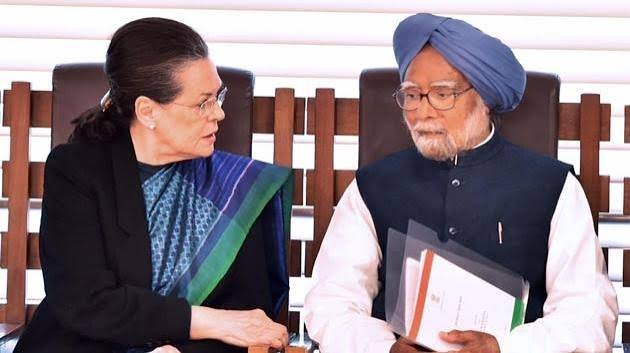
Sonia Gandhi has mounted a strong defence of Manmohan Singh’s legacy after the Supreme Court closed the coal allocation case, saying the former prime minister has been vindicated after years of allegations against his integrity.
BY PC bureau
August 11, 2026: The Supreme Court’s decision to bring the long-running coal allocation case involving former Prime Minister Manmohan Singh to a close has prompted Congress leader Sonia Gandhi to launch a strong defence of his legacy while taking aim at the Narendra Modi government.
In an article published in The Indian Express, Sonia Gandhi described Singh as a “quiet, gentle” but highly consequential prime minister and argued that the latest court ruling had finally put an end to what she called a prolonged political campaign against his integrity.
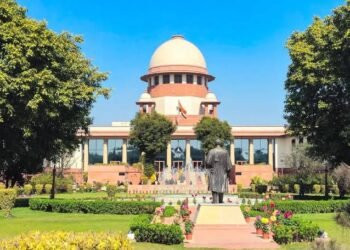
The Supreme Court on July 29, 2026, upheld the CBI’s decision to close the case and questioned the trial court’s rejection of the agency’s closure reports without adequate justification. Sonia Gandhi said the ruling had vindicated Singh after years of allegations surrounding the allocation of coal blocks during the UPA government.
She characterised the controversy as a “witch-hunt”, arguing that the campaign against Singh had been driven by a broad network of political and institutional interests.
“The lobby against him was coordinated and well-organised,” she wrote, alleging that it extended from sections of the bureaucracy and media to political organisations and civil society. With the Supreme Court’s decision, she said, the campaign had ended without establishing wrongdoing by Singh.
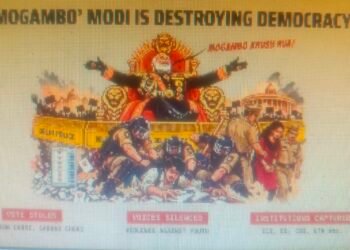
Pellet guns, Nail-studded lathis, tear gas fired at students who were peacefully asking questions about their own future.
Young women beaten by policemen, many injured on their private parts. Minors with broken bones. This is how the Modi government answers a question.
And the… pic.twitter.com/Xsva8RFQAR
— Rahul Gandhi (@RahulGandhi) August 10, 2026
Gandhi also used the occasion to criticise Prime Minister Narendra Modi personally. Referring to Modi’s recent remarks about forgiving students who had attacked him, she suggested that the prime minister should also reconsider what she described as his past attacks on Singh.
She specifically recalled Modi’s 2017 Rajya Sabha jibe that only Singh knew “the art of bathing with a raincoat on”, a remark aimed at the former prime minister’s alleged failure to confront corruption during the UPA years.
Gandhi argued that the contrast between the two administrations went beyond political rhetoric. She pointed to what she described as Singh’s record of economic management, social legislation and institutional accountability.
According to her, the UPA governments recorded stronger economic growth than the subsequent 12 years, even after taking into account changes in the methodology used to calculate GDP. She also credited the Singh government with helping lift millions of people out of poverty and steering the economy through the 2008 global financial crisis.
Among the major initiatives she highlighted were the Right to Education Act, expanded OBC reservations in central educational institutions, the Forest Rights Act, the Mahatma Gandhi National Rural Employment Guarantee Act, the National Food Security Act and the Indo-US civil nuclear agreement.
She also contrasted Singh’s approach to public accountability with what she portrayed as the current government’s relationship with the media and political dissent.
Gandhi recalled that Singh held more than 100 unscripted press conferences as prime minister and regularly answered questions in Parliament. She argued that civil society organisations had greater space to operate during the UPA period and that protests were more readily tolerated.
READ: US Judge Closes Adani Case, But Questions Still Remain
The Congress leader further accused the Modi government of using investigative agencies, including the CBI and Enforcement Directorate, as political instruments against opposition leaders. She alleged that politicians could face corruption investigations while in opposition and then receive political rehabilitation after joining the BJP.
“Corrupt when you’re in the Opposition, suddenly clean when you jump ship,” she wrote.
Gandhi’s article was also deeply personal. Singh died on December 27, 2024, and she said she regretted that he was not alive to witness the Supreme Court ruling.
Yet she argued that the former prime minister’s reputation would ultimately be determined by history rather than by the political controversies of his time.
She ended by recalling Singh’s January 2014 prediction that history would judge his tenure more favourably than his critics did.
For Gandhi, the Supreme Court’s decision provides an opportunity not only to revisit the coal allocation controversy but also to reopen a larger political argument over Singh’s 10 years in office—and the contrasting records claimed by the Congress and BJP for their respective periods in power.