Claiming the government is hiding behind pending Supreme Court proceedings, CJP leaders alleged that Union Ministers have failed to honour their public assurance that no protester would face criminal prosecution.
BY PC Bureau
New Delhi, July 28: The Cockroach Janta Party (CJP) on Tuesday accused the Central Government of reneging on its assurance that no legal action would be taken against students who participated in the nationwide protests over the alleged NEET-UG 2026 paper leak, warning that it would launch a fresh round of nationwide demonstrations if the commitment was not honoured immediately.
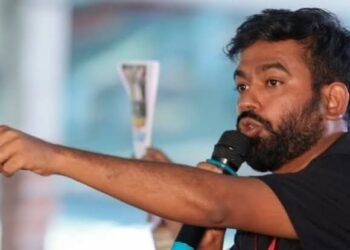
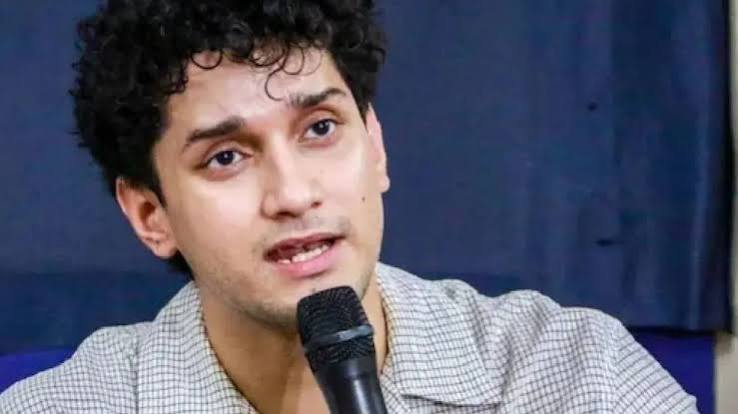
Addressing a press conference, CJP spokesperson Saurav Das alleged that the Centre had publicly assured the organisation on Saturday that no protester would face prosecution, no fresh First Information Reports (FIRs) would be registered, and all existing cases against demonstrators would be withdrawn.
According to Das, the assurance was made in the presence of the media by senior government representatives, who had also promised to provide a written guarantee by Tuesday.
“That written assurance has still not been given,” Das said. “The government is now trying to go back on the guarantees it made to the youth of this country.”
The Supreme Court cannot be politicised for government’s gains. Its orders cannot be weaponised to achieve those gains. A solemn guarantee was given before the nation. Those ought to be honoured. All FIRs ought to be withdrawn. If criminals roamed, police must apply for…
— Saurav Das (@SauravDassss) July 28, 2026
READ: Opinion: Who Gets to Lecture India’s Gen Z on Civility?
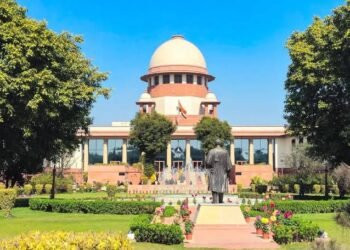
The controversy comes a day after the Supreme Court, while hearing petitions alleging excessive police action during the protests, permitted investigations into existing FIRs to continue, although it directed that no coercive action be taken against protesters with no prior criminal record and ordered the release of detained students without criminal antecedents.
Das alleged that the Centre was now citing the pending proceedings before the Supreme Court as an excuse for failing to honour its earlier commitment.
“After the PILs were filed in the Supreme Court, government representatives started saying that the matter is now sub judice. This cannot become an excuse to abandon the promises made to lakhs of protesting students,” he said.
Warning of a renewed agitation, Das said the CJP would not hesitate to return to the streets if the government failed to keep its word.
“If the government does not honour its assurances, we will once again call for protests—not only at Delhi’s Jantar Mantar but across the country. We had suspended our agitation in good faith after receiving these assurances. If they are withdrawn, we will have no option but to resume our movement,” he said.
The CJP also alleged that police action against protesters has continued in several states despite the government’s public commitments.
Referring to developments in the national capital, Das claimed that Delhi Police had searched the office of the Communist Party of India (CPI) in an attempt to arrest Aishre Ghoe, whom he described as one of the prominent faces of the CJP movement.
Another CJP spokesperson, Ashutosh Ranka, criticised the government’s handling of the matter, alleging that it failed to defend its own assurances before the Supreme Court.
“It is shameful that the government did not oppose the continuation of the FIR proceedings. If Union Ministers give their word and later refuse to stand by it, what value does that assurance carry?” Ranka said.
He reiterated the organisation’s demand that all criminal cases against peaceful protesters be withdrawn without delay and warned that the CJP would not allow students to be “harassed by investigative agencies or the police.”
“We expect the government to immediately implement what it promised. If we do not receive a positive response, the protests will resume,” Ranka said.
The CJP had called off its month-long agitation at Jantar Mantar after the Centre reportedly agreed to consider several of its demands, including the withdrawal of cases against protesters. The latest developments have raised fresh uncertainty over the implementation of that understanding, even as the Supreme Court continues to hear petitions relating to the police response to the protests.