Anonymous donors from across India and abroad are sending pizzas, burgers, meals and medicines to Jantar Mantar, creating a spontaneous supply chain powered entirely by trust, generosity and ordinary citizens determined to stand with the protesters.
By Navin Upadhyay
July 22, 2026: Walk into Jantar Mantar, the protest site of the Cockroach Janta Party (CJP), and the first thing that strikes you is not the slogans, the speeches or the sea of tricolours. It is the extraordinary sense of order amid apparent chaos.
Thousands of people—students, parents, professionals, workers, the elderly, the wealthy and the poor—fill the grounds through the day and well into the night. Yet the protest site functions with a discipline that would put many professionally managed events to shame. There are no visible instructions, no loud commands, no elaborate management system. And yet almost everything works.
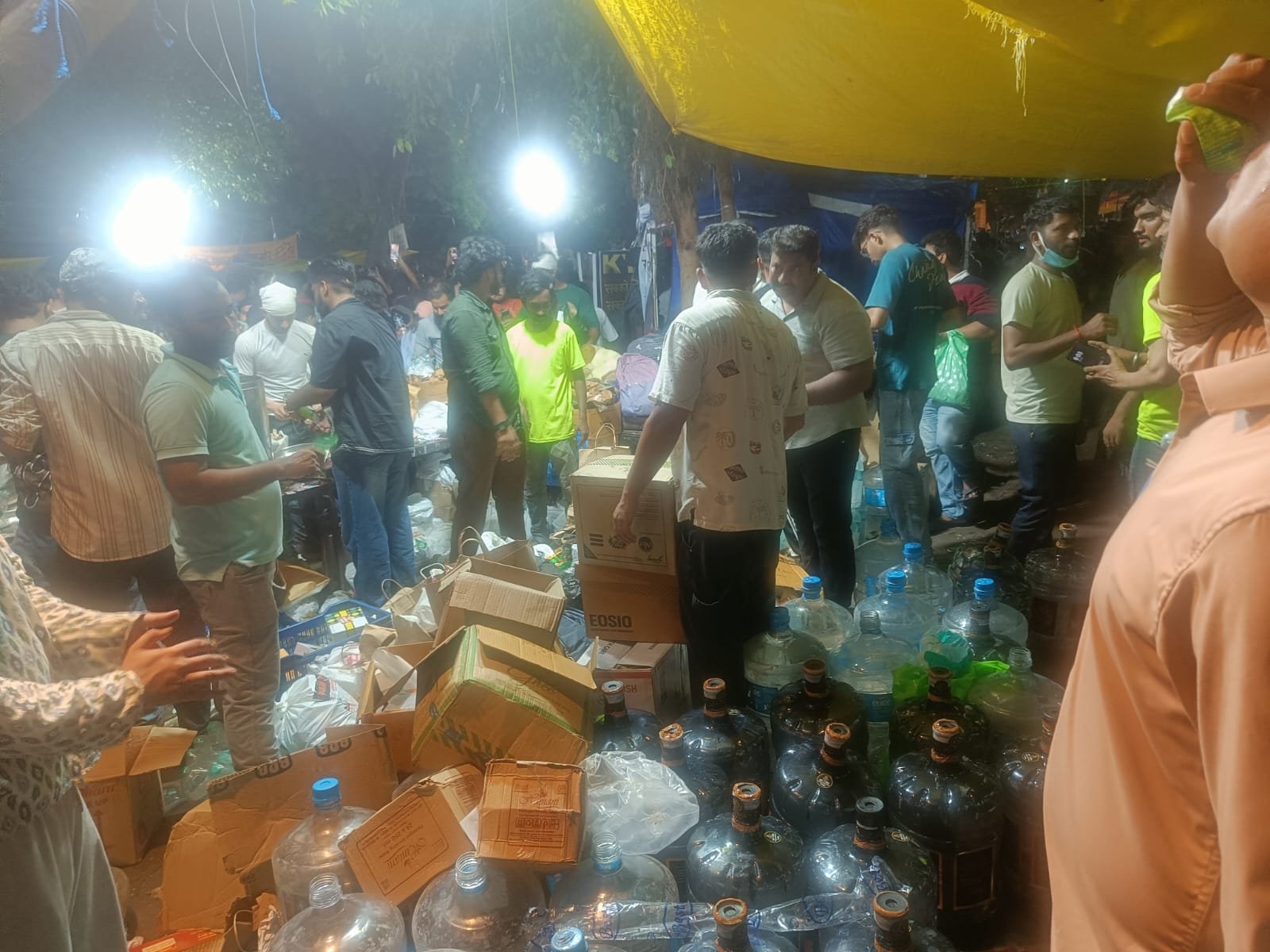
Every few steps, volunteers stand with packets of food, bottles of water, tea, coffee, cold drinks, fruit, pizza, burgers, samosas, kachoris and complete meals, gently urging visitors and protesters alike to eat. Refusal is rarely accepted. If you say you are not hungry, they request that you pass the packet to someone who might be.
The generosity seems endless.
Every few minutes, delivery executives from Zomato, Swiggy and other food delivery platforms walk into the protest site carrying fresh consignments. One after another, they unload bags filled with meals before disappearing to collect the next order.
Curious about who was paying for the food, I began asking questions.
The answer was remarkable.

People from across India—many of whom had never visited Jantar Mantar and never met the protesters—had begun placing online food orders for the protest site. They simply entered the location, paid digitally, and instructed that the meals be distributed to anyone present.
The delivery executives had quietly become an essential part of this spontaneous supply chain. They carried the food, located the volunteers, handed over the packets and returned for the next delivery. No one monitored them. No one counted the packets. Yet the system functioned almost entirely on trust.
One delivery executive arrived carrying a large hamper of pizzas.
“Who sent these?” I asked.
He glanced at his phone.
“Someone named Amrendra… from Mumbai,” he replied.
“And who are they for?”
He looked puzzled.
“It just says, ‘For anyone at the protest site.'”
A little later, another delivery executive walked in carrying cartons of burgers.
The sender, the volunteers told me, was an Indian living in the Netherlands.
By then it had become clear that the movement had travelled far beyond Jantar Mantar. The protest site had become the destination for thousands of anonymous acts of generosity from people spread across cities, states and even continents.
The volunteers distributing the food were equally remarkable.
An elderly man, drenched in sweat after hours of standing in the humid Delhi evening, continued handing out meal packets without pause.
READ: Opinion | Jantar Mantar: Where the India We Love Came Alive
“I came here only to see the protest,” he told me with a smile. “Someone asked if I could help distribute the food. I’ve been doing it ever since—and I’m enjoying every minute.”
His story was hardly unique.
Hundreds of others had become volunteers in exactly the same way. They had not travelled to Delhi intending to organise a protest. They had simply arrived, noticed something needed to be done, and quietly began doing it.
Equally impressive was the attention paid to cleanliness.
As volunteers distributed food and water, another army of volunteers moved silently through the crowd carrying large garbage bags. Empty water bottles, food wrappers, disposable plates and cups disappeared almost as quickly as they were discarded. There were no complaints, no arguments and no instructions shouted over loudspeakers. The cleaning operation worked with almost clinical efficiency.
Others moved through the gathering with pieces of cardboard, fanning exhausted protesters in the sticky July heat. Some distributed medicines. Others helped elderly visitors find places to sit. Every person seemed to discover a role without being assigned one.
The young people powering the movement evoked two conflicting emotions.
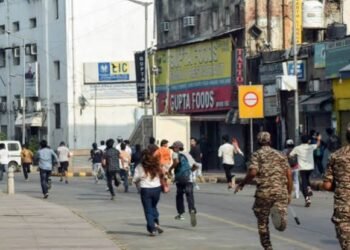
They inspired hope—for their energy, discipline and willingness to care for complete strangers. At the same time, they evoked sadness. Many still carried bruises from the police lathicharge. Some limped through the crowd. Others had bandages wrapped around their heads or arms. Yet they continued to organise, sing, clean, distribute food and welcome newcomers.
India has witnessed many protests over the decades. But rarely has one generated such spontaneous participation from ordinary citizens. What unfolded at Jantar Mantar was more than a demonstration against alleged examination irregularities. It became a collective expression of empathy, generosity and public participation.
That may ultimately prove to be its greatest achievement. Beyond the speeches and slogans, it reminded people that citizenship is not only about demanding accountability from those in power. It is also about showing up for strangers, trusting one another, and quietly doing whatever needs to be done.
Whether the movement succeeds in achieving its political demands remains to be seen. But the extraordinary community that has emerged around it has already revealed something profound about the country. Beneath the anger and the uncertainty, there still exists an India willing to feed strangers, care for the injured, clean up after itself and stand together without waiting to be asked.