In a significant move, the Centre will provide 100% funding for household tap water connections in the Ladakh region—covering an estimated ₹4 lakh per connection.
BY PC Bureau
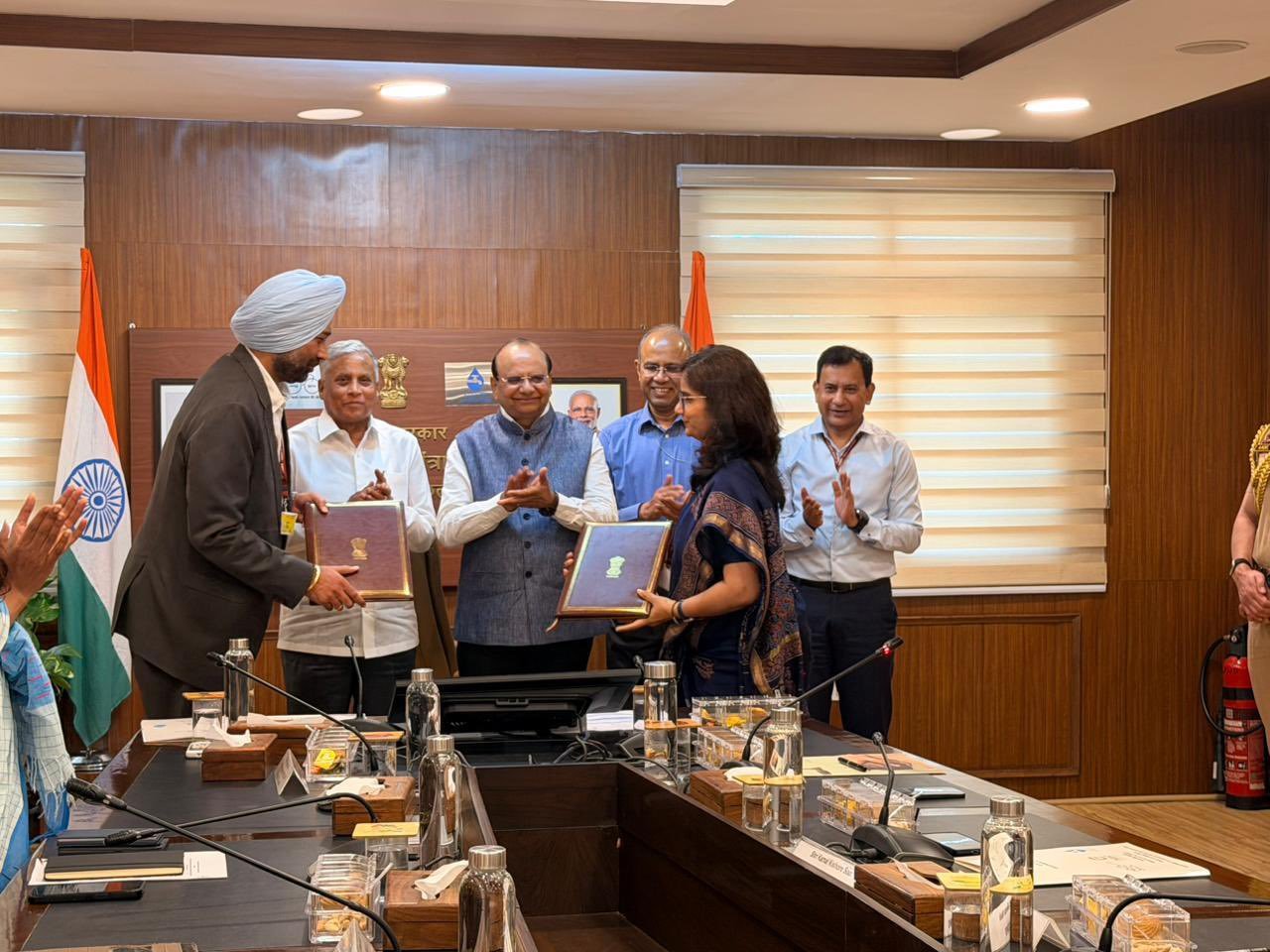
May 6: In a major push towards ensuring sustainable and reliable drinking water in Ladakh, the Union Territory administration on Tuesday signed a Memorandum of Understanding (MoU) with the Union Ministry of Jal Shakti. The agreement, initiated under the leadership of Lieutenant Governor Vinai Kumar Saxena, aims to strengthen water infrastructure in the region under the Jal Jeevan Mission (JJM) 2.0.
Union Minister for Jal Shakti C.R. Patil, Minister of State V. Somanna, and Ministry Secretary Ashok K.K. Meena were present during the signing ceremony.
The MoU formalizes collaboration between the Centre and the UT administration for effective implementation of JJM 2.0, a flagship programme of the Government of India that seeks to provide safe and adequate drinking water to every rural household through functional tap connections.
The UT of Ladakh took the first major leap towards ensuring sustainable and reliable drinking water supply in Ladakh, with signing of MoU between the Ladakh Administration and the Union Ministry of Jal Shakti. The MoU was signed in presence of Hon’ble Jal Shakti Minister, Shri… pic.twitter.com/S4bTADMgWS
— LG Ladakh (@lg_ladakh) May 6, 2026
A key highlight of the agreement is the provision of 100 percent Central funding for household water connections in Ladakh. Declaring the region a special case, the Centre will bear the full cost—estimated at ₹4 lakh per connection—significantly higher support compared to other states and Union Territories, where local governments typically contribute between 10 and 40 percent.
READ: DMK Slams Congress for Backing TVK, INDIA Bloc Rift Widens
Read: Post-Poll Anarchy in Bengal: Bulldozer Assault on TMC Office
The development follows sustained engagement between the Lieutenant Governor and the Union Ministry, focusing on Ladakh’s unique water security challenges. Saxena has consistently advocated for enhanced central support tailored to the region’s difficult terrain and climatic conditions.
Under the agreement, a structured framework will guide the commissioning and transfer of piped water supply systems to local bodies such as Gram Panchayats and Village Water and Sanitation Committees. The MoU was signed between the Department of Drinking Water and Sanitation under the Ministry of Jal Shakti and Ladakh’s Public Health Engineering (PHE) and Irrigation & Flood Control (I&FC) departments.
Officials said the initiative is expected to significantly address Ladakh’s water scarcity issues, which stem from harsh weather, limited freshwater sources, and logistical challenges. Improved infrastructure and efficient water management are likely to ensure year-round access to potable water, reducing dependence on tanker supply and seasonal sources.
Speaking on the occasion, Saxena described the MoU as a milestone in Ladakh’s journey towards water security. He highlighted complementary initiatives such as Project Him Sarovar, aimed at harnessing snow and glacial melt, as part of a broader strategy to make the region water self-sufficient.
The agreement also includes provisions for establishing a robust water quality testing and surveillance system. This will involve tagging water samples to specific households, enabling precise monitoring and timely corrective measures to ensure long-term sustainability.
Authorities believe the collaboration will pave the way for resilient, community-driven water systems adapted to Ladakh’s unique ecological context.