The talks come a day after activist Sonam Wangchuk ended his 26-day hunger strike following assurances from Union ministers on issues including withdrawal of cases against peaceful protesters, parliamentary discussions on paper leaks and education reforms, and compensation for affected families.
BY PC Bureau
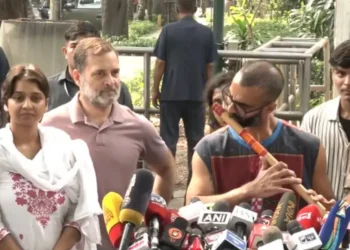
July 24, 2026: The Centre and the Cockroach Janta Party (CJP) are set to hold formal talks on Friday, marking the first structured dialogue between the government and the organisation leading the nationwide agitation over alleged examination paper leaks and irregularities. The meeting, scheduled for 12:30 pm at the Constitution Club of India, comes after the Centre agreed to CJP’s demand that discussions be held at a neutral venue rather than at a minister’s residence.
The development is being seen as a significant breakthrough after weeks of escalating protests, hunger strikes, police action, and political confrontation. However, CJP has made it clear that the talks do not signal the end of its agitation, with demonstrations at Jantar Mantar continuing until its principal demand—the resignation of Union Education Minister Dharmendra Pradhan—is met.
“The talks are an opportunity to present the concerns of millions of students, but our movement will continue until accountability is fixed,” CJP leaders said ahead of the meeting. The organisation has also reiterated its demands for comprehensive examination reforms, a judicial probe into alleged paper leaks, compensation for affected families, withdrawal of criminal cases against peaceful protesters, and action against officials responsible for the alleged irregularities.
The talks come less than 24 hours after environmentalist and education reform advocate Sonam Wangchuk ended his indefinite hunger strike after 26 days, following assurances from Union Ministers JP Nadda and Jitendra Singh. Wangchuk said his decision was taken after extensive negotiations and appeals from supporters concerned about his deteriorating health and the possibility of violence if the deadlock continued.
According to Wangchuk, the Centre conveyed that it was favourably considering several key demands, including the withdrawal of cases against peaceful protesters, a parliamentary discussion on examination paper leaks and broader education reforms, and compensation for families affected by the alleged NEET paper-leak tragedy. While welcoming these assurances, Wangchuk stressed that they would have to translate into concrete action and urged protesters across the country to remain peaceful and disciplined.
READ: Delhi on High Alert: Metro Stations Remain Sealed
Prime Minister Narendra Modi welcomed Wangchuk’s decision to end his fast, wishing him a speedy recovery and reiterating the government’s commitment to addressing concerns related to examination integrity and educational reforms.
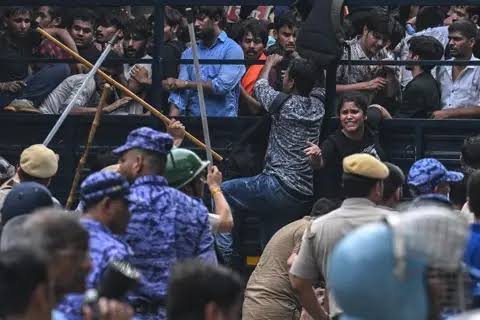
Even as the dialogue process begins, security has been tightened across central Delhi. Delhi Police mounted an extensive security operation around Jantar Mantar, Parliament Street, and adjoining areas, deploying personnel from the Rapid Action Force (RAF), Central Reserve Police Force (CRPF), and additional police units. Multi-layer barricades and frisking checkpoints were established at key locations, while more than 200 people were taken into preventive custody based on intelligence inputs to prevent any disruption of law and order.
READ: Breaking News: Sonam Wangchuk Ends 26-Day Hunger Strike
Police officials maintained that the preventive detentions were intelligence-based and temporary, insisting that no genuine commuters or bystanders were unnecessarily stopped. They also dismissed speculation about an imminent eviction of protesters from Jantar Mantar, stating that the security measures were purely precautionary.
The security arrangements have also affected public transport and commercial activity. Entry and exit were suspended at 17 Delhi Metro stations from Friday morning, while on Thursday evening authorities ordered shops and commercial establishments in Connaught Place to shut by 6 pm, underscoring the heightened security environment in the heart of the national capital.
Friday’s meeting is expected to test whether both sides can convert the recent thaw into meaningful progress. While the government has signalled its willingness to engage, CJP leaders insist the movement will continue until tangible decisions are taken on accountability, education reforms, and the resignation of the Union Education Minister.