Excise Minister Atul Bora said the move followed concerns from licensed traders that the bottle-size rule was hurting legitimate sales and pushing some consumer demand towards the informal liquor market.
BY PC Bureau
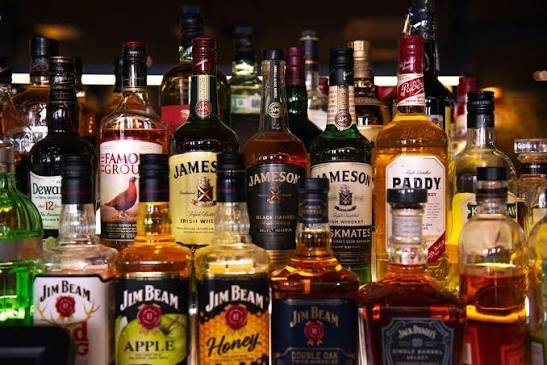
September 7, 2026: For about three months, bars and restaurants in Assam could serve Indian Made Foreign Liquor (IMFL) only from large 750 ml bottles. That rule, introduced under the Assam Excise (Amendment) Rules, 2026, has now been rolled back for on-shop outlets. Smaller 180 ml “nips” and 375 ml “pints” will once again be allowed.
The decision, announced by Excise Minister Atul Bora after a review meeting at Kar Bhawan in Guwahati, is less a sudden policy U-turn than a correction to a rule that licensed traders said was hurting legal sales without stopping illegal ones.
What changed in June — and why it mattered
Assam’s excise system draws a sharp distinction between two types of licences. “Off” shops sell sealed bottles for takeaway. “On” shops — including bars, restaurants and hotel lounges — sell liquor for consumption on the premises, usually by the peg.
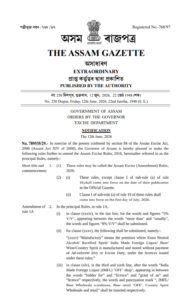
The June 2026 amendments tightened several parts of that system at once. They introduced Minimum Guaranteed Revenue for wholesale and retail off shops, stricter distance requirements between outlets, restrictions on licence shifting and a standard 60 ml peg. They also imposed minimum bottle sizes: off shops could sell sealed bottles of 180 ml or larger, while on shops were required to use bottles of at least 750 ml.
For bars and restaurants, that meant stocking only 750 ml bottles. Smaller packs — cheaper for customers who wanted one or two drinks and more convenient for establishments that did not want to open a full bottle — disappeared from the legal on-shop channel.
Traders argued that demand for the smaller sizes had not disappeared. Instead, when licensed outlets could no longer supply them, some customers could turn to informal or illicit sellers.
Why the government is reversing course
Bora presented the restoration of 180 ml and 375 ml bottles as a response to those concerns. The logic is straightforward: if licensed on-shop establishments can offer the sizes customers actually want, legal sales should increase, with a corresponding rise in excise revenue.
The move also fits into Assam’s broader revenue strategy. Liquor has become a significant source of non-tax revenue for the state, with the government collecting thousands of crores annually and introducing measures such as quarterly Minimum Guaranteed Revenue and greater use of online revenue collection.
The bottle-size rollback is therefore intended to keep legal sales and excise collections growing while maintaining the government’s crackdown on smuggling and illicitly brewed liquor.
The other half of the meeting: illegal liquor and borders
Bora used the same review meeting to reiterate a zero-tolerance policy towards illegal and illicitly brewed liquor and called for tighter surveillance along Assam’s inter-state borders.
Assam’s geographical position makes this a persistent challenge. Cheaper or untaxed liquor brought in from neighbouring states can undercut licensed sellers and deprive the state of excise revenue.
The minister also sought more transparent online revenue systems and regular enforcement drives. Licensed traders, he said, would have a smoother operating environment if they remained within the law.
The message was therefore two-pronged: ease the pressure on legitimate on-shop businesses while tightening enforcement against liquor outside the legal system.
READ: ISRO Makes It Clear: No Question of Privatisation
Heritage liquor is a separate bet
The meeting also revisited Assam’s “heritage liquor” sector — traditional brews associated with the state’s indigenous communities, including xaj, rohi, judima and apong.
Under the 2026 rules, manufacturing rights for these drinks are reserved for the communities that have traditionally produced them. Fees for micro-manufactories and retail vends were reduced, while production for the smallest category was capped at 1,000 litres a day. The rules also created a separate “Assam Made Liquor” category.
Bora’s review covered commercial production, marketing and even the possibility of promoting these traditional beverages overseas.
The policy combines two objectives: protecting cultural heritage and creating new income opportunities for local communities. Its practical test will be whether regulated heritage products can reach wider markets without being copied by outsiders or pushed into the same grey market the excise department is trying to eliminate.
What the rollback does — and does not do
Restoring nips and pints in bars and restaurants does not repeal the rest of the 2026 excise package. Distance norms, restrictions on licence shifting, the 60 ml standard peg and Minimum Guaranteed Revenue provisions for off shops remain part of the new regime.
What has changed is the most customer-facing aspect of on-shop liquor sales: bottle size.
If the government’s calculation proves correct, allowing smaller legal bottles could bring customers back to licensed establishments, increase legitimate turnover and reduce the incentive to buy from the informal market.
If traders’ concerns were only partly responsible for the decline in legal sales, however, the state will have loosened a restriction imposed only in June without fully resolving the smuggling and illicit-liquor problem that it continues to treat as a major enforcement priority.