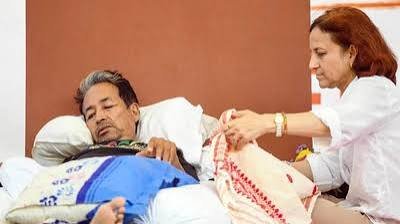
In a letter to the Union ministers, Sonam Wangchuk said he would break his fast only if the government guarantees that no student participating in the anti-NEET movement faces legal action, harassment or retaliation.
BY PC Bureau
New Delhi, July 22, 2026: Climate activist and education reformer Sonam Wangchuk on Wednesday signalled his willingness to end his indefinite hunger strike, indicating a significant softening of his stand after receiving assurances from the Centre during a late-night meeting with Union Health Minister J.P. Nadda and Union Minister Dr. Jitendra Singh.
In a letter addressed to the two Union ministers, Wangchuk thanked them for visiting him at the hospital and personally urging him to end his fast. He said the meeting had given him hope that the government was prepared to address the concerns raised by students protesting against alleged examination irregularities, including the NEET paper leak.
According to Wangchuk, the ministers assured him that the government would “positively consider” two key demands that have become central to the nationwide agitation.
The first relates to providing adequate financial compensation to the families of students who allegedly died by suicide after being affected by examination paper leaks and irregularities. The second concerns holding a meaningful discussion in Parliament on fixing accountability for the crisis, including consideration of demands for the resignation of Union Education Minister Dharmendra Pradhan.
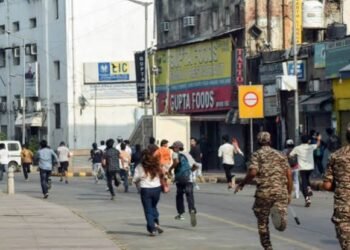
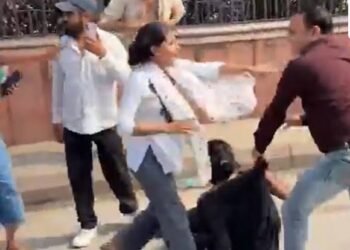
Describing the July 20 “Chalo Sansad” march as overwhelmingly peaceful, Wangchuk alleged that the demonstration was met with disproportionate police action despite protesters remaining non-violent. He expressed hope that the thousands of students who participated in the march would not be subjected to retaliatory action by the authorities.
However, while indicating his readiness to end the fast, Wangchuk attached one crucial condition.
He said he would break his indefinite fast only after receiving an unequivocal assurance from the government that no student or young protester would face vindictive legal action, criminal prosecution, disciplinary proceedings or harassment for participating in the movement.
“If such an assurance is given, I shall end my fast with faith that the Government has heard not only my appeal but also the aspirations of lakhs of young Indians. In the absence of such an assurance, I will be forced to continue my fast indefinitely,” Wangchuk wrote.
He also appealed to the Centre to ensure that no further excessive force is used against peaceful demonstrators and urged the authorities to respect the democratic right of students to express their grievances.
The activist revealed that nearly 65 Members of Parliament cutting across party lines had appealed to him to end his hunger strike, reminding him that his life was valuable and that he had a larger responsibility towards the country’s youth and education reforms.
“I wish to live and continue working for students and for the nation. But I cannot do so at the cost of abandoning the very young people for whom this movement began,” he wrote.
AN APPEAL TO THE GOVERNMENT
regarding breaking my fast…
Once the assurance from govt come I will also appeal to the peacefully protesting students to halt the movement for now and enter into dialogue with the government pic.twitter.com/gR6S8woF5R— Sonam Wangchuk (@Wangchuk66) July 22, 2026
A Significant Shift
The letter marks a noticeable shift from Wangchuk’s earlier position, when he had insisted on immediate action from the government before considering ending his fast.
His latest communication suggests a willingness to accept assurances that the government will seriously examine issues such as compensation and parliamentary accountability, while making protection of protesting students the central condition for ending his protest.
Political observers believe the development could open the door for a negotiated resolution to one of the most high-profile protest movements witnessed during the Monsoon Session of Parliament.
Wangchuk’s Protest Legacy
This is not the first time Wangchuk has used fasting and peaceful civil disobedience to press for policy changes.
The Ladakh-based engineer, innovator and Ramon Magsaysay Award recipient has emerged over the past decade as one of India’s most prominent non-partisan public campaigners. His movements have consistently focused on environmental protection, educational reforms and constitutional safeguards for fragile Himalayan regions.
READ: Rahul Gandhi Backs Student Protests, Seeks Pradhan’s Ouster
In 2024, Wangchuk undertook a prolonged hunger strike demanding constitutional protections for Ladakh, including statehood, inclusion under the Sixth Schedule of the Constitution and safeguards for the region’s ecology and employment. That agitation culminated in the widely publicised Delhi Chalo march, during which he and hundreds of supporters were detained at the Delhi border before later being allowed to continue their campaign.
Throughout his public life, Wangchuk has maintained a Gandhian style of protest, relying on fasting, dialogue and peaceful mobilisation rather than confrontational politics. His campaigns have generally sought institutional solutions through discussions with the government rather than partisan confrontation.
His latest agitation has similarly placed students at the centre of the debate, transforming concerns over examination integrity, paper leaks and student suicides into a broader national conversation about accountability, educational reform and the right to peaceful protest.
With Wangchuk now signalling his willingness to end his fast, attention has shifted to the Centre’s response. Whether the government formally guarantees protection for student protesters is likely to determine whether the hunger strike ends or enters a more confrontational phase.